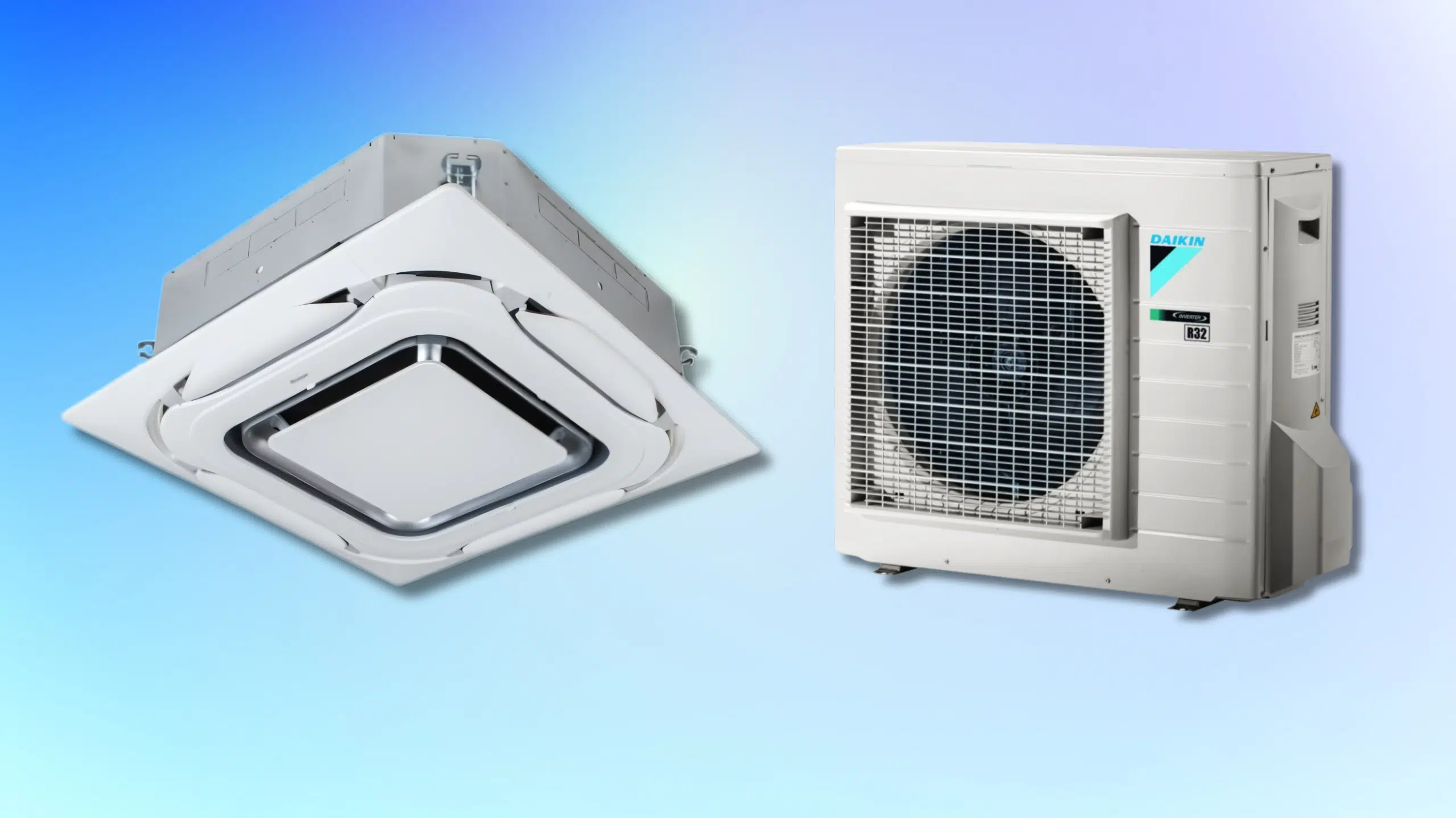
London summers are edging past 30 °C more often, and portable fans just don’t cut it. If you’re weighing up a permanent central air‑conditioning (AC) system, you’ve probably seen quotes that range from “ouch” to “eye‑watering”. This long‑form guide unpacks every pound, pence, and planning quirk so you can budget with confidence and dodge the most common cost traps.
Central AC Unit Cost Calculator
Total: £0
Quick Snapshot
| Home Type | Cooling Capacity (BTU/kW) | Typical All‑In Price* |
|---|---|---|
| 1‑bed flat (≤60 m²) | 12 000 BTU / 3.5 kW | £4 500–£6 500 |
| 3‑bed semi (≈110 m²) | 24 000–30 000 BTU / 7–9 kW | £6 500–£11 000 |
| Large detached (200 m²+) | 48 000 BTU+ | £11 000–£18 000 |
| Period/listed property | +15‑40 % over above | Varies |
*Prices include equipment, standard installation labour, and VAT. Complex ductwork, electrical upgrades, or asbestos remediation add extra see below.
1. Anatomy of a Central‑AC Quote
- Equipment (40–55 %)Outdoor condensing unitIndoor air‑handler/coilSmart or programmable thermostatLine‑set, refrigerant, isolation valves
- Labour (20–30 %)Heat‑load calculationsInstallation and pressure testingCommissioning & user hand‑over
- Ductwork (0–25 %)New ducts or modificationsAir‑sealing & insulationBalancing dampers & diffusers
- Electrical & Controls (5–10 %)Dedicated MCB or consumer‑unit upgradeInterlocks, isolator switch, condensate pump wiring
- Professional Fees & Compliance (2–5 %)F‑Gas handling & leak logPlanning permission (noise/visual in conservation areas)Building‑control sign‑off where ductwork penetrates fire breaks
- VAT (20 %)Central AC isn’t classed as a low‑carbon measure, so the standard rate applies. (Reversible heat‑pump systems may qualify for 0 % see Grants.)
Equipment (40–55 %)
- Outdoor condensing unit
- Indoor air‑handler/coil
- Smart or programmable thermostat
- Line‑set, refrigerant, isolation valves
Outdoor condensing unit
Indoor air‑handler/coil
Smart or programmable thermostat
Line‑set, refrigerant, isolation valves
Labour (20–30 %)
- Heat‑load calculations
- Installation and pressure testing
- Commissioning & user hand‑over
Heat‑load calculations
Installation and pressure testing
Commissioning & user hand‑over
Ductwork (0–25 %)
- New ducts or modifications
- Air‑sealing & insulation
- Balancing dampers & diffusers
New ducts or modifications
Air‑sealing & insulation
Balancing dampers & diffusers
Electrical & Controls (5–10 %)
- Dedicated MCB or consumer‑unit upgrade
- Interlocks, isolator switch, condensate pump wiring
Dedicated MCB or consumer‑unit upgrade
Interlocks, isolator switch, condensate pump wiring
Professional Fees & Compliance (2–5 %)
- F‑Gas handling & leak log
- Planning permission (noise/visual in conservation areas)
- Building‑control sign‑off where ductwork penetrates fire breaks
F‑Gas handling & leak log
Planning permission (noise/visual in conservation areas)
Building‑control sign‑off where ductwork penetrates fire breaks
VAT (20 %)
Central AC isn’t classed as a low‑carbon measure, so the standard rate applies. (Reversible heat‑pump systems may qualify for 0 % see Grants.)
Six Factors That Swing the Price
| Factor | Why It Matters | Cost Impact |
| Cooling Load | Oversizing wastes energy; undersizing never cools | ±£300–£1 200 per size jump |
| Property Age & Fabric | Solid walls, single‑glazed sash windows, or thin loft insulation raise load | +10–25 % |
| Existing Duct Condition | Leaky, under‑insulated ducts can lose 30 % of cool air | £3 000–£7 000 to refurb |
| Access & Logistics | Fourth‑floor flat? Scaffold and crane lift add costs | £800–£3 000 |
| Noise Limits | Near a boundary or in a conservation area: acoustic enclosures or low‑noise units | +£400–£1 500 |
| Season of Installation | Feb–April is “shoulder season”: contractors discount to fill diaries | 5–15 % |
Hidden Extras Homeowners Forget
- Asbestos & Lead Paint Surveys – Pre‑1970s homes often need testing before core‑drilling: £500–£1 000.
- Consumer‑Unit Upgrade – Older fuse boxes may trip under start‑up surge: £400–£1 200.
- Condensate Drain Routing – If gravity drain isn’t an option: pump kit £150–£300 plus labour.
- Scaffolding – Required above 3 m for external units: £600+ per elevation.
- Building‑Control Fees – London borough sign‑off where structural openings change: £180–£350.
Asbestos & Lead Paint Surveys – Pre‑1970s homes often need testing before core‑drilling: £500–£1 000.
Consumer‑Unit Upgrade – Older fuse boxes may trip under start‑up surge: £400–£1 200.
Condensate Drain Routing – If gravity drain isn’t an option: pump kit £150–£300 plus labour.
Scaffolding – Required above 3 m for external units: £600+ per elevation.
Building‑Control Fees – London borough sign‑off where structural openings change: £180–£350.
SEER vs SCOP: Picking the Right Efficiency
In the US, Seasonal Energy Efficiency Ratio (SEER) rules the roost, but the UK increasingly references Seasonal Coefficient of Performance (SCOP), which covers both heating and cooling on reversible systems.
- Sweet Spot: SEER 16–18 / SCOP ≥ 4.
- Premium: SEER 21+ / SCOP ≥ 5—but you’ll pay £1 500‑£2 500 extra and may not recoup the premium before tech leaps again.
Sweet Spot: SEER 16–18 / SCOP ≥ 4.
Premium: SEER 21+ / SCOP ≥ 5—but you’ll pay £1 500‑£2 500 extra and may not recoup the premium before tech leaps again.
Rule of Thumb: For London’s 250 cooling‑degree‑days, every SEER point over 16 saves roughly 3–4 % on annual cooling costs.
Government Grants & Incentives (2025)
| Scheme | Who Qualifies | Benefit for AC Buyers |
| Boiler Upgrade Scheme (BUS) | Owner‑occupiers in England & Wales replacing fossil heat with air‑source heat pump | £7 500 voucher if the system provides primary heating and meets SCOP ≥ 2.8 (many modern inverter “air‑to‑air” units do). Cooling is tolerated but not subsidised. |
| Home Upgrade Grant (HUG2) | Low‑income, off‑gas homes in England | Grants for fabric and low‑carbon heating can pair heat pump with ducted cooling function. |
| ECO4 | Means‑tested households via energy suppliers | Focus on insulation & heating; AC rarely funded but improved fabric can downsize your AC spend. |
| 0 % VAT (2022‑2027) | Applies to heat pumps, solar, insulation not straight AC. Opting for a reversible heat‑pump system could save the 20 % VAT if primarily used for heating. |
Tip: A reversible ducted air‑source heat pump priced at £9 000 falls to £7 500 with BUS, undercutting many cooling‑only systems.
The Bottom Line
A decent central AC installation in Britain should cost between £6,000-£12,000 for most homes. Anything less, they’re cutting corners. Anything more, you’d better be getting gold-plated vents.
But here’s the real truth: the best system isn’t always the most expensive one. It’s the one that’s properly sized, well-installed, and matches your actual needs – not the one with all the bells and whistles.
Remember: in Britain, we’re cooling our homes for maybe three months a year (though climate change might have other ideas). Choose wisely, and your AC will be your best friend during those increasingly common heatwaves without becoming your bank account’s worst enemy.
DIY vs. Pro: The Legal Bit
Under UK F‑Gas Regulations, only certified engineers can handle refrigerants. DIY install kits void warranties, can carry £200‑£5 000 fines, and may scupper your home insurance.
Five Ways to Trim the Bill (Without Cutting Corners)
- Improve Insulation First – Every cm of loft insulation can shave 5–10 % off required capacity.
- Ask for Heat‑Load Calculations – ACCA Manual J or CIBSE methods, not a thumb‑suck.
- Bundle Works – Combine AC with other refurb phases; shared scaffold saves £££.
- Opt for Zoning – Two smaller air‑handlers can use shorter duct runs and drop fan energy.
- Book Shoulder‑Season Install – Late winter slots often come with discounts or free smart stats.
Rule‑of‑Thumb Cost Calculator
Total Cost (£) ≈ (Cooling kW × £600) + Ductwork + Extras
Example for a 7 kW (≈24 000 BTU) system in a 1930s semi:
- Equipment & Labour: 7 kW × £600 = £4 200
- Ductwork Upgrade: £1 800
- Electrical Panel Upgrade: £700
- Contingency (10 %): £670
- VAT (20 %): £1 474
- Estimated Total: ≈£8 800
Equipment & Labour: 7 kW × £600 = £4 200
Ductwork Upgrade: £1 800
Electrical Panel Upgrade: £700
Contingency (10 %): £670
VAT (20 %): £1 474
Estimated Total: ≈£8 800
Getting Comparative Quotes
- Shortlist Three F‑Gas‑Certified Firms (check REFCOM or Refcom Elite).
- Request a Line‑Item Breakdown equipment, labour, duct, electrics, VAT.
- Ask About After‑Care emergency response time and annual service cost.
- Verify Warranty Transferability handy if you sell the house.
Shortlist Three F‑Gas‑Certified Firms (check REFCOM or Refcom Elite).
Request a Line‑Item Breakdown equipment, labour, duct, electrics, VAT.
Ask About After‑Care emergency response time and annual service cost.
Verify Warranty Transferability handy if you sell the house.
Central AC in London isn’t a luxury anymore when heatwaves can last two weeks. Expect to spend £6 000‑£12 000 for a typical family home but understand why the price lands where it does:
- Cooling load drives equipment size.
- Duct condition and property quirks add complexity.
- Grants can tilt the maths if you opt for a reversible heat‑pump system.
Cooling load drives equipment size.
Duct condition and property quirks add complexity.
Grants can tilt the maths if you opt for a reversible heat‑pump system.
Do the prep improve insulation, demand proper calculations, and compare truly like‑for‑like quotes. You’ll stay cool without burning through your renovation budget.
Central AC unit Experts Since 2004
AC experts , F-Gas certified
UK Regulations for Air Conditioning Installation
Before installing air conditioning in the UK, there are several regulations to consider:
- UK Government: Air conditioning inspections - Systems over 12kW require periodic inspections by accredited assessors.
- Planning Portal: Heating and cooling - Whether you need planning permission for external AC units.
- UK Government: F-Gas regulations - Installation must be carried out by F-Gas certified engineers.
- Building Regulations Part L - Energy efficiency requirements for heating and cooling systems in buildings.

Written by
Ali Elm
Ali is the Head of Operations at Be Cool Refrigeration with over a decade of hands-on experience in HVAC and commercial refrigeration. He oversees every installation, repair, and maintenance project, making sure the work meets the highest standards. Ali holds full F-Gas certification and has worked across residential, commercial, and industrial refrigeration systems throughout London and the South East. When he is not on site, he writes these guides to help business owners and homeowners understand their cooling systems better.