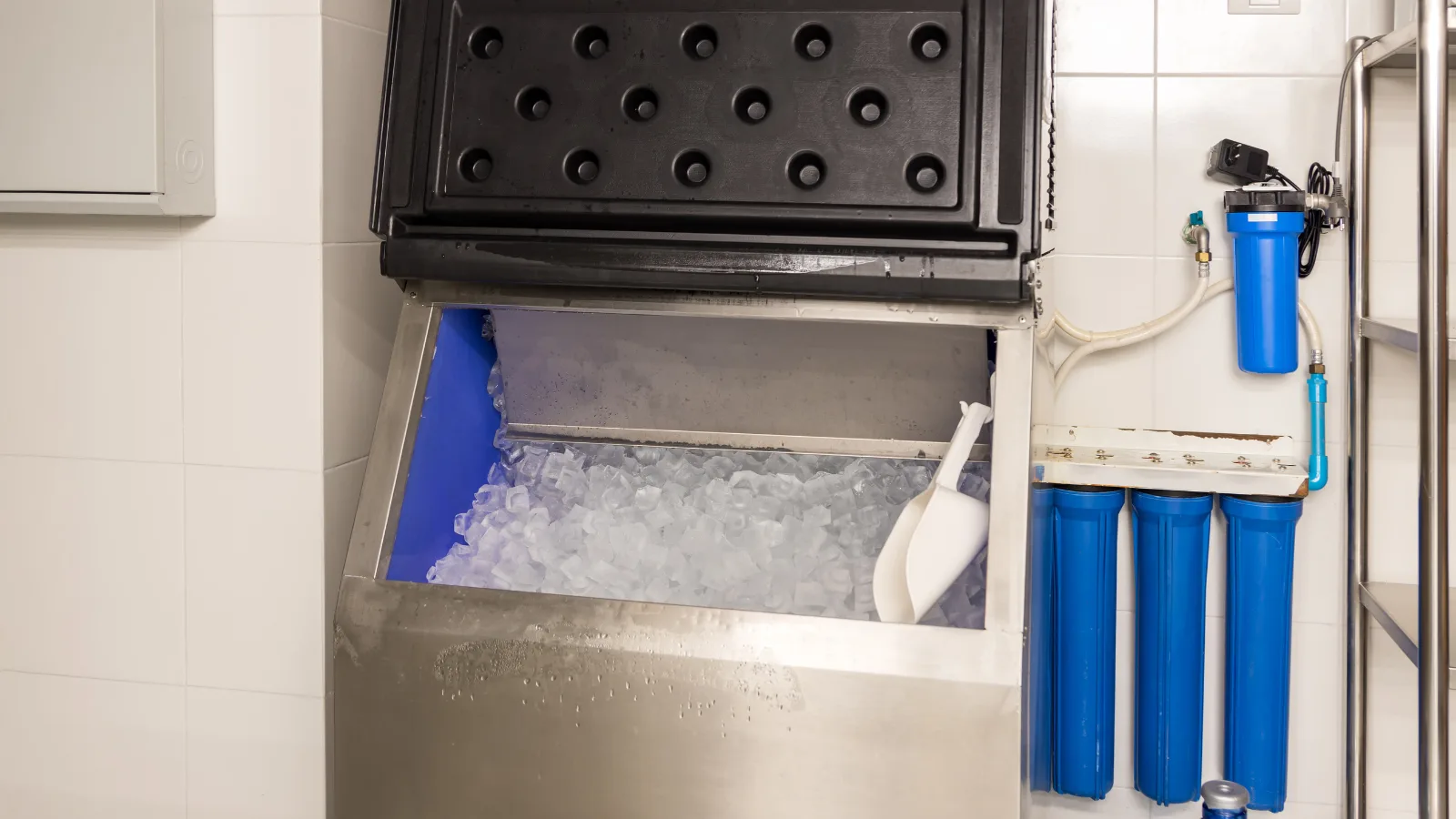
When your ice machine stops working, it disrupts drink service and kitchen operations. Be Cool Refrigeration provides fast ice machine repair across London for pubs, bars, restaurants, hotels, and any business that needs a reliable ice supply. We also supply and install new machines and provide planned maintenance.
Why Quick Repairs Matter
An ice machine breakdown during a busy service is more than an inconvenience. Bars lose revenue on cocktails and mixed drinks, restaurants cannot present dishes properly, and buying bagged ice is an expensive temporary fix. Our engineers carry common parts and aim to resolve most faults on the first visit, getting your ice supply back up and running as quickly as possible.
Brands We Work With



Common Ice Machine Problems
- Not making ice Water supply issues, inlet valve faults, or refrigeration problems
- Small or misshapen cubes Water distribution problems, scale build-up, or low refrigerant
- Machine leaking water Drain blockages, overflow issues, or cracked water components
- Error codes and alarms Controller faults specific to your machine model
- Excessive noise Pump, fan, or compressor issues causing disruptive noise levels
- Ice tastes or smells bad Water filter exhausted or internal cleaning required
Accredited & Certified


What Our Clients Say
Read All Reviews“I spoke with Danny this morning who gave me immediate, clear and supportive advice on a problem with a Daikin unit. No sense of trying to angle for a call-out and I’d be comfortable calling should that ultimately be necessary.”
Helpful immediate advice
“I would like to thank the Be Cool team for the excellent service I have received since I phoned on Saturday. Be Cool did everything they said they would. Someone called me back first thing on Monday morning and sent a very polite, excellent engineer on Tuesday who fixed what has been a nagging problem for far too long. I would give you 100 stars and not just the standard 5. I very much appreciated the phone call giving me notice that the engineer would arrive in one hour. In this day and age a company with the Be Cool level of service is rare indeed. What’s more everyone I spoke to on the phone was charming, as was the engineer. Everyone could not have been more helpful. I live in hope that there will be a swift return to this level of service which I have not received for a very long time. Congratulations!”
In this day and age a company with the Be Cool level of service is rare indeed.
“Be Cool did a fantastic job fitting our AC domestic unit. From helping us select the right system to guidance on how to use it, helpful and professional approach was very much appreciated. First class service backed up by regular calls to keep us updated on delivery and fitting schedule ⭐️⭐️⭐️⭐️⭐️”
Excellent, professional service
“We have used Be Cool several times in the last few months. Very friendly proactive staff and engineers can make repairs on site which is extremely useful.”
Excellent on-going service
“Very helpfull. Thank you so much!!”
Very helpfull. Thank you
“We used BeCool Ltd. to install new air conditioning in one of our 800sqm London venues. Top class! This was a big project but took little over two weeks. From the initial consultation to the handover, nothing was too much. The professionalism and quality of work was second to none. Following that, we used them to upgrade the air conditioning in our second London venue. Could not fault Ali and his team and BeCool Ltd is now our go-to place for AC and refrigeration. Thanks!”
The professionalism and quality of work was second to none!
“Came out quickly – fixed it on the same day. In a world of “you get what you pay for”, their prices are very reasonable. I hope I won’t need their services again, but if I do – will call them first thing.”
Came out quickly - fixed it on the same day!
“BeCool were really helpful and quick to fix our air conditioning issues, thank you!”
Really helpful & quick to fix!
“Be Cool have been working for us for over 5 years (since 2011), they install and maintain all the commercial refrigeration and air-conditioning equipment for our projects. Our trust has always grown in Be Cool and because of this we always follow their recommendations…. “They have simply never let us down attending emergencies immediately and undertaking the work to high quality”.”
Work to high quality
“Fridges, cold rooms, air-conditioning, ice machines, electric ovens, ice makers and MANY MORE…Be Cool have supplied and maintained our equipment since our restaurants, pubs and hotels opened (since 2010) and we have never look further…they have always responded to our calls and breakdowns. Knowledgeable! Professional!”
Knowledgeable! Professional!
“I spoke with Danny this morning who gave me immediate, clear and supportive advice on a problem with a Daikin unit. No sense of trying to angle for a call-out and I’d be comfortable calling should that ultimately be necessary.”
Helpful immediate advice
“I would like to thank the Be Cool team for the excellent service I have received since I phoned on Saturday. Be Cool did everything they said they would. Someone called me back first thing on Monday morning and sent a very polite, excellent engineer on Tuesday who fixed what has been a nagging problem for far too long. I would give you 100 stars and not just the standard 5. I very much appreciated the phone call giving me notice that the engineer would arrive in one hour. In this day and age a company with the Be Cool level of service is rare indeed. What’s more everyone I spoke to on the phone was charming, as was the engineer. Everyone could not have been more helpful. I live in hope that there will be a swift return to this level of service which I have not received for a very long time. Congratulations!”
In this day and age a company with the Be Cool level of service is rare indeed.
“Be Cool did a fantastic job fitting our AC domestic unit. From helping us select the right system to guidance on how to use it, helpful and professional approach was very much appreciated. First class service backed up by regular calls to keep us updated on delivery and fitting schedule ⭐️⭐️⭐️⭐️⭐️”
Excellent, professional service
“We have used Be Cool several times in the last few months. Very friendly proactive staff and engineers can make repairs on site which is extremely useful.”
Excellent on-going service
“Very helpfull. Thank you so much!!”
Very helpfull. Thank you
“We used BeCool Ltd. to install new air conditioning in one of our 800sqm London venues. Top class! This was a big project but took little over two weeks. From the initial consultation to the handover, nothing was too much. The professionalism and quality of work was second to none. Following that, we used them to upgrade the air conditioning in our second London venue. Could not fault Ali and his team and BeCool Ltd is now our go-to place for AC and refrigeration. Thanks!”
The professionalism and quality of work was second to none!
“Came out quickly – fixed it on the same day. In a world of “you get what you pay for”, their prices are very reasonable. I hope I won’t need their services again, but if I do – will call them first thing.”
Came out quickly - fixed it on the same day!
“BeCool were really helpful and quick to fix our air conditioning issues, thank you!”
Really helpful & quick to fix!
“Be Cool have been working for us for over 5 years (since 2011), they install and maintain all the commercial refrigeration and air-conditioning equipment for our projects. Our trust has always grown in Be Cool and because of this we always follow their recommendations…. “They have simply never let us down attending emergencies immediately and undertaking the work to high quality”.”
Work to high quality
“Fridges, cold rooms, air-conditioning, ice machines, electric ovens, ice makers and MANY MORE…Be Cool have supplied and maintained our equipment since our restaurants, pubs and hotels opened (since 2010) and we have never look further…they have always responded to our calls and breakdowns. Knowledgeable! Professional!”
Knowledgeable! Professional!
“I spoke with Danny this morning who gave me immediate, clear and supportive advice on a problem with a Daikin unit. No sense of trying to angle for a call-out and I’d be comfortable calling should that ultimately be necessary.”
Helpful immediate advice
“I would like to thank the Be Cool team for the excellent service I have received since I phoned on Saturday. Be Cool did everything they said they would. Someone called me back first thing on Monday morning and sent a very polite, excellent engineer on Tuesday who fixed what has been a nagging problem for far too long. I would give you 100 stars and not just the standard 5. I very much appreciated the phone call giving me notice that the engineer would arrive in one hour. In this day and age a company with the Be Cool level of service is rare indeed. What’s more everyone I spoke to on the phone was charming, as was the engineer. Everyone could not have been more helpful. I live in hope that there will be a swift return to this level of service which I have not received for a very long time. Congratulations!”
In this day and age a company with the Be Cool level of service is rare indeed.
“Be Cool did a fantastic job fitting our AC domestic unit. From helping us select the right system to guidance on how to use it, helpful and professional approach was very much appreciated. First class service backed up by regular calls to keep us updated on delivery and fitting schedule ⭐️⭐️⭐️⭐️⭐️”
Excellent, professional service
“We have used Be Cool several times in the last few months. Very friendly proactive staff and engineers can make repairs on site which is extremely useful.”
Excellent on-going service
“Very helpfull. Thank you so much!!”
Very helpfull. Thank you
“We used BeCool Ltd. to install new air conditioning in one of our 800sqm London venues. Top class! This was a big project but took little over two weeks. From the initial consultation to the handover, nothing was too much. The professionalism and quality of work was second to none. Following that, we used them to upgrade the air conditioning in our second London venue. Could not fault Ali and his team and BeCool Ltd is now our go-to place for AC and refrigeration. Thanks!”
The professionalism and quality of work was second to none!
“Came out quickly – fixed it on the same day. In a world of “you get what you pay for”, their prices are very reasonable. I hope I won’t need their services again, but if I do – will call them first thing.”
Came out quickly - fixed it on the same day!
“BeCool were really helpful and quick to fix our air conditioning issues, thank you!”
Really helpful & quick to fix!
“Be Cool have been working for us for over 5 years (since 2011), they install and maintain all the commercial refrigeration and air-conditioning equipment for our projects. Our trust has always grown in Be Cool and because of this we always follow their recommendations…. “They have simply never let us down attending emergencies immediately and undertaking the work to high quality”.”
Work to high quality
“Fridges, cold rooms, air-conditioning, ice machines, electric ovens, ice makers and MANY MORE…Be Cool have supplied and maintained our equipment since our restaurants, pubs and hotels opened (since 2010) and we have never look further…they have always responded to our calls and breakdowns. Knowledgeable! Professional!”
Knowledgeable! Professional!
“I spoke with Danny this morning who gave me immediate, clear and supportive advice on a problem with a Daikin unit. No sense of trying to angle for a call-out and I’d be comfortable calling should that ultimately be necessary.”
Helpful immediate advice
“I would like to thank the Be Cool team for the excellent service I have received since I phoned on Saturday. Be Cool did everything they said they would. Someone called me back first thing on Monday morning and sent a very polite, excellent engineer on Tuesday who fixed what has been a nagging problem for far too long. I would give you 100 stars and not just the standard 5. I very much appreciated the phone call giving me notice that the engineer would arrive in one hour. In this day and age a company with the Be Cool level of service is rare indeed. What’s more everyone I spoke to on the phone was charming, as was the engineer. Everyone could not have been more helpful. I live in hope that there will be a swift return to this level of service which I have not received for a very long time. Congratulations!”
In this day and age a company with the Be Cool level of service is rare indeed.
“Be Cool did a fantastic job fitting our AC domestic unit. From helping us select the right system to guidance on how to use it, helpful and professional approach was very much appreciated. First class service backed up by regular calls to keep us updated on delivery and fitting schedule ⭐️⭐️⭐️⭐️⭐️”
Excellent, professional service
“We have used Be Cool several times in the last few months. Very friendly proactive staff and engineers can make repairs on site which is extremely useful.”
Excellent on-going service
“Very helpfull. Thank you so much!!”
Very helpfull. Thank you
“We used BeCool Ltd. to install new air conditioning in one of our 800sqm London venues. Top class! This was a big project but took little over two weeks. From the initial consultation to the handover, nothing was too much. The professionalism and quality of work was second to none. Following that, we used them to upgrade the air conditioning in our second London venue. Could not fault Ali and his team and BeCool Ltd is now our go-to place for AC and refrigeration. Thanks!”
The professionalism and quality of work was second to none!
“Came out quickly – fixed it on the same day. In a world of “you get what you pay for”, their prices are very reasonable. I hope I won’t need their services again, but if I do – will call them first thing.”
Came out quickly - fixed it on the same day!
“BeCool were really helpful and quick to fix our air conditioning issues, thank you!”
Really helpful & quick to fix!
“Be Cool have been working for us for over 5 years (since 2011), they install and maintain all the commercial refrigeration and air-conditioning equipment for our projects. Our trust has always grown in Be Cool and because of this we always follow their recommendations…. “They have simply never let us down attending emergencies immediately and undertaking the work to high quality”.”
Work to high quality
“Fridges, cold rooms, air-conditioning, ice machines, electric ovens, ice makers and MANY MORE…Be Cool have supplied and maintained our equipment since our restaurants, pubs and hotels opened (since 2010) and we have never look further…they have always responded to our calls and breakdowns. Knowledgeable! Professional!”
Knowledgeable! Professional!
Ice Machine Maintenance
Ice machines need regular cleaning and sanitisation to prevent scale build-up, mould growth, and bacterial contamination. We recommend servicing every 6 months, which includes descaling, sanitising, filter replacement, and a full mechanical check. A well-maintained machine produces better quality ice, uses less energy, and lasts significantly longer.
Our Process
Call or book online
Tell us the brand, model, and symptoms. We will arrange an engineer visit promptly.
Diagnosis
Our engineer inspects the machine, identifies the fault, and explains the repair options and costs.
Repair or replace
Most repairs are completed on the first visit. If replacement makes more sense, we will advise honestly.
Aftercare
We recommend a maintenance schedule and can set up a service plan to prevent future issues.
Call us today
0203 488 1889
New Ice Machine Installation
If your machine is beyond repair or you need additional capacity, we supply and install new ice machines from leading brands. We will help you choose the right type (cube, flake, or nugget), the correct output capacity, and handle the full installation including water and drainage connections.
Frequently Asked Questions
How quickly can you attend an ice machine breakdown?
We aim to attend same-day for urgent callouts during business hours. Standard repairs are typically booked within 24 to 48 hours.
What brands do you repair?
We work on all major ice machine brands including Hoshizaki, Scotsman, Ice-O-Matic, Manitowoc, Foster, Polar, and Whirlpool.
How often should an ice machine be serviced?
Every 6 months is recommended for most commercial environments. Busy venues or areas with hard water may benefit from quarterly servicing to manage limescale build-up.
Is it worth repairing or should I replace?
If the machine is under 5 years old and the repair cost is reasonable, repair usually makes sense. For older machines with recurring faults, replacement is often more cost-effective. We will give you honest advice either way.