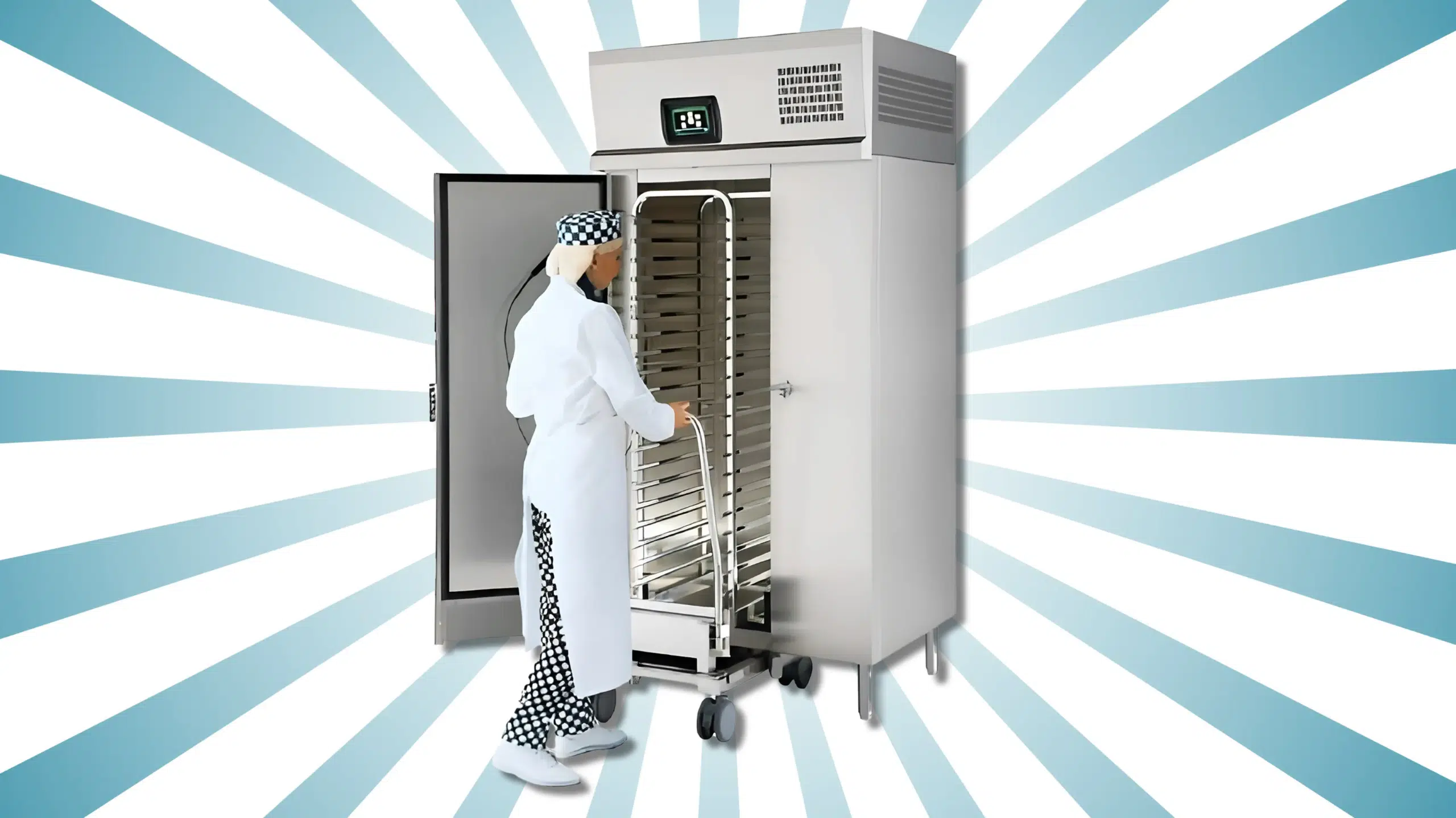
According to recent food industry statistics, approximately 1.3 billion tonnes of food is wasted globally each year, with improper cooling contributing to nearly 30% of this waste in commercial kitchens. Understanding how blast chillers work and implementing them effectively can significantly reduce these losses while ensuring food safety.
The Science Behind How Blast Chillers Work
A blast chiller works by circulating high-velocity cold air around food items, rapidly reducing their temperature from 70°C to 3°C within 90 minutes. This rapid cooling process, which moves air at speeds of up to 3 meters per second, is crucial for food safety. Research shows that traditional refrigeration methods can take up to 4 hours to achieve the same temperature reduction, leaving food in the dangerous temperature zone (8°C to 63°C) for too long.
Key Components of How Blast Chillers Work:
- High-Velocity Fans: Generate airflow speeds of 2-3 m/s (compared to 0.3 m/s in standard fridges)
- Powerful Compressors: Typically 2-3 times more powerful than standard refrigeration
- Advanced Temperature Probes: Accurate to within ±0.3°C
- Optimised Air Distribution: Multiple air flow channels for uniform cooling
The Critical Difference in How Commercial Blast Chillers Work
Understanding how blast chillers work differently from standard refrigeration is crucial for food safety. Studies by the FDA show that reducing food temperature from 60°C to 10°C within two hours reduces bacterial growth by up to 90% compared to conventional cooling methods.
Temperature Reduction Speed:
- – Blast Chiller: 70°C to 3°C in 90 minutes
- – Standard Refrigerator: 70°C to 3°C in 4-6 hours
Scientific Benefits of Understanding How Blast Chillers Work
Recent research published in the Journal of Food Science demonstrates several key advantages:
- Microbial Control
- – Reduces bacterial growth by up to 98% compared to conventional cooling
- – Extends shelf life by an average of 5-7 days
- Crystal Formation
- – Creates microscopic ice crystals (2-3 micrometers)
- – Traditional freezing produces crystals 15-20 micrometers in size
- – Results in 40% less cellular damage
- Energy Efficiency
- – Uses 25% less energy per kg of food compared to traditional cooling
- – Achieves optimal temperature in 1/4 of the time
Commercial Applications: How Do Blast Chillers Work in Different Settings?
Understanding how blast chillers work in various commercial settings is essential for maximizing their benefits:
Restaurants (40% of users):
- ● Average daily usage: 50-100kg of food
- ● Energy savings: £200-£300 monthly
- ● Food waste reduction: 25-30%
Hotels (30% of users):
- ● Daily capacity: 100-200kg
- ● Labor cost reduction: 15-20%
- ● Prep time savings: 2-3 hours daily
Catering (20% of users):
- ● Event preparation: Up to 500kg per session
- ● Quality improvement: 40% better texture retention
- ● Storage time extension: 5-7 days
Latest Technological Advances in How Blast Chillers Work
Modern blast chillers incorporate smart technology that optimizes the cooling process:
- ● AI-driven temperature control (±0.1°C accuracy)
- ● IoT monitoring capabilities
- ● Energy consumption tracking
- ● HACCP data logging
- ● Variable fan speed control
Making the Right Choice for Your Business
When selecting a blast chiller, understanding how blast chillers work helps in choosing the right model. Consider these factors:
- Capacity Requirements
- – Small operations: 10-20kg per cycle
- – Medium operations: 20-50kg per cycle
- – Large operations: 50kg+ per cycle
- Space Efficiency
- – Undercounter models: 0.6m²
- – Reach-in units: 1-1.5m²
- – Roll-in systems: 2m²+
Understanding how blast chillers work is crucial for modern food service operations. With the global commercial blast chiller market projected to reach £2.1 billion by 2027 (growing at 8.5% CAGR), investing in this technology isn’t just about compliance – it’s about staying competitive while ensuring food safety and quality.
Want to learn more about how blast chillers work for your specific operation? Contact our experts for a detailed consultation and site survey.

Written by
Ali Elm
Ali is the Head of Operations at Be Cool Refrigeration with over a decade of hands-on experience in HVAC and commercial refrigeration. He oversees every installation, repair, and maintenance project, making sure the work meets the highest standards. Ali holds full F-Gas certification and has worked across residential, commercial, and industrial refrigeration systems throughout London and the South East. When he is not on site, he writes these guides to help business owners and homeowners understand their cooling systems better.