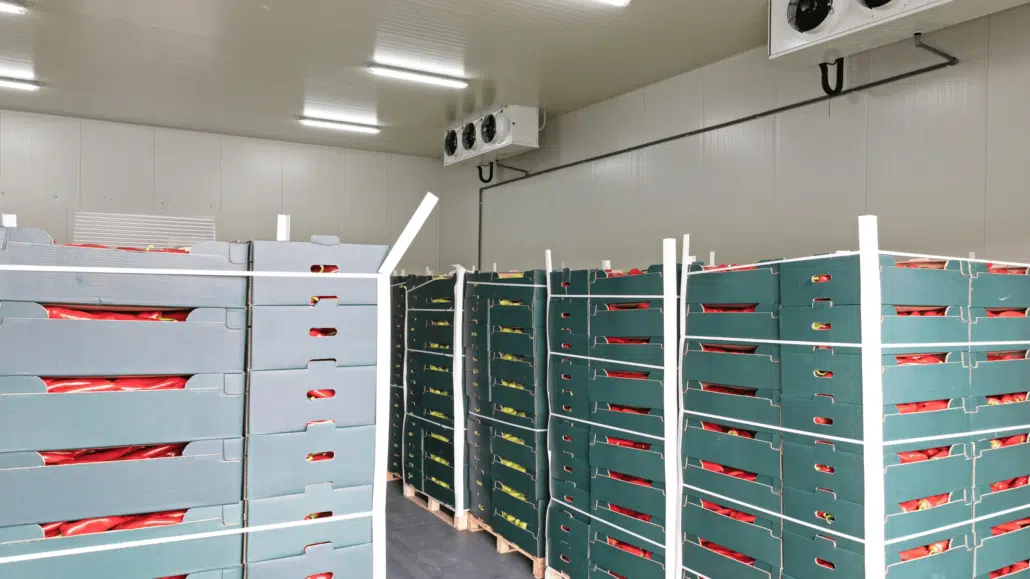
At Be Cool Refrigeration, we’ve been installing custom cold room solutions since 2004. Over the past two decades, we’ve helped hundreds of businesses improve their operations with properly designed and installed cold storage facilities.
“When I first started in this industry, I noticed many business owners viewed cold rooms simply as a necessary expense,” says Ali, our Head of Operations. “Twenty years later, I’ve seen firsthand how the right cold storage solution transforms a business from the inside out.”
This guide will walk you through the key advantages of installing a professional cold room for your business, helping you make an informed decision based on facts rather than sales talk.
What Exactly Is a Cold Room?
Before discussing benefits, let’s clarify what we mean by a “cold room.” A cold room is a specially constructed, insulated enclosure designed to maintain controlled low temperatures. Unlike regular refrigerators, cold rooms are walk-in spaces that allow for bulk storage of temperature-sensitive products. They can be customised to maintain specific temperature ranges depending on your business needs.
“I remember installing a cold room for a small farm shop in 2006,” Ali recalls. “The owner initially wanted just enough space for weekend stock. When we showed him how a properly designed cold room could help him store seasonal produce for months longer, he completely rethought his business model. That shop is now a regional supplier with three cold rooms!”
Key Benefits of Cold Rooms for Your Business
1. Increased Storage Capacity
One of the most immediate benefits of installing a cold room is the dramatic increase in storage capacity. Unlike standard commercial refrigerators, cold rooms offer:
- – Floor-to-ceiling storage opportunities
- – Customisable shelving arrangements
- – Ability to store palletised goods
- – Space for bulk ingredients or finished products
This expanded capacity allows businesses to purchase ingredients or supplies in larger quantities, potentially leading to significant bulk purchase discounts. For restaurants, food manufacturers, and flower shops alike, having the ability to store more inventory can transform your purchasing strategy.
“We installed a cold room for a restaurant that was spending hours managing deliveries every day,” says Ali. “With their new storage capacity, they switched to twice-weekly deliveries, saving on both delivery costs and staff time. The chef told me it was like gaining an extra staff member without paying another salary!”
2. Superior Temperature Control
In our experience installing cold rooms since 2004, we’ve found that precise temperature control is crucial for many businesses. Cold rooms offer:
- – Highly stable temperature conditions
- – Customisable temperature settings (typically from -25°C to +15°C)
- – Zone-specific cooling for different product needs
- – Better recovery times after door openings compared to standard refrigerators
For businesses handling sensitive products like dairy, meat, vaccines, or certain chemicals, this level of temperature precision isn’t just convenient—it’s essential for product integrity and safety.
“Temperature fluctuation is the silent profit killer,” Ali often tells our new clients. “Just last month, we helped a specialty cheese shop that was losing product weekly due to poor temperature control. Their conventional refrigeration couldn’t handle frequent door openings. After installing our solution, they haven’t lost a single wheel of cheese to temperature issues.”
3. Energy Efficiency
Modern cold rooms are surprisingly energy-efficient, especially when properly installed by experienced professionals. Energy savings come from:
- – Superior insulation materials that maintain temperatures with less power
- – Energy-efficient cooling systems designed for the specific space
- – Smart controllers that optimise cooling cycles
- – Motion-activated lighting systems
- – Proper door seals and rapid-closing mechanisms
Over time, these efficiency features can significantly reduce operational costs. Many of our clients report electricity savings of 15-30% compared to multiple stand-alone refrigeration units delivering the same capacity.
“It always surprises business owners when I tell them a properly designed cold room can use less energy than the collection of fridges they’re currently running,” Ali explains. “One hotel we worked with cut their refrigeration energy costs by nearly 40% after switching to our centralised cold room system.”
4. Extended Product Shelf Life
Perhaps the most valuable benefit for food-related businesses is the significant extension of product shelf life. Cold rooms provide:
- – More stable temperatures than conventional refrigerators
- – Less temperature fluctuation during access
- – Better humidity control
- – Reduced risk of cross-contamination
These factors combine to keep products fresher for longer. For restaurants and food producers, this means less waste, more consistent product quality, and ultimately better profit margins.
“The proudest moment in my career was when a small organic farm told us our cold room had changed their entire business,” shares Ali. “Before, they had to sell everything within days of harvest. With proper cold storage, they could store certain crops for months, extending their selling season and increasing their annual revenue by about 30%.”
5. Compliance with Food Safety Regulations
For businesses in the food and beverage industry, regulatory compliance isn’t optional. Professional cold rooms help ensure compliance with:
- – HACCP (Hazard Analysis and Critical Control Points) requirements
- – Food Standards Agency regulations
- – Local health department guidelines
- – Industry-specific certification standards
Since 2004, we’ve helped hundreds of businesses meet and exceed their regulatory requirements through properly designed cold storage solutions.
Ali notes, “During inspections, health officials are increasingly looking at temperature logs and storage conditions. One of our pub clients recently told me that the inspector specifically commented on their excellent cold room setup during their latest visit. That kind of peace of mind is invaluable for any food business.”
6. Specialised Solutions for Aging Products
For businesses involved in aging products like cheese, wine, or charcuterie, cold rooms offer specialised benefits that standard refrigeration simply cannot match.
“Aging rooms require exceptionally precise control of both temperature and humidity,” Ali emphasises. “We’ve worked with several artisanal food producers who need these specialised environments to create their premium products.”
These aging environments often require additional features such as specialised evaporator coatings and dehumidifiers to prevent corrosion and maintain the perfect conditions throughout the aging process.
“A cheesemaker we worked with was having issues with their aging room affecting the quality of their specialty blue cheese,” recalls Ali. “Once we installed the proper evaporator coatings and humidity control systems, they saw a remarkable improvement in consistency and quality. These small details make an enormous difference in the final product.”
7. Scalability for Growing Businesses
From our experience working with growing businesses, we’ve seen how important scalability is. Cold rooms offer:
- – Modular designs that can be expanded later
- – Ability to add zones or partitions as needs evolve
- – Options to upgrade cooling systems as demand increases
- – Potential for integration with production or distribution systems
This scalability means your initial investment can grow with your business rather than being replaced entirely when you outgrow it.
“I always advise clients to think about where they’ll be in five years,” says Ali. “We recently expanded a cold room for a bakery we initially installed in 2015. Because we planned ahead, they were able to double their capacity without disrupting their operation or starting from scratch.”
8. Enhanced Workflow and Productivity
Well-designed cold rooms significantly improve staff workflow and productivity:
- – Walk-in access eliminates the need to constantly open and close refrigerator doors
- – Organised storage systems make inventory management more efficient
- – Wider aisles and better lighting improve picking speed
- – Reduced product damage from cramped conditions
- – Less time spent managing temperature manually
Many of our clients report that staff efficiency improvements alone justify their cold room investment within the first year of operation.
“A restaurant manager once timed his staff before and after we installed their cold room,” Ali recounts with a smile. “They were saving nearly 90 minutes every day just in reduced time spent searching for and retrieving ingredients. That’s over 500 hours a year of staff time redirected to actually cooking and serving customers!”
9. Reduced Food Waste
Food waste is both an environmental concern and a significant cost for many businesses. Cold rooms help reduce waste through:
- – More accurate temperature control preventing premature spoilage
- – Better organisation reducing the risk of forgotten inventory
- – Improved stock rotation capabilities
- – Longer shelf life for sensitive products
With food costs continuing to rise, reducing waste has become an increasingly important benefit of proper cold storage.
“The environmental impact matters to me personally,” Ali shares. “When a client tells us they’ve reduced their food waste by 30% after installing our cold room, I know we’re doing something that benefits their business and the planet. One hotel we worked with estimated they saved over £20,000 in reduced waste in the first year alone.”
10. Increased Property Value
For business owners who own their premises, a professionally installed cold room can increase property value. Unlike many business improvements that depreciate quickly, well-maintained cold rooms are considered capital improvements that add long-term value.
“I’ve had several clients sell their businesses over the years,” notes Ali. “Almost without exception, they tell me that their cold room was specifically mentioned as a valuable asset during the sale process. One pub owner even told me he recouped 150% of his initial investment in the final sale price.”
11. Humidity Management for Product Quality
Proper humidity control is another crucial benefit of professional cold rooms. Different products require different humidity levels to maintain optimal quality and shelf life.
“Many clients don’t realise that temperature is only half the storage equation,” Ali points out. “For sensitive products like cheese, wine, or certain produce, humidity management is just as important as temperature control.”
For example, meats and dairy products typically require lower humidity levels to prevent bacterial growth, while fruits and vegetables often need higher humidity to maintain freshness and prevent dehydration.
“We recently installed a cold room for a high-end chocolatier who was struggling with chocolate bloom due to humidity fluctuations,” explains Ali. “Their new system maintains perfect conditions, allowing them to store finished products longer without quality issues.”
For businesses concerned about excessive moisture, dehumidifiers can be effective solutions in cold rooms, protecting both products and equipment from condensation and moisture-related damage.
Common Applications for Cold Rooms
Over our years in business, we’ve installed cold rooms for a wide variety of industries:
Food and Beverage:
- ● Restaurants and catering companies
- ● Bakeries and confectioneries
- ● Butchers and meat processors
- ● Breweries and distilleries
- ● Farm shops and produce suppliers
Floral and Horticultural:
- ● Florists and flower wholesalers
- ● Garden centres and nurseries
- ● Flower farms and importers
Scientific and Medical:
- ● Laboratories and research facilities
- ● Pharmacies and medical supplies
- ● Vaccine storage facilities
Industrial and Manufacturing:
- ● Chemical storage
- ● Food manufacturing
- ● Beverage production
- ● Product testing facilities
“The diversity of applications is what keeps this job interesting,” says Ali. “One week I’m designing a solution for storing delicate orchids, and the next I’m working on a system for a craft brewery. Each project brings unique challenges and rewards.”
Making the Right Choice for Your Business
When considering a cold room investment, we recommend evaluating these factors:
- Current and future storage needs: Think not just about today’s requirements but where your business will be in 3-5 years.
- Space availability: Cold rooms can be designed for various spaces, including unusually shaped areas, but available space will influence design options.
- Energy costs: Consider the long-term running costs along with the initial investment.
- Specific temperature requirements: Different products require different conditions—be clear about your needs.
- Installation logistics: Professional installation minimises disruption and ensures optimal performance.
“The biggest mistake I see is businesses focusing solely on initial price,” Ali cautions. “I always encourage clients to calculate the total cost of ownership over at least five years. When you factor in energy savings, reduced waste, and increased productivity, the best solution often isn’t the cheapest upfront, but it delivers the greatest value over time.”
After nearly two decades of installing cold room solutions for businesses across various industries, we’ve seen firsthand how the right cold storage system can transform operations, improve product quality, reduce waste, and ultimately boost profitability.
While the initial investment may seem significant, the long-term benefits increased storage capacity, energy efficiency, extended product shelf life, improved workflow, and regulatory compliance typically offer an excellent return on investment.
“What I find most rewarding,” Ali reflects, “is visiting clients years after installation and seeing how our work has helped their business grow. Cold storage might not be the most glamorous aspect of a business, but it’s often the foundation that enables everything else to run smoothly.”
At Be Cool Refrigeration, we take the time to understand your specific needs before recommending solutions. Our team is always available to discuss options no pressure, no jargon. Just practical advice and reliable service.
UK Food Safety and Refrigeration Regulations
If you store food commercially in the UK, maintaining correct refrigeration temperatures is a legal requirement. Here are the key resources:
- Food Standards Agency: Temperature control guidance - Legal temperature requirements for food storage and display.
- FSA: HACCP guidance - How to build temperature monitoring into your food safety management system.
- UK Government: F-Gas regulations - Requirements for leak checking and maintaining refrigeration systems containing F-gases.

Written by
Ali Elm
Ali is the Head of Operations at Be Cool Refrigeration with over a decade of hands-on experience in HVAC and commercial refrigeration. He oversees every installation, repair, and maintenance project, making sure the work meets the highest standards. Ali holds full F-Gas certification and has worked across residential, commercial, and industrial refrigeration systems throughout London and the South East. When he is not on site, he writes these guides to help business owners and homeowners understand their cooling systems better.