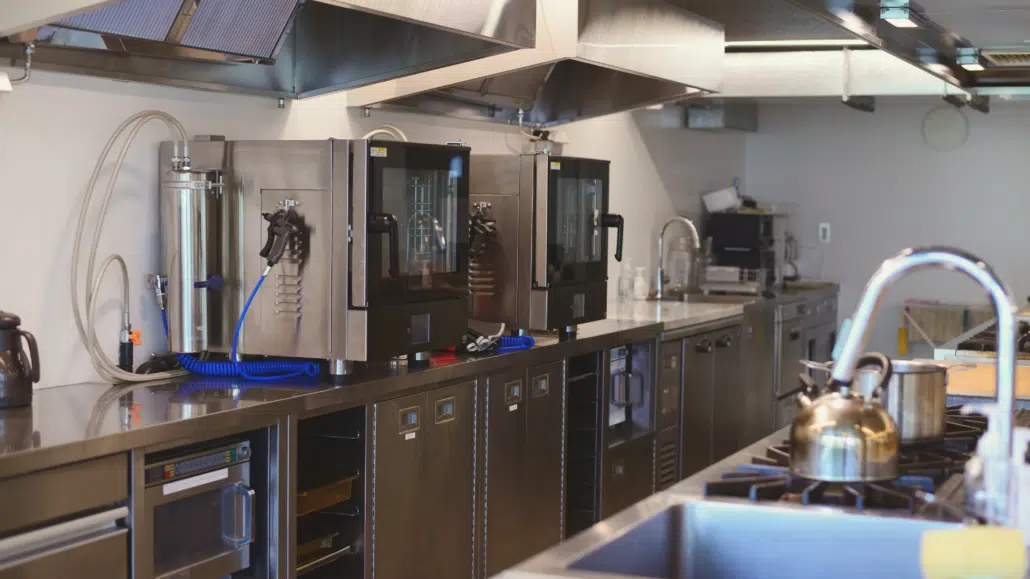
A new blast chiller in the UK costs from around £1,400 ex VAT for a small countertop unit to roughly £4,400 to £7,800 for a reach-in cabinet, and £13,000 or more for a roll-in model, based on prices listed by UK catering equipment suppliers in November 2026. Capacity, whether it also blast freezes, and the brand make most of the difference.
The price on the listing is only part of the cost. Installation, the electrical supply, servicing and how well the unit matches your kitchen's volumes all decide whether it pays its way. This guide covers each, with links to the listings so you can check current prices yourself.
Blast chiller prices at a glance
| Type | Typical use | Listed price, ex VAT (November 2026) | Example |
|---|---|---|---|
| Countertop | Small kitchens, cafés, a few trays per cycle | From about £1,400 | Polar G-Series CK640, 8 kg chill / 5 kg freeze, listed at £1,395.99 |
| Reach-in cabinet | Restaurants, pubs, schools, care homes | About £4,400 to £7,800 | Williams reach-in models from £4,436.99, Foster reach-in models from £5,307.99 to £7,823.99 |
| Roll-in | Central production kitchens, hotels, hospitals, cook-chill operations | From about £13,000 | Modular roll-in units listed from £15,910.99 |
These are retailers' listed prices at the time of writing, not quotes, and they change often. Manufacturers' list prices are usually much higher than the prices retailers actually charge, so compare like for like. Add VAT at 20% if your business cannot reclaim it.
What drives the price
- Capacity per cycle. Measured in kilograms of food chilled or frozen per cycle, usually alongside the number of gastronorm trays. Doubling capacity roughly moves you up a size class.
- Chill only, or chill and freeze. Combined blast chiller and shock freezer models cost more than chill-only units of the same size.
- Controls. Core temperature probes, programmes for different foods, and HACCP data logging or connectivity add cost and save paperwork.
- Construction and brand. Stainless steel grade, door design, and the support network behind the brand.
- Refrigeration. Integral units are self-contained. Remote condensing units move the heat and noise out of the kitchen but need installing by a refrigeration engineer.
- Roll-in compatibility. Roll-in models are sized for trolleys, which suits high-volume production but needs the floor space and a level threshold.
The costs after you buy it
- Installation. Countertop and most reach-in units plug in, but they need the right electrical supply, clearance for airflow, and somewhere for condensate to go. Remote systems and roll-ins need refrigeration pipework and commissioning by an F gas certified engineer.
- Electricity. A blast chiller works hardest at the start of each cycle, when hot food goes in. The more cycles a day, the more it costs, and an undersized unit run back to back costs more than a correctly sized one.
- Servicing. Condenser coils clogged with kitchen grease are a common reason blast chillers start missing their times. Planned commercial refrigeration maintenance keeps cycle times and running costs where they should be.
- Repairs. Check what the warranty covers, how long it lasts and what servicing it requires before you buy.
Why kitchens buy one: the food safety case
Cooling cooked food slowly is one of the classic causes of food poisoning, because bacteria grow fastest between 8°C and 63°C. GOV.UK's guidance on chilling and freezing says chilled food must be held at 8°C or below, which "is a legal requirement in England, Wales and Northern Ireland", and its cooking guidance says hot food that is not being served should be cooled "as quickly as possible to 8°C or below".
A blast chiller does that far faster than a standard fridge, which is not designed to take hot food. Manufacturers rate their cabinets on a standard cycle. Foster, for example, publishes its range as able to blast chill from +70°C to +3°C in 90 minutes. Our guide to the cook-chill process and blast chilling explains how those ratings relate to the law and to your HACCP plan.
How to size a blast chiller
- Work out the volume. How many kilograms of cooked food need chilling at the busiest point of the day, and how many trays that fills.
- Allow for cycle time. If a cycle takes around 90 minutes, count how many cycles you can fit between cooking and service.
- Decide on freezing. If you batch cook and freeze, a combined chiller and freezer avoids a second machine.
- Check the space and services. Floor space, door swing, ventilation around the unit, power supply and drainage.
- Size up rather than down. Overloading a small unit is how chill times slip and food stays warm for too long.
New, refurbished or second-hand
Refurbished and used blast chillers are cheaper, but check three things before buying: the refrigerant it runs on, whether it still achieves its rated chill time, and what warranty comes with it. An older unit on a high-GWP refrigerant can be expensive to service, and one that no longer hits its times is a food safety problem rather than a bargain.
Paying for it
For businesses, VAT on equipment is usually recoverable, and the cost of plant and machinery such as a blast chiller can normally be claimed through capital allowances, including the annual investment allowance. Our guide to capital allowances explains how they work for building services and equipment, and your accountant will confirm what applies. Leasing and finance are also widely offered by suppliers.
Questions people ask about blast chiller costs
How much does a blast chiller cost in the UK?
Based on UK catering suppliers' listings in November 2026, countertop units start at around £1,400 ex VAT, reach-in cabinets run from roughly £4,400 to £7,800, and roll-in models start at around £13,000. Prices vary with capacity, freezing capability and brand.
What is the cheapest type of blast chiller?
Countertop models, which handle a few trays per cycle and start at around £1,400 ex VAT. They suit small kitchens, but a busy kitchen that overloads one will struggle to hit safe chill times.
Is a blast chiller worth it for a small restaurant?
Usually, if you cook food in advance and cool it before service. It cools food far faster than a standard fridge, protects stock in the fridges you already have, and makes your cooling records easier to keep. If you cook everything to order, you may not need one.
Can I put hot food in a normal fridge instead?
Standard fridges are not designed to remove heat from hot food quickly, and putting large quantities in warms everything else inside. GOV.UK's guidance is to cool food as quickly as possible to 8°C or below, which is the job a blast chiller is built for.
How long does a blast chiller take to chill food?
Manufacturers rate their cabinets on standard cycles, typically from +70°C to +3°C in 90 minutes for chilling. Real times depend on the food, its depth in the tray, the load and how well the unit is maintained.
Choosing and looking after a blast chiller
If you are choosing a blast chiller for a London kitchen, or yours has started missing its times, our blast chiller service covers supply, installation and repair. For how the cycle actually works, see our guide to how a blast chiller works.
Last updated: 4 November 2026

Written by
Ali Elm
Ali is the Head of Operations at Be Cool Refrigeration with over a decade of hands-on experience in HVAC and commercial refrigeration. He oversees every installation, repair, and maintenance project, making sure the work meets the highest standards. Ali holds full F-Gas certification and has worked across residential, commercial, and industrial refrigeration systems throughout London and the South East. When he is not on site, he writes these guides to help business owners and homeowners understand their cooling systems better.