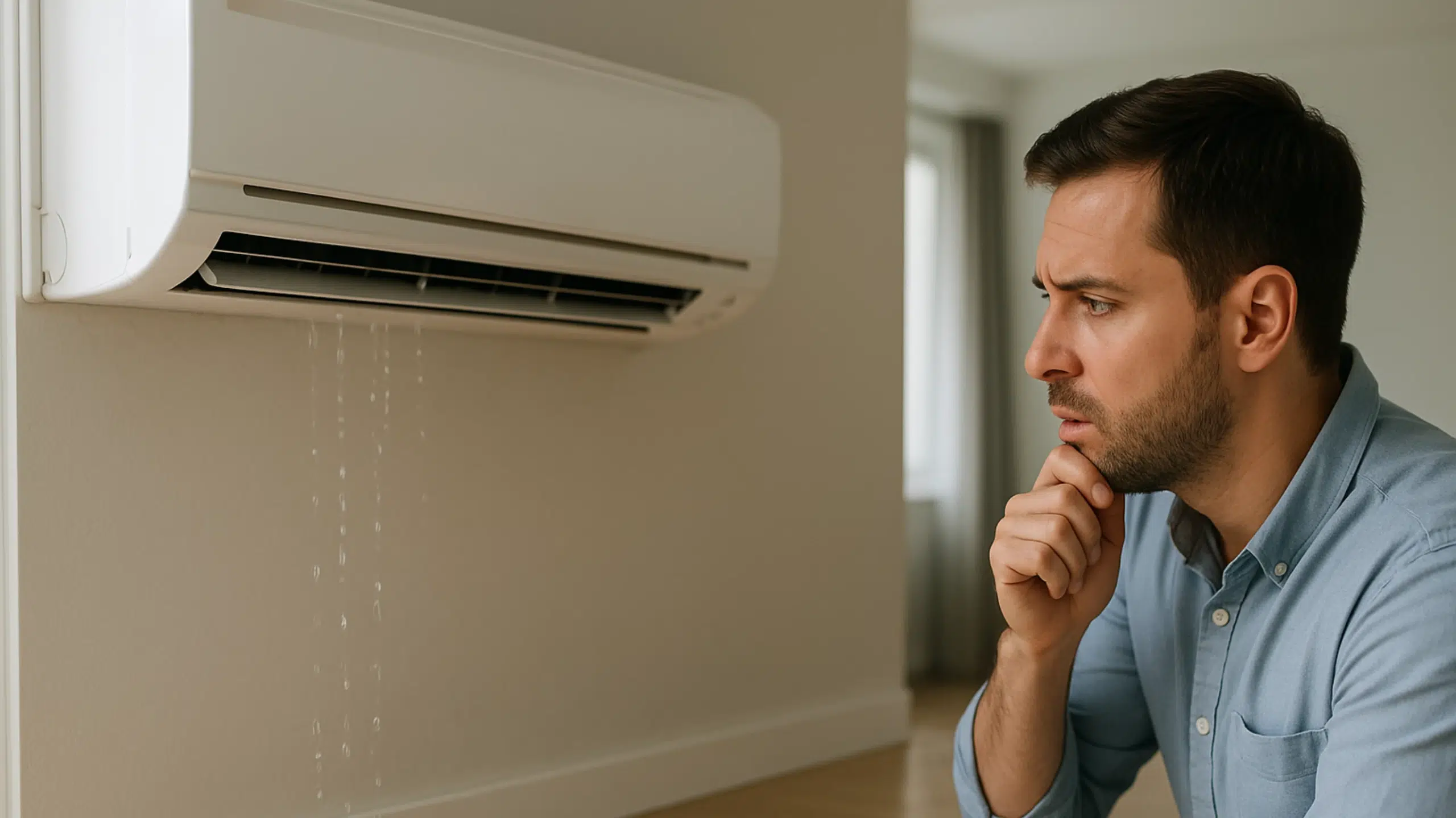
Why your air conditioner makes water in the first place
When warm, humid indoor air hits your system’s icy‑cold evaporator coil, the moisture condenses, just like beads on a cold glass. That water drips into a drain pan and exits through a condensate line. Any hiccup in that simple journey can send water places it shouldn’t be.
Is it ever “normal” for an AC to leak?
A few drops outdoors on a sweltering day? Totally fine. Water pooling indoors, dripping from ceiling vents, or staining walls is never okay. Left unchecked, leaks invite mold, rot drywall, and even short‑out electronics.
7 common reasons your AC is leaking water
| # | Culprit | How it causes the leak | Quick check |
|---|---|---|---|
| 1 | Clogged condensate drain line | Dirt, algae or pet hair blocks the pipe; water backs up and overflows | Locate the PVC drain and flush with warm distilled‑vinegar water. |
| 2 | Cracked or rusted drain pan | Old steel pans corrode, letting water escape before it reaches the drain | Shine a flashlight underneath; replace if rusted through. |
| 3 | Dirty air filter | Starved airflow freezes coils; ice melts and floods the pan | Swap filters every 30–60 days. |
| 4 | Frozen evaporator coil | Low refrigerant or poor airflow ices the coil, then melts | Look for frost on the indoor unit; let it thaw and call a pro for refrigerant check. |
| 5 | Low refrigerant | Pressure drops, temperature plunges, coil freezes | Symptoms: hissing noises, warm air from vents, high bills. Requires licensed technician. |
| 6 | Broken condensate pump (for basements/attics) | Pump can’t lift water up to an exterior drain | Listen for silence where a faint hum used to be; replace pump. |
| 7 | Improper installation or unlevel unit | Tilted unit makes water spill over the pan edge instead of into the drain | Check that the air handler sits level; shim if necessary. |
Three DIY checks before you ring an HVAC tech
- Power down the unit at the breaker, safety first.
- Replace the air filter. A £10 filter often solves a £300 water damage problem.
- Do the “vac test.” Attach a wet/dry‑vac to the condensate line outside and pull for 30 seconds. A sludge‑filled canister means you just cleared the clog and possibly saved yourself a service fee.
Power down the unit at the breaker, safety first.
Replace the air filter. A £10 filter often solves a £300 water damage problem.
Do the “vac test.” Attach a wet/dry‑vac to the condensate line outside and pull for 30 seconds. A sludge‑filled canister means you just cleared the clog and possibly saved yourself a service fee.
If water’s still dripping after those steps or you see ice, smell mildew, or notice breakers tripping, bring in a professional. Leaks can signal deeper issues like refrigerant loss or failing coils that only certified technicians should tackle.
Pro‑level fixes you shouldn’t DIY
- Refrigerant recharge or leak repair
- Drain‑pan replacement on older units
- Condensate pump installation or wiring
- Leveling a mis‑set air handler
Technicians have the gauges, vacuums, and EPA‑approved refrigerants to do the job right and protect your warranty.
Need help with any of these jobs? Schedule expert air conditioning repair with our certified technicians
Keep your aircon leaking water woes away with routine maintenance
- Change filters at the start of every season, or monthly during pollen season, using our step‑by‑step guide to an air‑conditioning filter change.
- Pour a cup of vinegar into the condensate line quarterly to deter algae.
- Clean outdoor coils with a gentle garden‑hose spray (never pressure‑wash).
- Schedule an annual tune‑up each spring to catch small drain or refrigerant issues before they soak your drywall.
Change filters at the start of every season, or monthly during pollen season, using our step‑by‑step guide to an air‑conditioning filter change.
Pour a cup of vinegar into the condensate line quarterly to deter algae.
Clean outdoor coils with a gentle garden‑hose spray (never pressure‑wash).
Schedule an annual tune‑up each spring to catch small drain or refrigerant issues before they soak your drywall.
An AC leaking water isn’t just annoying, it’s a red flag. A clear drain line, clean filter, and healthy refrigerant charge keep water where it belongs: outside. So if you walk in to the sound of an unexpected indoor rainstorm, act quickly, shut the system off, try the simple checks above, and call a trusted HVAC pro if the drip persists. Your wallet and your drywall will thank you.
FAQ's
How do I stop my air conditioner from leaking water?
Can I still use my AC if it’s leaking water?
Why is my central AC system leaking water?
Is it normal for AC to leak water?
How to Change my Photo from Admin Dashboard?
Why is my AC leaking water inside my house?
How do I unclog my AC drain line?
What can I do to keep condensed moisture from dripping out of my AC vent?
How long will an AC last with a leak?
Should I turn off my AC if it’s leaking?
Is an AC leak serious?

Written by
Ali Elm
Ali is the Head of Operations at Be Cool Refrigeration with over a decade of hands-on experience in HVAC and commercial refrigeration. He oversees every installation, repair, and maintenance project, making sure the work meets the highest standards. Ali holds full F-Gas certification and has worked across residential, commercial, and industrial refrigeration systems throughout London and the South East. When he is not on site, he writes these guides to help business owners and homeowners understand their cooling systems better.