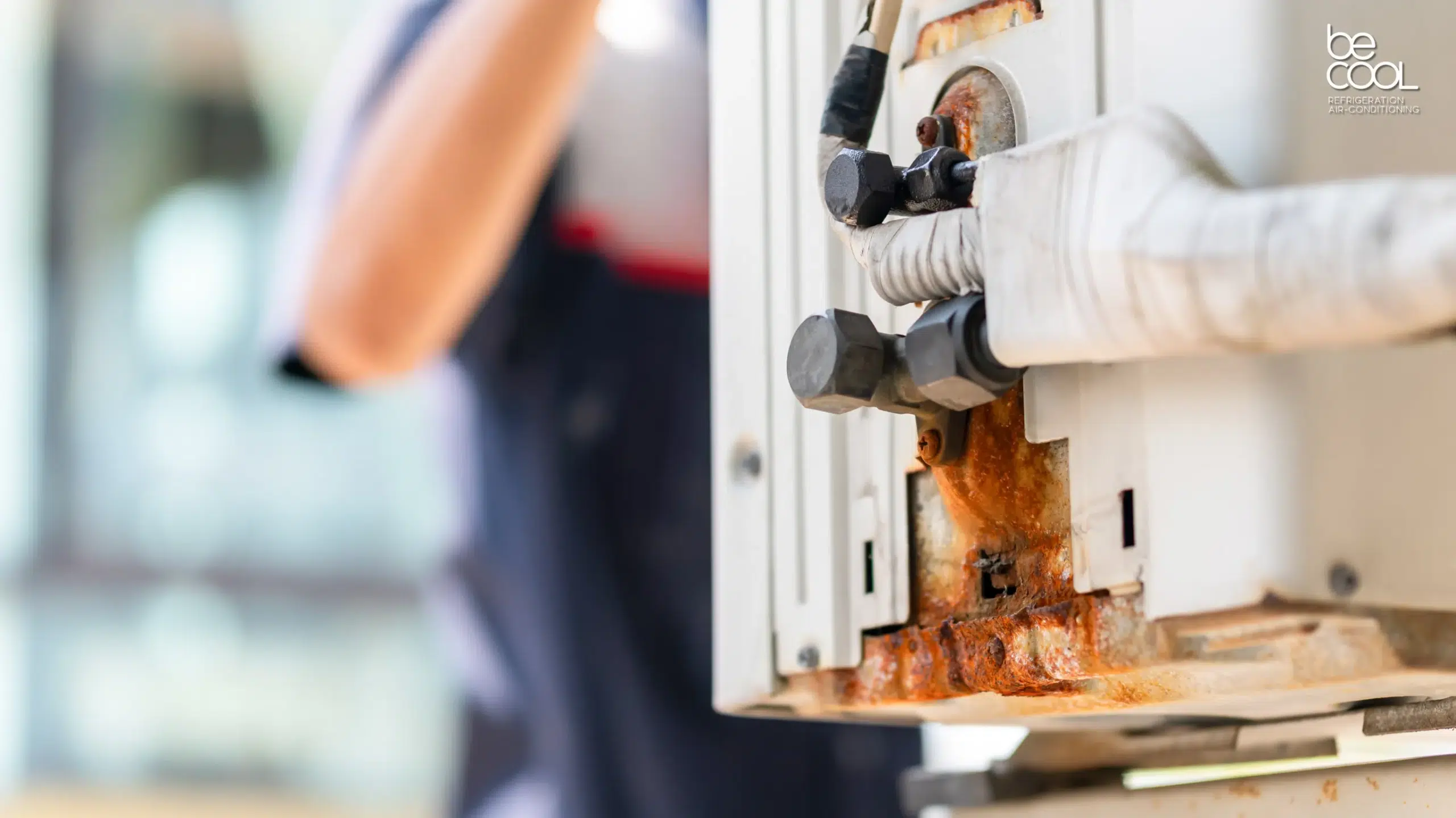
An air conditioner leaks water from the indoor unit when the condensate it makes in cooling mode cannot drain away properly. The usual causes are a blocked, bent or loose drain hose, a dirty air filter, a failed condensate pump or a unit that is not level. Switch it off, catch the water, and check whether water is coming out of the drain hose outside. Water dripping from the outdoor unit is usually normal.
This guide covers where the water comes from, what you can check yourself, what manufacturers such as Daikin, LG and Panasonic advise, and when it needs an engineer.
At a glance
| What you see | Likely cause | What to do |
|---|---|---|
| Water dripping from the indoor unit, nothing coming out of the drain outside | Blocked, bent or kinked drain hose | Switch off and clear the end of the hose. If that does not fix it, call an engineer |
| Water dripping from the indoor unit, drain outside is running | Dirty air filter, or high humidity | Clean the filters and see if it stops |
| Water from a ceiling cassette or ducted unit, sometimes with an error code | Condensate pump or float switch fault | Switch off and call an engineer |
| Ice on the indoor coil, then water when it melts | Blocked airflow or a refrigerant problem | Clean the filters. If it ices again, call an engineer |
| Water dripping from the outdoor unit | Normal condensation in cooling, or defrost water in heating | No action, unless it is pooling somewhere it causes a problem |
Why an air conditioner makes water
In cooling mode, the indoor coil is colder than the air passing over it, so moisture in the air condenses on it, the same way water forms on a cold glass. That water runs into a drip tray and away through a drain hose, either by gravity or with a small condensate pump. On a humid day, an air conditioner can produce a surprising amount of it.
A leak means that water is not getting away. Either the drain path is blocked, the water is going somewhere it should not, or the unit is making more water than usual. LG's UK support guide on water dripping notes that some condensation is normal in cooling mode, and that there is more of it when indoor humidity is high.
The common causes
A blocked, bent or loose drain hose
This is the most common cause. Daikin's troubleshooting guide says that obstructions and bends in the drain hose or the drainage path can stop water draining, and Panasonic's guidance says the drain pipe should not be blocked or bent, and that dirt collected in it may need cleaning by authorised service personnel. LG adds that a loose or damaged drain hose should be reconnected securely, that a hose lying long and flat can sag and trap water, and that if the hose runs into a container, its end must not sit under water, or water can flow back into the unit.
A dirty air filter
Daikin says that if the indoor unit's air filter is dirty, condensate can form and leak from the air outlet, which is why the filters need regular cleaning. LG makes a second point: dust from a dirty filter can mix with the water and clog the drain hose. Daikin recommends cleaning the filters every 2 weeks, and LG at least twice a month.
A failed condensate pump
Ceiling cassettes, ducted units and wall units with no fall to a drain use a condensate pump to lift the water away. If the pump fails or its float switch sticks, the tray fills and overflows. Many units stop and show a code when this happens, such as A3 on Daikin or P5 on a Mitsubishi Electric Mr Slim, which our guides to Daikin error codes and Mitsubishi Electric error codes explain. Our guide to condensate pumps covers how they work and why they fail.
Ice on the coil
If too little air passes over the indoor coil, it can get cold enough to freeze. When the ice melts, more water arrives than the tray and drain can handle. A clogged filter is the simplest reason. A low refrigerant charge can also make the coil ice up, and that means a leak to find and repair, which needs an F gas qualified engineer.
Installation problems
The indoor unit needs to sit level, or tilted very slightly towards the drain, and the drain needs a steady fall all the way. A unit that has been knocked, moved or fitted without enough fall can leak even when everything else is clean. Leaks that start soon after an installation usually come back to this.
Humidity and how the unit is set
LG says condensation can form on the vents when the room is very humid, for example with doors left open in wet weather, and that it stops once the humidity drops or the room reaches its set temperature. It suggests avoiding a narrow vane angle with a low fan speed for long periods on hot, humid days, and setting the vents wider with a higher fan speed instead.
What to do when it starts leaking
- Switch it off. Daikin advises not using the air conditioner while it leaks, because the water can damage floors, walls and furnishings.
- Catch the water. Put down a bucket or towels until it stops.
- Check the drain outside. Daikin's first check is whether water is coming out of the drain hose outside, and to clear anything blocking its end.
- Clean the filters. Follow the user manual for your model.
- Look at the hose. Make sure it is connected, not kinked, and not sitting in water.
- Note any code. If the unit shows an error code, write it down with the model number.
Do not open the unit or try to clear the drain from inside it. Daikin's advice, if water still is not draining, is to contact the installer or Daikin for a service.
Water from the outdoor unit
Daikin explains that in cooling mode, the pipes in the outdoor unit get cold and condensation can drip from it, and that in heating mode, the outdoor unit melts the frost that builds up on it and discharges it as water or steam. Neither is a fault. It is only worth acting on if the water is running somewhere it causes a slip hazard or damage, in which case an engineer can fit a drain from the base of the unit.
Commercial systems
In offices, shops and restaurants, a leaking cassette above a ceiling is more than a nuisance. Water can stain ceiling tiles, drip onto stock or equipment and create a slip hazard, so switch the unit off straight away and keep people clear of the area. Planned air conditioning maintenance includes cleaning filters, flushing drains and testing condensate pumps, which prevents most leaks before they start.
When to call an engineer
- The unit still leaks after the filters are clean and the drain outlet is clear.
- No water is coming out of the drain outside while the unit is cooling.
- A cassette or ducted unit is leaking, or shows a drain or float switch code.
- Ice keeps forming on the indoor coil.
- The leak started after the unit was installed, moved or knocked.
Our air conditioning repair engineers find and fix leaks on wall, cassette and ducted systems across London.
Questions people ask about air conditioners leaking water
Why is my air conditioner leaking water inside?
Usually because the condensate it makes cannot drain away. Daikin and Panasonic both point first to a blocked or bent drain hose, and Daikin and LG to a dirty air filter. On cassettes and ducted units, a failed condensate pump is also common.
Is it normal for an air conditioner to drip water?
From the outdoor unit, yes: Daikin says condensation drips from it in cooling and defrost water comes from it in heating. From the indoor unit, no. Water inside the room means something is stopping the condensate draining.
Can I still use my air conditioner if it is leaking?
Daikin advises against it, because the water can damage floors, walls and furnishings. Switch it off, catch the water and check the drain outside first.
How do I stop my air conditioner leaking water?
Clean the air filters, check the drain hose outside is clear and not kinked or sitting in water, and check it is still connected. If it still leaks, the drain, pump or installation needs an engineer.
Why does my air conditioner leak water when it is cooling?
Cooling is when it makes condensate, so that is when a drain problem shows. High humidity makes more water, and LG notes that a narrow vane angle with a low fan speed on humid days can add condensation at the vents.
Can low refrigerant cause an air conditioner to leak water?
It can. A low charge can make the indoor coil freeze, and when the ice melts, the drain can be overwhelmed. Low refrigerant means a leak, which an F gas qualified engineer needs to find and repair.
The short version
Water inside means the condensate is not getting away. Switch off, catch the water, clean the filters and check the drain outside. If that does not stop it, the drain, pump or installation needs an engineer, and regular maintenance stops most leaks happening at all.
Last updated: 4 November 2026

Written by
Ali Elm
Ali is the Head of Operations at Be Cool Refrigeration with over a decade of hands-on experience in HVAC and commercial refrigeration. He oversees every installation, repair, and maintenance project, making sure the work meets the highest standards. Ali holds full F-Gas certification and has worked across residential, commercial, and industrial refrigeration systems throughout London and the South East. When he is not on site, he writes these guides to help business owners and homeowners understand their cooling systems better.