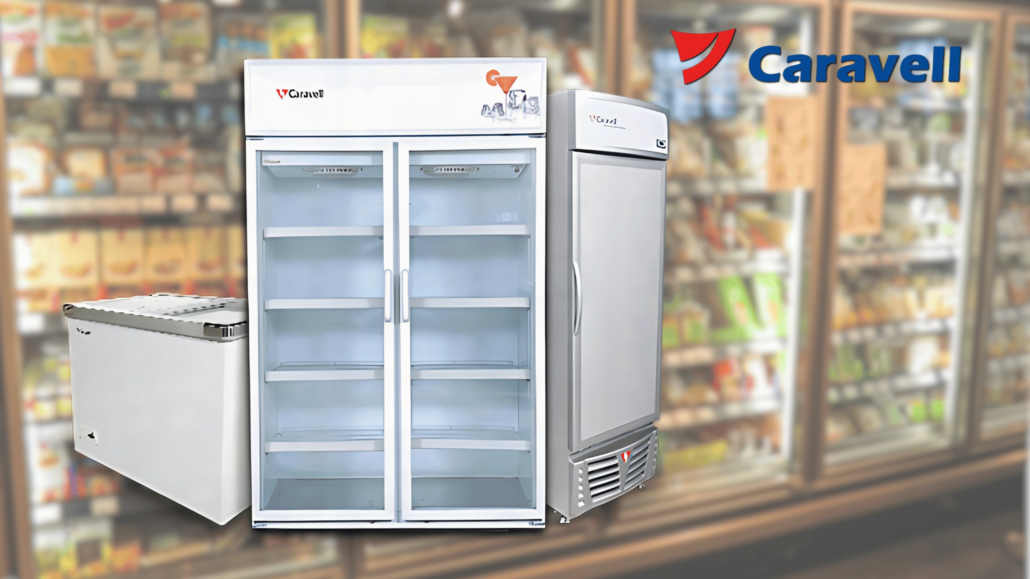
Caravell commercial refrigeration units use a simple error code system displayed on the digital controller. When a fault occurs, a code like E1 or E4 appears on the temperature display, helping you identify the problem quickly. Caravell is part of the Gram Commercial group (a Hoshizaki company), so some of these codes and controllers are shared across the Gram and Hoshizaki ranges.
This guide covers all known Caravell error codes across their commercial fridge, freezer, display cabinet, bottle cooler, and chest freezer ranges. We have included what each code actually means, the most likely cause, and practical steps to resolve it.
Caravell Error Codes: Complete List
| Code | Meaning | Likely Cause | What to Do |
|---|---|---|---|
| E1 | Cabinet temperature probe failure | The internal temperature sensor has disconnected, been damaged during cleaning, or has failed. The sensor wire may have been snagged or the connector may have come loose. | Open the controller housing and check the sensor wire connection. Make sure the connector is fully seated. If the wire is intact and the connector is secure, the sensor itself has failed and needs replacing. This is a common, inexpensive part. |
| E2 | Evaporator temperature probe failure | The sensor on the evaporator coil (used to control the defrost cycle) has failed, disconnected, or iced over. This sensor determines when defrost starts and ends. | Inspect the sensor and its wiring. If the sensor is buried under a layer of ice, there may be a defrost issue causing the ice buildup. Once defrosted and cleared, check if the sensor reads correctly. Replace if faulty. |
| E3 | Defrost timeout | The unit attempted a defrost cycle but it did not complete within the allowed time. This usually means the defrost heater is not working, the evaporator fan is blocked, or there is excessive ice buildup that cannot be cleared in a normal cycle. | Check the defrost heater is functioning (it should get warm during defrost). Make sure the evaporator fans can spin freely and are not blocked by ice or product. If the unit is overloaded with stock blocking airflow at the back, rearrange the contents. If the heater has failed, it needs replacing. |
| E4 | High temperature alarm | The cabinet temperature has risen above its safe upper limit. This is the most common Caravell alarm in commercial settings, often triggered after busy service periods with frequent door openings, stock loading, or a power cut. | Check the door is closing fully and the seal is intact. Make sure the unit is not overloaded or packed too tightly (air needs to circulate). Clean the condenser coils, as dust buildup is one of the most common causes of poor cooling. If the door, stock, and condenser are all fine, the compressor, fan, or refrigerant system may need attention. |
| E5 | Low temperature alarm | The cabinet is running colder than its set limit. This can damage sensitive stock and increase energy consumption. | Check the thermostat setpoint, as someone may have accidentally changed it. Inspect the temperature probe and controller. The unit may be running a longer refrigeration cycle than needed, which points to a controller or sensor issue. |
| E6 | Controller communication error | The controller cannot communicate with one of the sensors or control components. This could be a wiring fault, a failed controller board, or interference on the data line. | Restart the unit by switching it off at the mains, waiting 30 seconds, and switching it back on. If E6 returns, the controller board may need replacing. Check all wiring connections at the controller for loose or corroded terminals. |
| E7 | Condenser fan failure | The condenser fan motor has stopped running or is running intermittently. Without the fan, the condenser cannot dissipate heat and the unit will overheat. | Check the fan motor is receiving power. Look for ice, debris, or cable ties that may be obstructing the blade. If the motor hums but does not spin, the motor bearings have likely seized and it needs replacing. |
| E8 | Compressor protection activated | The compressor overload protection has triggered, usually due to high operating temperatures, electrical issues, or a refrigerant system fault. | Check the condenser is clean and has adequate airflow. Verify the ambient temperature is within the unit's operating range (most Caravell units are rated for climate class 4, up to 30C ambient). If the condenser is clean and the environment is within range, the compressor or its electrical supply needs professional diagnosis. |
| E9 | Door switch alarm | The door switch sensor has detected the door is open, or the switch itself has failed. If the door is definitely closed, the magnetic switch or its wiring may be faulty. | Check the door is fully closed and the gasket is sealing properly. Test the magnetic switch with a multimeter if accessible. Replace the switch if it is not registering a closed door. |
Troubleshooting the Most Common Caravell Errors
E4 (High Temperature) in Detail
E4 is by far the most frequently encountered Caravell error code in commercial kitchens. Before calling an engineer, work through these checks:
- Door seal check - Close the door and run your hand around the edge. If you feel cold air escaping, the gasket needs replacing. A damaged seal lets warm air in constantly, forcing the compressor to work harder.
- Stock arrangement - Overpacking blocks the internal airflow that keeps everything at temperature. Leave gaps between items, especially near the back wall and around the evaporator fan area.
- Condenser cleaning - This is the single most effective maintenance task. The condenser coil (usually at the bottom or back of the unit) collects dust, grease, and kitchen debris. Clean it with a soft brush or vacuum every month. In busy kitchens, you may need to do this fortnightly.
- Ambient temperature - If the unit is positioned next to an oven, dishwasher, or in direct sunlight, the condenser cannot reject heat effectively. Consider relocating the unit or improving ventilation around it.
- Recent power cut - After a power outage, the cabinet temperature will rise. The E4 alarm should clear once the unit has had time to pull the temperature back down. This can take 2-4 hours depending on how long the power was off.
E1 and E2 (Probe Failures)
Temperature probe failures are common on units that are cleaned aggressively. High-pressure washers and chemical cleaners can damage the probe wire insulation or push water into the connector. When cleaning, avoid directing water jets at the sensor probes and their cables.
Resetting a Caravell Unit
For any error code, a power reset is worth trying before calling an engineer:
- Turn off the unit at the mains (not the controller).
- Wait 30 seconds.
- Turn it back on.
- Monitor the display. If the error code returns within a few minutes, the fault is genuine and needs further investigation.
A reset clears temporary faults caused by power surges, brief sensor glitches, or transient overloads. It will not fix genuine hardware failures.
Preventative Maintenance Schedule
Regular maintenance prevents most Caravell error codes. Here is a practical schedule for commercial environments:
- Daily - Check door seals are closing properly. Do not overload the unit. Wipe down the door gasket to prevent food debris from compromising the seal.
- Weekly - Check the temperature display reads within range. Report any unusual noises (clicking, buzzing, or continuous running).
- Monthly - Clean the condenser coils with a soft brush or vacuum. Check the drain tray and drain line for blockages. Inspect the evaporator for excessive frost buildup.
- Quarterly - Have a qualified engineer inspect the refrigerant system, electrical connections, and compressor operation.
When to Call a Professional
- E3 (defrost timeout) - If the evaporator is heavily iced and manual defrost does not resolve it, the defrost heater or timer needs professional replacement.
- E4 after all basic checks - If the door, stock, and condenser are fine but the unit still cannot hold temperature, there may be a refrigerant leak or compressor issue.
- E6 after restart - A persistent controller communication error usually means the controller board has failed.
- E7 or E8 - Fan motor and compressor faults need an engineer with the right parts and testing equipment.
- Any code involving temperature loss with perishable stock - If you are storing food and the unit cannot maintain safe temperatures, you may need to move stock to another unit while waiting for the repair. The Food Standards Agency temperature control guidance explains the legal requirements.
UK Regulations for Commercial Refrigeration
- F-Gas Regulation - Caravell units containing fluorinated refrigerants must have regular leak checks. The frequency depends on the system's CO2 equivalent charge. See the UK Government F-Gas guidance.
- Food Safety - The Food Standards Agency requires food businesses to keep chilled food below 8C (with a recommended operating temperature of 5C or below). Your HACCP plan should include refrigeration temperature monitoring procedures.
- HACCP Compliance - Temperature logs from your refrigeration units form a key part of your HACCP food safety management system. Error codes should be logged and responded to as part of your corrective action procedures.
Official Caravell Resources
- Gram Commercial (Caravell parent company) - Product range, technical specifications, and support contact.
- Hoshizaki Europe - Caravell is part of the Hoshizaki group. European support and technical documentation.

Written by
Ali Elm
Ali is the Head of Operations at Be Cool Refrigeration with over a decade of hands-on experience in HVAC and commercial refrigeration. He oversees every installation, repair, and maintenance project, making sure the work meets the highest standards. Ali holds full F-Gas certification and has worked across residential, commercial, and industrial refrigeration systems throughout London and the South East. When he is not on site, he writes these guides to help business owners and homeowners understand their cooling systems better.