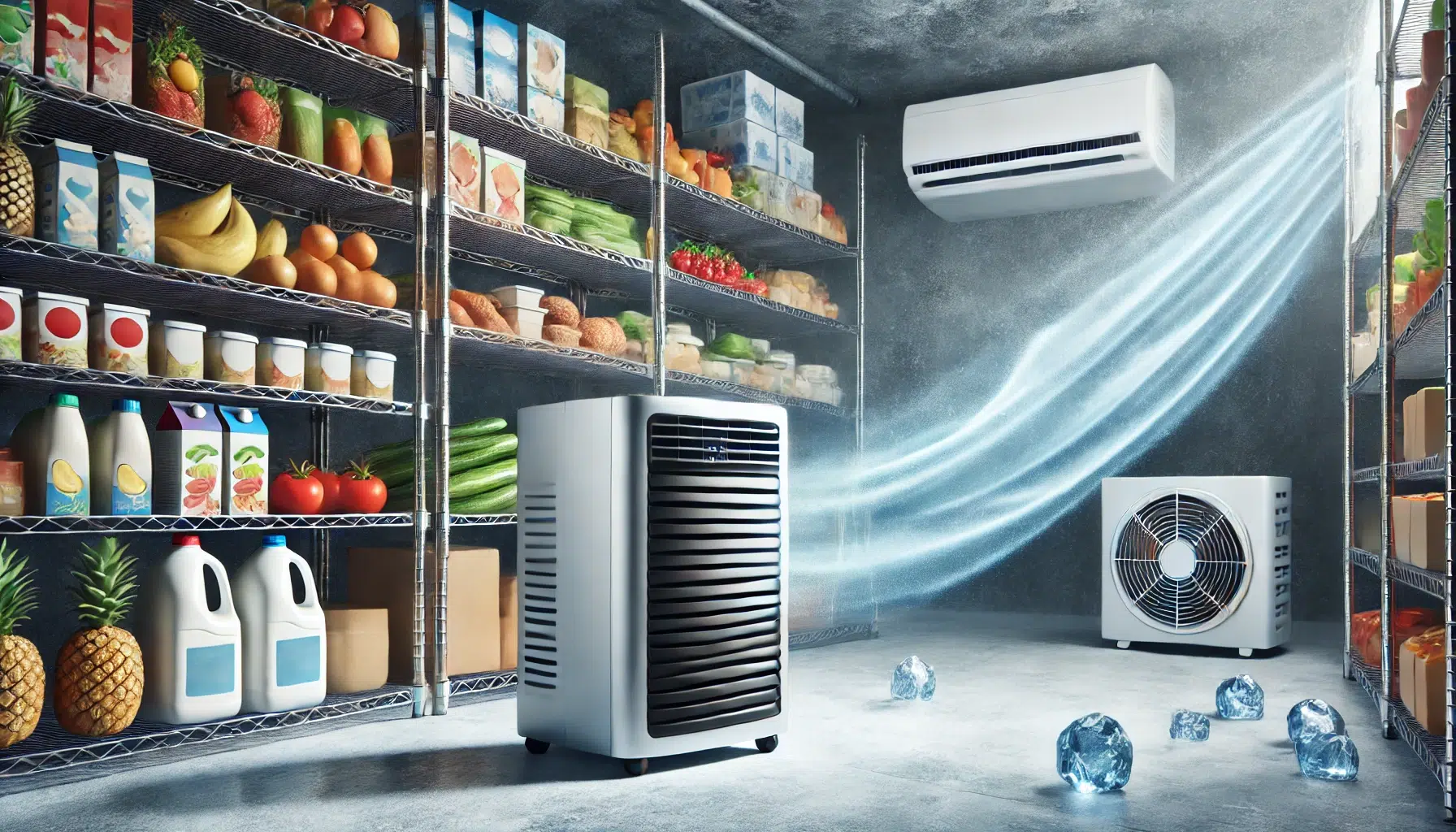
Dehumidifiers can for sure work in cold rooms, but their efficiency depends on the type of dehumidifier and the specific conditions of the cold room. Here’s a simple breakdown of how and when dehumidifiers are effective in cold environments.
Why Would a Cold Room Need a Dehumidifier?
Cold rooms are designed to maintain low temperatures, often to store perishable items or prevent spoilage. However, humidity can still be an issue in these spaces. High humidity levels can lead to:
- ➜ Ice formation on walls, ceilings, or cooling equipment.
- ➜ Frost build-up on products or packaging.
- ➜ Mold or mildew, which can damage goods and compromise hygiene.
A dehumidifier helps control excess moisture, ensuring the cold room operates efficiently and maintains the integrity of stored items.
How Do Dehumidifiers Work in Cold Rooms?
Dehumidifiers remove moisture from the air, but their performance is affected by temperature. In cold rooms, standard dehumidifiers may struggle because low temperatures can freeze the condensation that forms inside the unit. To address this, specialised dehumidifiers are required.
Types of Dehumidifiers for Cold Rooms
- Refrigerant (Compressor-Based) Dehumidifiers:Best suited for temperatures above 15°C.Not ideal for most cold rooms, as coils can freeze in colder conditions.
- Desiccant Dehumidifiers:Designed for low-temperature environments.Use a moisture-absorbing material (desiccant) instead of cooling coils, making them highly effective in cold rooms.Operate efficiently even in sub-zero temperatures.
- Low-Temperature Refrigerant Dehumidifiers:Specialized units with anti-freeze protection.Can work in environments as cold as 5°C.
Refrigerant (Compressor-Based) Dehumidifiers:
- Best suited for temperatures above 15°C.
- Not ideal for most cold rooms, as coils can freeze in colder conditions.
Desiccant Dehumidifiers:
- Designed for low-temperature environments.
- Use a moisture-absorbing material (desiccant) instead of cooling coils, making them highly effective in cold rooms.
- Operate efficiently even in sub-zero temperatures.
Low-Temperature Refrigerant Dehumidifiers:
- Specialized units with anti-freeze protection.
- Can work in environments as cold as 5°C.
Factors to Consider for Using a Dehumidifier in a Cold Room
- Room Temperature:Use a desiccant dehumidifier for rooms below 10°C.
- Humidity Levels:Identify the specific moisture level in the cold room to choose the right dehumidifier capacity.
- Size of the Room:Larger cold rooms require higher-capacity dehumidifiers to handle the volume of air effectively.
- Ventilation:Proper ventilation and air circulation enhance the dehumidifier’s performance.
- Maintenance:Regular cleaning and servicing are essential to prevent ice build-up in the unit and ensure long-term functionality.
Room Temperature:
- Use a desiccant dehumidifier for rooms below 10°C.
Humidity Levels:
- Identify the specific moisture level in the cold room to choose the right dehumidifier capacity.
Size of the Room:
- Larger cold rooms require higher-capacity dehumidifiers to handle the volume of air effectively.
Ventilation:
- Proper ventilation and air circulation enhance the dehumidifier’s performance.
Maintenance:
- Regular cleaning and servicing are essential to prevent ice build-up in the unit and ensure long-term functionality.
Benefits of Dehumidifiers in Cold Rooms
- ★ Prevents frost and ice build-up, reducing maintenance on cooling systems.
- ★ Protects stored goods from moisture damage.
- ★ Improves energy efficiency by reducing strain on refrigeration systems.
- ★ Maintains hygiene and prevents mold growth.
Contact us For Cold Room Installations
Cold Room Experts Since 2004
UK Food Safety and Refrigeration Regulations
If you store food commercially in the UK, maintaining correct refrigeration temperatures is a legal requirement. Here are the key resources:
- Food Standards Agency: Temperature control guidance - Legal temperature requirements for food storage and display.
- FSA: HACCP guidance - How to build temperature monitoring into your food safety management system.
- UK Government: F-Gas regulations - Requirements for leak checking and maintaining refrigeration systems containing F-gases.

Written by
Ali Elm
Ali is the Head of Operations at Be Cool Refrigeration with over a decade of hands-on experience in HVAC and commercial refrigeration. He oversees every installation, repair, and maintenance project, making sure the work meets the highest standards. Ali holds full F-Gas certification and has worked across residential, commercial, and industrial refrigeration systems throughout London and the South East. When he is not on site, he writes these guides to help business owners and homeowners understand their cooling systems better.