Enhance Climate Control with Advanced VRF Air Conditioning

VRF Air conditioning Outdoor units on a rooftop of a building
Variable Refrigerant Flow (VRF) air conditioning offers precise, multi-zone climate control by expertly adjusting refrigerant flow to meet the exact thermal needs of each space. This guide dives into the fundamentals of VRF, how it stacks up against other HVAC approaches, and why it’s the go-to choice for energy efficiency and occupant comfort. If you’re grappling with rising energy bills, uneven temperatures, or limited space for equipment, VRF presents a mature, effective solution. Leveraging inverter-driven compressors, smart branch controllers, and zoned control, it tackles these challenges head-on. You’ll learn what VRF systems are, how their components work together, the tangible benefits for energy use and comfort, the different system types available, how VRF compares to splits, chillers, and ducted systems, practical installation and commissioning steps, essential maintenance routines, and what the future holds for refrigerants and smart controls. We’ve included handy checklists, comparison tables, and step-by-step guides to help you specify, select, and operate VRF air conditioning for both residential and commercial projects.

What Exactly Is VRF Air Conditioning? Core Principles and the VRV Distinction

VRF air conditioning is a sophisticated multi-zone HVAC strategy that fine-tunes refrigerant flow to indoor units, ensuring each zone receives precisely the energy it requires. This smart approach minimises energy waste from cycling and boosts part-load efficiency. It relies on advanced inverter compressor technology, precise metering devices, and intelligent branch controllers to dynamically adjust refrigerant volume and pressure in real time, capable of delivering both heating and cooling from a single outdoor unit when needed. The standout benefit is targeted climate control with superior energy performance compared to many conventional systems. Plus, the system’s architecture allows for a wide variety of indoor unit styles and keeps plantroom footprints compact. Understanding the trademark difference between VRF and VRV is helpful when navigating manufacturer literature and comparing technical specifications.

What Does Variable Refrigerant Flow Mean in HVAC?

Variable Refrigerant Flow signifies that the system continuously adjusts the amount of refrigerant circulating to each indoor unit based on real-time demand. This smart modulation drastically reduces on/off cycling and precisely matches the system’s output to the actual load. It achieves this through variable-speed inverter compressors that alter refrigerant mass flow, complemented by electronic expansion valves or metering devices at indoor units or branch controllers for accurate distribution. The outcome is enhanced efficiency at part-load conditions, smoother temperature regulation, and lower peak electrical demand compared to fixed-capacity systems. This operational model is particularly effective in buildings with multiple zones, where different areas require distinct temperature settings simultaneously, leading to significant energy savings and improved occupant comfort.
 
Extensive monitoring and analysis of VRF systems in residential settings have yielded valuable insights into their energy efficiency and consumption patterns.
Analysis of Variable Refrigerant Flow (VRF) System Energy Efficiency and Consumption in Residential Buildings Variable refrigerant flow (VRF) systems are a common type of cooling equipment for buildings in China, widely applied in residential and office buildings. The performance of VRF systems significantly influences the cooling energy consumption of buildings. System energy efficiency and electricity consumption are the primary indicators used to evaluate the performance of VRF systems. Obtaining the actual energy efficiency and electricity consumption of VRF systems in buildings is challenging due to the high cost of the required complex measurements. This study proposes a virtual sensor modelling method to determine the actual energy efficiency and electricity consumption of 344 VRF systems in residential buildings. Statistical and clustering analyses are conducted to determine energy efficiency and electricity consumption, thereby obtaining distributions and typical operating load patterns of VRF systems in residential buildings in China. The main findings are as follows: the primary range for the Seasonal Energy Efficiency Ratio (SEER) during the cooling season is from 2.9 to 4.4; the median SEER in the Hot Summer and Cold Winter zone is lower than in other climate zones; a longer cooling duration may lead to greater electricity consumption, and the electricity load for VRF systems exhibits a daily periodic pattern. The issue of oversizing is prevalent for VRF systems in the dataset, which also contributes to lower energy efficiency. High usage of VRF systems was observed from 27 July to 26 August. The findings provide recommendations for the design of VRF systems in residential buildings.

How Does VRF Differ from Daikin‘s VRV Technology?

 
VRV is Daikin‘s proprietary brand name for the technology widely known as VRF. Functionally, the core principles of variable refrigerant flow, inverter-driven compressors, and zoned indoor units are identical. In practice, product literature often uses VRF and VRV interchangeably. However, specific features, control platforms, and warranty terms can vary by manufacturer and model. When comparing system architectures, specifiers should consider VRV/VRF as belonging to the same system family, but always verify manufacturer-specific component compatibility, controls, and service requirements. Recognizing the trademark distinction is useful when sourcing technical manuals or integrating controllers with existing building management systems.

What Are the Essential Components of a VRF System?

 
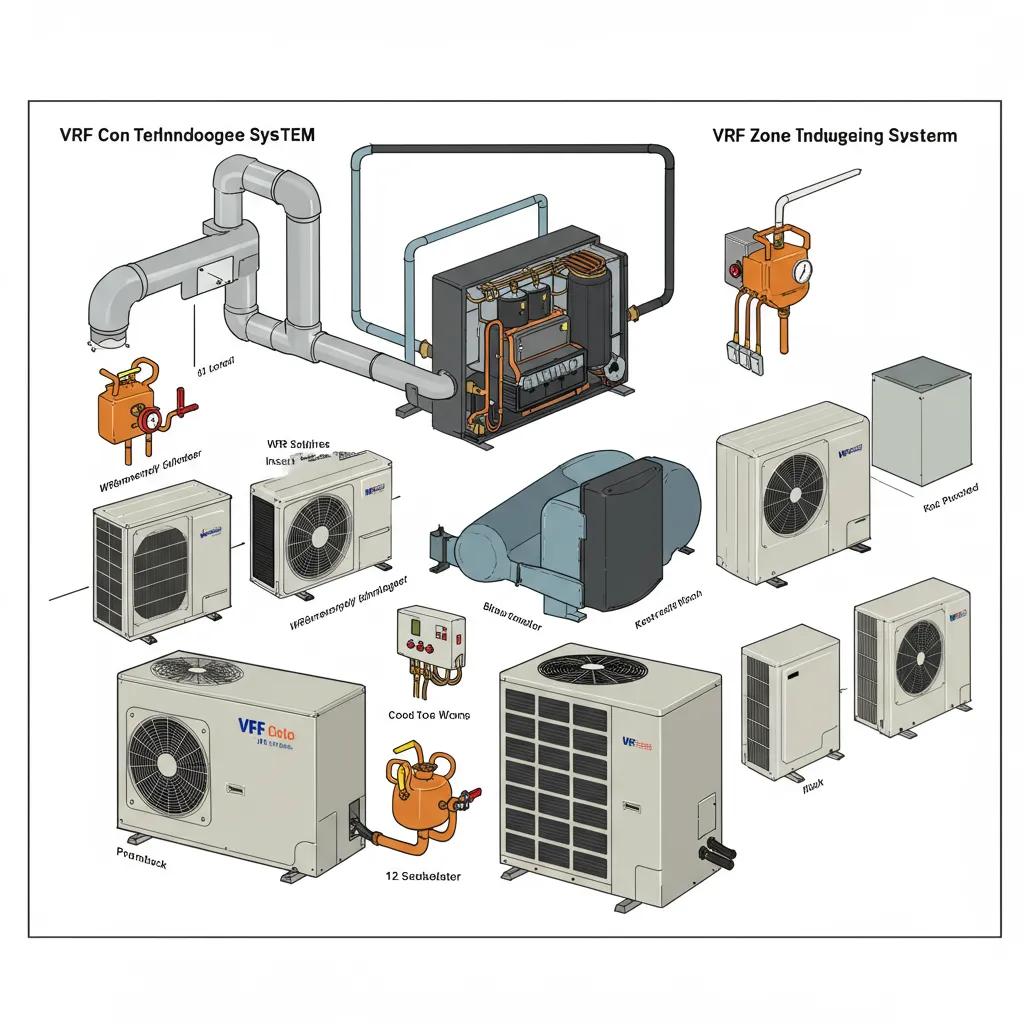
A VRF system is composed of several interconnected components that work in harmony to deliver efficient, refrigeration-based climate control. These include the outdoor condensing unit(s), a variety of indoor unit types, refrigerant piping, branch controllers, and the crucial inverter compressor assemblies. The outdoor unit houses the compressor, heat rejection equipment, and the central controller that manages system capacity. Indoor units, available in wall-mounted, cassette, ducted, and floor-standing styles, condition the air within their respective zones and feature local metering and sensors. Branch controllers, or distribution boxes, expertly manage refrigerant routing, monitor system pressures, and contain control valves to balance the needs of multiple indoor units connected to a single circuit. These components form a cohesive system outdoor unit, indoor units, piping, and controllers that must be meticulously coordinated during design and commissioning to ensure correct refrigerant charge and seamless communication.

What Are the Essential Components of a VRF System?

 
A VRF system is composed of several interconnected components that work in harmony to deliver efficient, refrigeration-based climate control. These include the outdoor condensing unit(s), a variety of indoor unit types, refrigerant piping, branch controllers, and the crucial inverter compressor assemblies. The outdoor unit houses the compressor, heat rejection equipment, and the central controller that manages system capacity. Indoor units, available in wall-mounted, cassette, ducted, and floor-standing styles, condition the air within their respective zones and feature local metering and sensors. Branch controllers, or distribution boxes, expertly manage refrigerant routing, monitor system pressures, and contain control valves to balance the needs of multiple indoor units connected to a single circuit. These components form a cohesive system outdoor unit, indoor units, piping, and controllers that must be meticulously coordinated during design and commissioning to ensure correct refrigerant charge and seamless communication.

How Does the Inverter Compressor Drive Energy Savings in VRF?

 
The inverter compressor enables variable-speed operation, allowing the outdoor unit to precisely match its capacity to the building‘s instantaneous load, rather than running at a fixed full capacity and cycling frequently. This significantly reduces the energy consumed during start-ups and enhances the part-load coefficient of performance (COP), which is the operational state for most buildings during a large portion of the year. In comparable applications, inverter-driven VRF systems commonly deliver 30–55% energy improvements over older fixed-speed systems, although actual savings are influenced by building type, control strategies, and usage patterns. By dynamically modulating compressor speed and coordinating with branch controllers, the system maintains tighter temperature control and minimises energy waste from over-conditioning.

How Do VRF Systems Operate? Components, Functionality, and Refrigerant Flow Management

components of a vrf air conditioning system
A VRF system intelligently senses the demands of individual zones and routes refrigerant accordingly through precisely coordinated modulation of compressor speed and metering devices. This allows for simultaneous heating and cooling when heat recovery capabilities are engaged. Operationally, zone thermostats or controllers transmit setpoint requests to the outdoor unit’s controller. This controller then adjusts inverter frequency and activates specific valve positions in the branch controllers to deliver the precise amount of refrigerant mass to the indoor units. The primary advantage is flexible, highly efficient multi-zone control that minimises rejected heat and optimises energy usage across diverse load conditions. The following sections will detail the roles of the indoor and outdoor units, how refrigerant flow is varied, the principles of heat recovery, and the function of branch controllers.
 

What Are the Roles of the Outdoor and Indoor Units in VRF Systems?

 
The outdoor unit is the heart of the system, housing the compressors, condensers, and primary control electronics. It generates the necessary pressure differential and manages heat rejection for refrigerant circulation and overall system capacity control. Indoor units, equipped with evaporator coils, fans, metering devices, and local sensors, are responsible for conditioning the air within their specific zones. They come in various forms cassette, wall-mounted, ducted, and floor-mounted to seamlessly integrate with different architectural designs and airflow requirements. Matching the indoor unit type to the room’s function such as cassettes for open-plan offices, ducted units for concealed installations, or wall-mounted units for retrofits ensures optimal comfort, acoustic performance, and aesthetics. Proper coordination between the outdoor unit’s capacity and the distribution of load to the indoor units is vital to prevent excessive piping lengths and maintain the correct refrigerant charge.

How Does Refrigerant Flow Vary to Provide Zoned Heating and Cooling?

 
Refrigerant flow is dynamically varied through the combined actions of the inverter compressor‘s speed modulation, electronic expansion valves, and the solenoid valves within branch controllers that precisely throttle or direct refrigerant to active indoor units. When a zone requires cooling, its corresponding indoor unit’s metering device opens to accept refrigerant and absorb heat. Conversely, if another zone needs heating, the system can reverse the refrigerant flow or utilize heat recovery circuits to transfer heat between zones rather than rejecting it externally. This variable distribution capability allows individual rooms to maintain independent setpoints and operating schedules, dramatically reducing instances of simultaneous over-conditioning. The net result is highly targeted energy delivery and significantly reduced system losses compared to single-point conditioning strategies.


What Is Heat Recovery in VRF, and How Does It Enable Simultaneous Heating and Cooling?

 
Heat recovery VRF systems incorporate sophisticated internal refrigerant routing that captures heat being rejected from zones that are in cooling mode and redirects it to zones that require heating. This enables true simultaneous operation across the same refrigerant circuit. The mechanism involves the use of four-way valves, advanced branch controllers, and internal heat exchangers to precisely balance refrigerant flows. This ensures that heat extracted from one area can be used to warm another, minimising the need for external heat rejection. This feature is particularly valuable in applications like hotels, mixed-use buildings, and multi-tenant offices where occupancy patterns and internal loads vary significantly. By transferring energy internally, heat recovery systems substantially reduce overall energy consumption and maximise the utilisation of installed capacity.
 
The application of VRF heat pump systems in office environments, particularly in Japan, highlights their growing prevalence and the benefits they offer in terms of adaptability, energy efficiency, and occupant comfort.

Variable Refrigerant Flow Heat Pump Systems in Office Environments: Prevalence, Benefits, and Control Complexities

The installation of Variable Refrigerant Flow (VRF) heat pump systems in office buildings, irrespective of their dimensions or configuration, has recently gained significant traction in Japan. These systems comprise a single packaged outdoor unit connected to multiple indoor units via refrigerant piping. A key advantage lies in their adaptability to diverse building designs due to their standardised nature. Furthermore, these systems offer energy efficiency and improved occupant comfort, facilitated by straightforward operation of individual indoor units. However, the extensive range of possible indoor unit combinations, freely selectable by users within the outdoor unit’s capacity limits, and the independent on/off capability of each indoor unit, render operational conditions unpredictable. Consequently, identifying suitable control parameters across a broad spectrum of load conditions presents considerable difficulty. For this reason, the objective of this paper is to systematically organise the control characteristics. To evaluate VRF systems, we have developed

How Do Branch Controllers Manage Multiple Indoor Units?

 
Branch controllers function as intelligent distribution hubs, precisely regulating refrigerant flow to multiple indoor units. They achieve this through a bank of electrically actuated valves and local sensors that continuously monitor pressure and temperature. These controllers translate commands from zone thermostats into specific valve positions, ensuring each indoor unit receives the correct refrigerant mass flow and superheat for stable, efficient operation. Branch controllers also manage unit addressing, report system faults, and coordinate with the outdoor unit to maintain overall system balance, especially under partial-load conditions. Accurate commissioning of branch controllers is absolutely critical, as valve timing, pressure differentials, and charge distribution directly impact zone comfort and prevent issues like liquid refrigerant migration.

What Are the Advantages of VRF Air Conditioning? Energy Efficiency, Comfort, and Design Flexibility

VRF systems offer a compelling suite of interconnected benefits: enhanced energy efficiency through intelligent inverter control and heat recovery, superior occupant comfort thanks to precise zoning, and remarkable installation flexibility that significantly reduces the footprint required for plantrooms and ductwork. The core mechanism driving these advantages is the system’s ability to accurately modulate refrigerant flow, combined with a diverse range of indoor unit options and integrated controls, all working together to minimise waste and precisely match output to actual demand. Quantified energy savings can vary by project, but recent studies and installations consistently show typical savings in the 30-55% range compared to older fixed-capacity systems when properly sized for building load profiles. The following subsections delve deeper into the drivers of efficiency, the advantages of zoning, the value of simultaneous heating and cooling, design flexibility, and acoustic performance.
 
Before we present the EAV table, here’s a practical summary of the benefits you can expect from VRF:
  1. Energy Savings: Reduced energy consumption at part-load conditions thanks to inverter modulation and heat recovery.
  2. Zoned Comfort: Independent temperature control for each room or area, ensuring minimal temperature fluctuations.
  3. Space Efficiency: Smaller mechanical plant requirements and significantly reduced ductwork needs. 
This summary highlights why VRF is frequently the preferred choice when energy efficiency, occupant comfort, and space constraints are key priorities. The next section provides a detailed tabular comparison of energy, comfort, and flexibility attributes.
 
We can contrast the various VRF benefits by looking at measurable attributes and outcomes.
Benefit Area
Attribute
Typical Value
Energy Efficiency
Measured seasonal savings
Up to 30–55% vs older fixed-speed systems
Comfort
Zoning precision
Per-room setpoints, ±0.5–1.0°C stability
Flexibility
Space impact
Reduced ductwork, smaller plantroom footprint
Acoustic
Noise levels
Indoor units often <30–40 dB(A); outdoor mitigation available
This EAV table clearly illustrates how VRF delivers combined advantages across efficiency, comfort, and site planning, making it an excellent choice for many modern retrofit and new-build projects.

How Does VRF Achieve Better Energy Efficiency Than Traditional HVAC?

 
VRF primarily boosts energy efficiency through its inverter-driven compressor modulation, superior part-load COP, and, where applicable, heat recovery technology that leverages internal heat transfer instead of external rejection. These mechanisms drastically reduce cycling losses and allow the system’s installed capacity to operate much closer to the actual building load, which is critical as most buildings spend the majority of their operational time at partial load rather than full capacity. Example savings of 30–55% are achievable in suitable applications, but real-world performance is contingent upon correct sizing, seamless controls integration, and occupant behaviour. Understanding these dependencies helps set realistic expectations and supports informed decisions regarding payback periods and lifecycle costs.
 

What Is Zoned Control, and How Does It Enhance Occupant Comfort?

 
Zoned control in VRF means that each indoor unit is equipped with its own thermostat or controller, enabling independent scheduling and setpoint adjustments that precisely match usage patterns and individual occupant preferences. This eliminates the waste associated with conditioning unoccupied areas and provides tailored comfort in spaces like hotel rooms, meeting rooms, and zoned office layouts. Integration with building management systems (BMS) allows for group scheduling, energy-saving setbacks, and overall system optimisation while preserving per-zone autonomy. The combination of individual control and centralized monitoring delivers both enhanced comfort and significant operational energy savings.
 

How Does Simultaneous Heating and Cooling Benefit Multi-Zone Buildings?

 
Simultaneous heating and cooling, a capability offered by heat recovery VRF systems, allows energy to be efficiently transferred from zones that require cooling to zones that need heating, thereby avoiding the unnecessary rejection of usable heat. Practical scenarios where this is highly advantageous include hotels with occupied rooms needing cooling while common areas require heating, or mixed-use developments with diverse internal load requirements. The key benefit is reduced external heat rejection and lower overall energy consumption, alongside the ability to meet varied occupant needs without installing multiple separate plant systems. This internal energy exchange is a critical differentiator compared to single-mode HVAC systems.
 

What Design Flexibility and Space Savings Do VRF Systems Offer?

 
VRF systems provide exceptional design flexibility by accommodating a wide array of indoor unit types and significantly minimising the need for extensive ductwork. This preserves valuable ceiling voids and reduces overall building height requirements. Plantrooms can be substantially smaller because the outdoor units are modular, and multiple condensing units can be strategically located externally or on rooftops, freeing up internal space for more usable floor area. For retrofit projects, the reduced requirement for large duct runs and the compact nature of the piping layouts simplify installation and minimise disruption. Designers highly value this flexibility, especially when working with constrained mechanical spaces or when aiming to preserve architectural features.
 

How Quiet Are VRF Indoor and Outdoor Units During Operation?

 
VRF indoor units are meticulously engineered for exceptionally low noise levels. Wall-mounted and concealed ducted units typically operate below 30–40 dB(A) at standard settings, making them perfectly suitable for sensitive areas like bedrooms, offices, and hospital rooms. Outdoor unit noise levels vary depending on capacity and placement, but can be effectively managed through acoustic screens, strategic siting, and anti-vibration mounts to comply with local planning regulations. This quiet performance makes VRF ideal for applications in noise-sensitive environments such as hotels and healthcare facilities where acoustic comfort is paramount. Careful planning of unit location and the use of appropriate screening often resolve potential external noise concerns.
 

What Types of VRF Systems Are Available? Heat Pump, Heat Recovery, Water-Cooled, and Hybrid VRF

 
The VRF system landscape includes several distinct types: heat pump VRF for straightforward heating or cooling, heat recovery VRF for simultaneous heating and cooling, water-cooled VRF for installations with limited outdoor space, and hybrid VRF, which cleverly combines refrigerant and water loops to minimise indoor refrigerant charge. Each type is designed to address specific building constraints, regulatory requirements, or safety considerations, offering an architecture tailored to particular applications. The choice depends on factors like climate, building usage, available space for outdoor equipment, and regulatory drivers such as refrigerant policies. The following subsections provide detailed descriptions of the defining features and typical applications of each type.
 
Below is a quick reference table comparing VRF types by their key features and typical applications to assist in your selection process.
VRF Type
Key Feature
Typical Application
Heat Pump VRF
Simple reverse-cycle operation
Residential, small commercial in moderate climates
Heat Recovery VRF
Simultaneous heating/cooling
Hotels, mixed-use buildings, offices with diverse loads
Water-Cooled VRF
Condenser cooled by water loop
Sites with limited external condenser space or central plant
Hybrid VRF
Refrigerant-water combination
High-safety or low-indoor-refrigerant-charge scenarios
This table serves as a valuable tool for specifiers to evaluate which VRF architecture best aligns with project constraints and desired performance outcomes.
 

What Is a Heat Pump VRF System, and When Is It Typically Used?

A heat pump VRF system operates using a reversible refrigerant loop, capable of supplying either heating or cooling to zones, but generally not both simultaneously on the same circuit. It is an excellent choice for residential and small commercial projects located in temperate climates where simultaneous, opposing thermal demands are infrequent. The inherent simplicity of heat pump VRF offers cost-effectiveness and a lower initial investment compared to heat recovery types. However, in buildings with diverse and simultaneous heating and cooling needs, the lack of simultaneous operation can limit potential energy savings. Designers should carefully consider the climate and the diversity of internal loads when selecting heat pump VRF.

How Does Heat Recovery VRF Enable Simultaneous Heating and Cooling?

Heat recovery VRF systems employ additional refrigerant routing and sophisticated control valves to efficiently transfer heat from zones that are in cooling mode to zones that require heating. This capability allows for simultaneous heating and cooling operations, drawing from the same outdoor plant. This intelligent design captures heat that would otherwise be rejected externally and reallocates it within the building, significantly improving overall energy utilisation and reducing the total energy demand. Common beneficiaries of this technology include hotels, multi-storey offices, and schools, where occupancy and internal loads often vary significantly across different areas. The result is both substantial operational energy savings and enhanced occupant comfort flexibility.

What Are the Key Features of Water-Cooled VRF Systems?

Water-cooled VRF systems replace the traditional air-cooled condenser with a water-cooled condenser that connects to a central plant, such as cooling towers or river water systems. This makes them an ideal solution for installations with limited rooftop or façade space, or where strict aesthetic restrictions are in place. These systems often achieve higher seasonal efficiency due to the stable condensing temperatures provided by the water loop and can simplify acoustic planning by allowing major plant equipment to be located within plantrooms. However, integration with central plant adds complexity and necessitates central water treatment and ongoing maintenance for towers and heat exchangers. Water-cooled VRF is frequently specified for large commercial developments that already possess central plant infrastructure.

What Innovations Do Hybrid VRF Systems Bring to Refrigerant Use and Efficiency?

Hybrid VRF designs ingeniously combine refrigerant loops with a low-temperature water circuit or modular heat exchangers. This innovative approach significantly reduces the amount of refrigerant required within occupied spaces while maintaining efficient thermal distribution and precise zonal control. These systems are a direct response to regulatory and safety drivers, aiming to limit refrigerant presence in occupied areas and offering modular scalability for large-scale projects. Hybrid approaches effectively balance the high efficiency of refrigerant-based distribution with the enhanced safety and serviceability benefits offered by water-based secondary loops. Hybrid configurations are increasingly being selected for projects where specific constraints or safety considerations favour these integrated schemes.
 

How Does VRF Compare to Traditional HVAC Systems? Split, Chiller, and Ducted Systems

 
VRF systems hold their own favourably against many traditional HVAC systems, particularly in terms of flexibility, part-load efficiency, and zoning capabilities. However, there are trade-offs to consider regarding upfront costs, service complexity, and suitability for extremely large-scale applications. Compared to simple split systems, VRF offers superior multi-zone control and efficiency, albeit at a higher initial investment and with greater design and commissioning complexity. When compared to chiller-based systems, VRF often presents a smaller footprint and better part-load performance for mid-sized buildings. Conversely, chillers can be more economical for very large-scale applications with centralized distribution. The following table provides a summary of comparative attributes to aid your decision-making process.
System Type
Upfront Cost
Efficiency
Best Use Case
Split AC
Low
Moderate (single-zone)
Small homes, single rooms
VRF
Moderate-High
High (part-load)
Multi-zone residences, offices, hotels
Chiller-based
High
High at scale
Large commercial, campus installations
Ducted HVAC
Variable
Depends on duct efficiency
Retrofits with existing ductwork

What Are the Key Differences Between VRF and Split AC Systems?

 
VRF systems are designed to support numerous indoor units connected to a single outdoor plant, offering precise zonal control. In contrast, split AC systems typically consist of one outdoor unit paired with one indoor unit and lack coordinated part-load control capabilities. Split ACs generally have a lower initial cost and simpler maintenance, making them a sensible choice for small-scale applications. However, they perform less effectively in buildings requiring multiple independently controlled zones. VRF is far more scalable, often quieter in operation, and provides centralized monitoring options for larger installations. For projects involving more than a handful of zones or requiring BMS integration and scheduling, VRF frequently emerges as the more practical and efficient choice.
 
How Does VRF Compare to Chiller-Based HVAC in Cost and Performance?
Chiller-based systems can offer greater cost-effectiveness for very large floor areas due to economies of scale and centralized plant infrastructure. However, they demand significant plantroom space, extensive distribution piping, and often incur larger energy penalties at part-load conditions. VRF systems typically require less internal plantroom space, feature smaller mechanical distribution networks, and maintain high efficiency across a broad range of operating loads thanks to their advanced inverter technology. Lifecycle cost comparisons are highly dependent on the specific duty profiles: VRF can outperform chillers in mid-sized, heavily zoned buildings, while chillers may prove more economical in uniform, large-scale conditioning scenarios. Project-specific modelling is essential for accurate capital expenditure (capex) and operational expenditure (opex) trade-offs.
 
Comparative analyses conducted in university settings have provided valuable insights into the performance differences between VRF and conventional HVAC systems, such as VAV.
 
VRF versus Conventional HVAC Systems: A Comparative Analysis in University Settings Comparisons between VRF and conventional HVAC systems in university settings indicate that the VRF approach, as employed in the comparative analysis of VAV and VRF systems within universities,
 

What Advantages Does VRF Have Over Ducted HVAC Systems?

 
VRF systems significantly reduce or even eliminate the need for extensive ductwork, thereby lowering installation disruption and preserving valuable ceiling voids. This is particularly advantageous in retrofit projects and heritage buildings. Ductwork energy losses and the requirement for large plantrooms are minimised with VRF, and indoor units can be selected to seamlessly integrate with architectural and acoustic requirements. However, ducted systems may still be preferable where centralized air distribution and filtration are mandated, or where existing ductwork can be effectively reused. The decision often hinges on architectural constraints, specific filtration needs, and the value placed on individual zone control.
 

When Is VRF the Preferred Choice for Commercial or Residential Applications?

 
VRF is the preferred choice when buildings require precise multi-zone temperature control, have limited plantroom space, or demand highly energy-efficient part-load performance. Typical applications include multi-family residential blocks, small-to-medium-sized offices, hotels, and retrofit projects. Selection checklists should carefully consider zoning complexity, allowable outdoor unit locations, local noise regulations, and refrigerant-related regulatory requirements. For applications demanding uniform, large-scale conditioning with very high simultaneous loads, chiller-based solutions may remain the most appropriate option. Decision-making should always include a comprehensive whole-life cost analysis that accounts for energy savings, maintenance expenses, and anticipated operational patterns.
 

How Is a VRF System Installed? Planning, Process, and Best Practices

A successful VRF installation begins with meticulous planning: accurate load calculations, a well-defined zoning strategy, optimal piping layout, provision for service access, and seamless controls integration must be finalized before procurement. The installation process then involves mechanical mounting of units, precise refrigerant piping and brazing, installation of electrical and communication wiring, system evacuation and accurate refrigerant charging, followed by systematic commissioning and performance testing. Best practices emphasize the use of certified installers, careful refrigerant handling, thorough pressure testing, and staged commissioning to verify superheat/subcooling and communication integrity. The following numbered installation steps outline the typical workflow and sequencing required to achieve reliable, long-term operation.
  1. Survey & Design: Conduct detailed load calculations, select appropriate indoor/outdoor units, and meticulously plan pipe runs.
  2. Mechanical Installation: Mount outdoor and indoor units securely, and install refrigerant piping and drain lines according to design specifications.
  3. Electrical & Controls: Install all necessary power, communication wiring, and local thermostats or BMS interfaces.
  4. Commissioning: Evacuate the system, charge with refrigerant, perform leak testing, flush filters, configure controller parameters, and validate overall performance. 
These steps are designed to prioritize quality control and minimize rework. The final handover should include comprehensive training for facilities staff and clear, detailed documentation. Engaging professional installers and adhering to manufacturers’ commissioning guides are essential references throughout the execution phase.
 
What Are the Key Planning Factors for VRF System Installation?
Crucial planning factors include performing accurate thermal load calculations, developing a zoning strategy that aligns with occupancy patterns, designing pipe routing that respects manufacturer-specified maximum lengths and elevation differences, and selecting suitable outdoor unit locations that ensure service access and minimise noise impact. Designers must also carefully consider refrigerant charge calculations, potential for future expansion, and integration with building controls to enable effective energy optimisation. Early coordination with structural, architectural, and MEP (Mechanical, Electrical, and Plumbing) teams is vital to prevent clashes and facilitate compact, efficient routing. Thorough planning significantly reduces the need for costly field changes and supports a smoother commissioning process.

What Are the Main Steps Involved in Installing a VRF System?

Installation progresses through a series of sequential stages: design and procurement, structural and mechanical mounting of equipment, refrigerant piping installation and brazing, electrical and communications wiring, system evacuation and refrigerant charging, and finally, comprehensive commissioning and handover. Each stage incorporates critical quality checks, such as pressure testing of the refrigerant piping, verifying electrical cable continuity, and confirming controller addressing and firmware compatibility. Commissioning should rigorously validate airflow, temperatures, refrigerant pressures, and fault logs under typical operating conditions. Following a methodical sequence minimises the risk of refrigeration system issues and ensures all warranty conditions are met.

Why Is Professional Installation Critical for VRF Systems?

 
Professional installation is paramount for VRF systems because they demand precise refrigerant charging, meticulous brazing and leak testing, correct branch controller addressing, and specialized commissioning procedures to achieve design performance and maintain warranty validity. Improper installation can lead to refrigerant imbalances, communication faults, and significantly degraded efficiency, resulting in higher operating costs and premature component wear. Certified installers possess the expertise regarding manufacturer tolerances, charge algorithms, and commissioning sequences necessary to protect the system’s longevity. For these critical reasons, engaging experienced contractors and strictly following established commissioning protocols is absolutely essential.
 

What Are the Typical Cost Considerations for VRF Installation and Operation?

 
Typical cost considerations include a higher upfront capital investment for equipment and skilled installation labour compared to simpler split systems. This is often balanced by potential operational savings derived from superior part-load efficiency and heat recovery capabilities. A comprehensive lifecycle cost assessment should factor in energy savings, scheduled maintenance requirements, the expected lifespan of the equipment, and any applicable rebates or regulations influencing refrigerant choices. Key variables impacting the overall cost are system size, the number of indoor units, piping complexity, and the extent of control integration required. Accurate modelling of payback periods and total cost of ownership empowers stakeholders to make well-informed procurement decisions.
 

How Is VRF Air Conditioning Maintained and Troubleshot? Routine Checks and Common Issues

 
Regular maintenance is key to preserving VRF system efficiency and reducing the likelihood of faults. Recommended tasks include routine filter cleaning, condensate drain inspection, outdoor unit cleaning, and periodic calibration of controls. Troubleshooting common issues—such as refrigerant leaks, communication errors, unbalanced operation, or unusual noises—requires methodical symptom-to-probable-cause-to-immediate-action workflows to prevent service delays. Maintenance agreements and scheduled re-commissioning checks are vital for retaining performance and protecting warranties. The sections below provide actionable checklists and common fault diagnostics to assist building managers and technicians.
 
Here is a concise maintenance checklist outlining recommended frequencies and primary tasks:
  1. Monthly: Inspect and clean indoor unit filters; check condensate drains for any blockages.
  2. Quarterly: Examine outdoor unit fins, clear away debris, and verify piping insulation and drain functionality.
  3. Annually: Conduct a full system inspection, calibrate controls, perform refrigerant leak testing, and consider preventive component replacement.
This schedule helps maintain optimal COP, minimise downtime, and provides clear triggers for engaging certified technicians for tasks requiring specialized tools and refrigerant handling expertise.
 

What Routine Maintenance Is Required for VRF Systems?

 
Routine maintenance encompasses cleaning or replacing indoor unit filters, verifying the integrity of condensate traps and drains, clearing debris from around outdoor units, and ensuring unobstructed airflow across coils. Controls and sensors should be periodically inspected and calibrated to guarantee accurate setpoint response and prevent system hunting. Manufacturers strongly recommend scheduled technical service for refrigerant leak detection, pressure checks, and firmware updates for system controllers. Regular, straightforward on-site maintenance extends the intervals between major service interventions and supports sustained system efficiency.

What Are Common VRF System Issues and How Are They Resolved?

 
Common issues encountered include refrigerant leaks, indoor-outdoor communication errors, pressure imbalances between refrigerant branches, and insufficient refrigerant charge. Each of these can manifest through symptoms like performance degradation or specific fault codes displayed by the system. Troubleshooting typically follows a structured symptom → probable cause → immediate action pattern. For instance, low cooling capacity might indicate a potential refrigerant leak or undercharge; the immediate action would be to check system pressures, inspect joints for leaks, and arrange for repair and recharging by certified technicians. Communication faults are often resolved by meticulously checking wiring integrity, unit addresses, and controller logs. Employing preventive sealing techniques, correct brazing methods, and thorough commissioning significantly reduces the recurrence of these issues.


How Does Proper Maintenance Impact VRF System Lifespan and Efficiency?

 
Consistent and diligent maintenance preserves the cleanliness of heat exchangers, ensures the accuracy of control systems, and maintains the correct refrigerant charge. Collectively, these factors uphold the system’s Coefficient of Performance (COP) and reduce stress on components, thereby extending its operational lifespan. Well-maintained VRF equipment commonly reaches or exceeds its expected service life with minimal degradation in seasonal performance. In contrast, neglected systems exhibit earlier declines in efficiency and incur higher repair costs. Preventive maintenance also ensures compliance with warranty conditions and lowers the total cost of ownership by minimising emergency call-outs. Investing in routine care therefore yields measurable operational and financial returns over the system’s lifetime.
 

What Is the Future of VRF Air Conditioning? Trends, Sustainability, and Smart Controls

 
The future trajectory of VRF air conditioning is being significantly shaped by evolving refrigerant regulations, the widespread adoption of low-Global Warming Potential (GWP) refrigerants, advancements in smart controls, and the development of modular/hybrid architectures designed to reduce indoor refrigerant charge and enhance scalability. Seamless integration with smart controls and cloud-based analytics enables predictive maintenance, proactive fault detection, and optimized energy management across entire portfolios of buildings. Hybrid designs are increasingly merging the efficiency of refrigerant systems with the safety and regulatory compliance benefits of water-based secondary loops. Recent case studies from UK and European projects highlight significant energy savings and comfort improvements achieved when VRF systems are correctly specified and commissioned. The following subsections explore emerging refrigerant trends, control innovations, modular design approaches, and recent project outcomes.
 

How Are New Refrigerants and Regulations Shaping VRF Sustainability?

 
Regulatory pressure to curb greenhouse gas emissions and reduce global warming potential is a major catalyst driving the adoption of low-GWP refrigerants and system designs that minimise refrigerant charge within occupied spaces. Specifiers must carefully evaluate the trade-offs associated with different refrigerants, considering factors like flammability, glide, and efficiency, while ensuring strict compliance with local safety codes and installation standards. The lifecycle environmental impact is now a critical consideration in product selection, encouraging the use of hybrid and water-cooled variants where appropriate. As regulations continue to evolve, manufacturers and specifiers are increasingly prioritizing solutions that effectively balance high performance with a reduced direct environmental footprint.
 

What Role Do Smart Controls and Connectivity Play in VRF System Optimization?

 
Smart controls and enhanced connectivity empower building managers with data-driven insights to fine-tune setpoints, optimize schedules, and improve compressor staging, leading to reduced energy consumption while maintaining exceptional comfort levels. Cloud platforms and Building Management System (BMS) integration facilitate remote monitoring, predictive fault detection, and performance benchmarking across multiple sites, resulting in faster response times and minimized downtime. Protocols and cybersecurity considerations are integral to modern integration planning, ensuring that data flows enhance operational efficiency without introducing vulnerabilities. The ultimate outcome is better-managed energy consumption, quicker fault diagnosis, and elevated occupant satisfaction.
 

How Are Hybrid VRF Systems and Modular Designs Evolving?

 
Hybrid and modular VRF architectures represent a significant evolution in the field, combining the efficiency of refrigerant loops with water circuits or modular condensing units. These innovations enable enhanced scalability, drastically reduce the refrigerant charge within occupied spaces, and simplify maintenance procedures. Modularity supports phased installation strategies and facilitates easier service replacements with minimal operational downtime, while hybrid approaches effectively address safety considerations in sensitive building environments. These design trends promote greater flexibility for future expansions and align with regulatory emphasis on minimizing refrigerant volumes in occupied areas. Market adoption is steadily increasing, particularly in projects where specific constraints or safety requirements favour these advanced hybrid schemes.
 

What Recent Case Studies Demonstrate VRF Energy Savings and Comfort Improvements?

Recent case studies from the UK and Europe compellingly demonstrate that correctly specified and commissioned VRF projects can deliver substantial energy savings—frequently reported in the 25–50% range compared to older systems—while simultaneously enhancing occupant comfort through stable, per-zone temperature setpoints. Key lessons learned from these projects consistently highlight the critical importance of accurate load modelling, meticulous piping design to prevent pressure losses, and thorough commissioning processes to validate control algorithms. These real-world project outcomes strongly support VRF as a viable and effective pathway towards decarbonisation across a wide spectrum of building types, especially when integrated with low-GWP refrigerants and advanced smart controls.
 
This comprehensive article has covered VRF fundamentals, operational principles, key benefits, available system types, comparative analyses, installation best practices, maintenance procedures, and future trends, all designed to support informed decision-making regarding variable refrigerant flow solutions.

Why Is Professional Installation Critical for VRF Systems?

 
Professional installation is paramount for VRF systems because they demand precise refrigerant charging, meticulous brazing and leak testing, correct branch controller addressing, and specialized commissioning procedures to achieve design performance and maintain warranty validity. Improper installation can lead to refrigerant imbalances, communication faults, and significantly degraded efficiency, resulting in higher operating costs and premature component wear. Certified installers possess the expertise regarding manufacturer tolerances, charge algorithms, and commissioning sequences necessary to protect the system’s longevity. For these critical reasons, engaging experienced contractors and strictly following established commissioning protocols is absolutely essential.
 

What Are the Typical Cost Considerations for VRF Installation and Operation?

 
Typical cost considerations include a higher upfront capital investment for equipment and skilled installation labour compared to simpler split systems. This is often balanced by potential operational savings derived from superior part-load efficiency and heat recovery capabilities. A comprehensive lifecycle cost assessment should factor in energy savings, scheduled maintenance requirements, the expected lifespan of the equipment, and any applicable rebates or regulations influencing refrigerant choices. Key variables impacting the overall cost are system size, the number of indoor units, piping complexity, and the extent of control integration required. Accurate modelling of payback periods and total cost of ownership empowers stakeholders to make well-informed procurement decisions.
 

How Is VRF Air Conditioning Maintained and Troubleshot? Routine Checks and Common Issues

 
Regular maintenance is key to preserving VRF system efficiency and reducing the likelihood of faults. Recommended tasks include routine filter cleaning, condensate drain inspection, outdoor unit cleaning, and periodic calibration of controls. Troubleshooting common issues—such as refrigerant leaks, communication errors, unbalanced operation, or unusual noises—requires methodical symptom-to-probable-cause-to-immediate-action workflows to prevent service delays. Maintenance agreements and scheduled re-commissioning checks are vital for retaining performance and protecting warranties. The sections below provide actionable checklists and common fault diagnostics to assist building managers and technicians.
 
Here is a concise maintenance checklist outlining recommended frequencies and primary tasks:
  1. Monthly: Inspect and clean indoor unit filters; check condensate drains for any blockages.
  2. Quarterly: Examine outdoor unit fins, clear away debris, and verify piping insulation and drain functionality.
  3. Annually: Conduct a full system inspection, calibrate controls, perform refrigerant leak testing, and consider preventive component replacement.
This schedule helps maintain optimal COP, minimise downtime, and provides clear triggers for engaging certified technicians for tasks requiring specialized tools and refrigerant handling expertise.
 

What Routine Maintenance Is Required for VRF Systems?

 
Routine maintenance encompasses cleaning or replacing indoor unit filters, verifying the integrity of condensate traps and drains, clearing debris from around outdoor units, and ensuring unobstructed airflow across coils. Controls and sensors should be periodically inspected and calibrated to guarantee accurate setpoint response and prevent system hunting. Manufacturers strongly recommend scheduled technical service for refrigerant leak detection, pressure checks, and firmware updates for system controllers. Regular, straightforward on-site maintenance extends the intervals between major service interventions and supports sustained system efficiency.

What Are Common VRF System Issues and How Are They Resolved?

 
Common issues encountered include refrigerant leaks, indoor-outdoor communication errors, pressure imbalances between refrigerant branches, and insufficient refrigerant charge. Each of these can manifest through symptoms like performance degradation or specific fault codes displayed by the system. Troubleshooting typically follows a structured symptom → probable cause → immediate action pattern. For instance, low cooling capacity might indicate a potential refrigerant leak or undercharge; the immediate action would be to check system pressures, inspect joints for leaks, and arrange for repair and recharging by certified technicians. Communication faults are often resolved by meticulously checking wiring integrity, unit addresses, and controller logs. Employing preventive sealing techniques, correct brazing methods, and thorough commissioning significantly reduces the recurrence of these issues.


How Does Proper Maintenance Impact VRF System Lifespan and Efficiency?

 
Consistent and diligent maintenance preserves the cleanliness of heat exchangers, ensures the accuracy of control systems, and maintains the correct refrigerant charge. Collectively, these factors uphold the system’s Coefficient of Performance (COP) and reduce stress on components, thereby extending its operational lifespan. Well-maintained VRF equipment commonly reaches or exceeds its expected service life with minimal degradation in seasonal performance. In contrast, neglected systems exhibit earlier declines in efficiency and incur higher repair costs. Preventive maintenance also ensures compliance with warranty conditions and lowers the total cost of ownership by minimising emergency call-outs. Investing in routine care therefore yields measurable operational and financial returns over the system’s lifetime.
 

What Is the Future of VRF Air Conditioning? Trends, Sustainability, and Smart Controls

 
The future trajectory of VRF air conditioning is being significantly shaped by evolving refrigerant regulations, the widespread adoption of low-Global Warming Potential (GWP) refrigerants, advancements in smart controls, and the development of modular/hybrid architectures designed to reduce indoor refrigerant charge and enhance scalability. Seamless integration with smart controls and cloud-based analytics enables predictive maintenance, proactive fault detection, and optimized energy management across entire portfolios of buildings. Hybrid designs are increasingly merging the efficiency of refrigerant systems with the safety and regulatory compliance benefits of water-based secondary loops. Recent case studies from UK and European projects highlight significant energy savings and comfort improvements achieved when VRF systems are correctly specified and commissioned. The following subsections explore emerging refrigerant trends, control innovations, modular design approaches, and recent project outcomes.
 

How Are New Refrigerants and Regulations Shaping VRF Sustainability?

 
Regulatory pressure to curb greenhouse gas emissions and reduce global warming potential is a major catalyst driving the adoption of low-GWP refrigerants and system designs that minimise refrigerant charge within occupied spaces. Specifiers must carefully evaluate the trade-offs associated with different refrigerants, considering factors like flammability, glide, and efficiency, while ensuring strict compliance with local safety codes and installation standards. The lifecycle environmental impact is now a critical consideration in product selection, encouraging the use of hybrid and water-cooled variants where appropriate. As regulations continue to evolve, manufacturers and specifiers are increasingly prioritizing solutions that effectively balance high performance with a reduced direct environmental footprint.
 

What Role Do Smart Controls and Connectivity Play in VRF System Optimization?

 
Smart controls and enhanced connectivity empower building managers with data-driven insights to fine-tune setpoints, optimize schedules, and improve compressor staging, leading to reduced energy consumption while maintaining exceptional comfort levels. Cloud platforms and Building Management System (BMS) integration facilitate remote monitoring, predictive fault detection, and performance benchmarking across multiple sites, resulting in faster response times and minimized downtime. Protocols and cybersecurity considerations are integral to modern integration planning, ensuring that data flows enhance operational efficiency without introducing vulnerabilities. The ultimate outcome is better-managed energy consumption, quicker fault diagnosis, and elevated occupant satisfaction.
 

How Are Hybrid VRF Systems and Modular Designs Evolving?

 
Hybrid and modular VRF architectures represent a significant evolution in the field, combining the efficiency of refrigerant loops with water circuits or modular condensing units. These innovations enable enhanced scalability, drastically reduce the refrigerant charge within occupied spaces, and simplify maintenance procedures. Modularity supports phased installation strategies and facilitates easier service replacements with minimal operational downtime, while hybrid approaches effectively address safety considerations in sensitive building environments. These design trends promote greater flexibility for future expansions and align with regulatory emphasis on minimizing refrigerant volumes in occupied areas. Market adoption is steadily increasing, particularly in projects where specific constraints or safety requirements favour these advanced hybrid schemes.
 

What Recent Case Studies Demonstrate VRF Energy Savings and Comfort Improvements?

Recent case studies from the UK and Europe compellingly demonstrate that correctly specified and commissioned VRF projects can deliver substantial energy savings—frequently reported in the 25–50% range compared to older systems—while simultaneously enhancing occupant comfort through stable, per-zone temperature setpoints. Key lessons learned from these projects consistently highlight the critical importance of accurate load modelling, meticulous piping design to prevent pressure losses, and thorough commissioning processes to validate control algorithms. These real-world project outcomes strongly support VRF as a viable and effective pathway towards decarbonisation across a wide spectrum of building types, especially when integrated with low-GWP refrigerants and advanced smart controls.
 
This comprehensive article has covered VRF fundamentals, operational principles, key benefits, available system types, comparative analyses, installation best practices, maintenance procedures, and future trends, all designed to support informed decision-making regarding variable refrigerant flow solutions.

Frequently Asked Questions

What are the environmental benefits of using VRF systems?

VRF systems contribute significantly to environmental sustainability by drastically reducing energy consumption compared to traditional HVAC systems. Their advanced inverter-driven technology optimises energy usage, leading to lower greenhouse gas emissions. Furthermore, many VRF systems are engineered to utilize low-GWP refrigerants, which have a substantially reduced impact on global warming. By enhancing energy efficiency and employing eco-friendly refrigerants, VRF systems empower building owners to achieve their sustainability objectives and comply with increasingly stringent environmental regulations.

How does the installation process of VRF systems differ from traditional HVAC systems?

The installation of VRF systems is generally more intricate than that of traditional HVAC systems, primarily due to the requirement for precise refrigerant piping, meticulous electrical connections, and sophisticated controls integration. VRF systems necessitate careful planning to ensure optimal performance, including accurate load calculations and well-defined zoning strategies. Unlike conventional systems that often rely on extensive ductwork, VRF installations typically utilize smaller, more flexible piping, which can significantly reduce disruption during the installation phase. Engaging certified professionals is absolutely crucial to guarantee proper setup and flawless commissioning.

What maintenance practices are essential for ensuring the longevity of VRF systems?

To ensure the extended longevity of VRF systems, consistent and regular maintenance is absolutely essential. This includes monthly cleaning or replacement of indoor filters, quarterly inspections of outdoor units, and annual comprehensive system checks. Qualified technicians should meticulously verify refrigerant levels, conduct thorough leak detection, and calibrate controls to maintain peak efficiency. Additionally, keeping the outdoor unit free from debris and ensuring unimpeded airflow are critical maintenance tasks. Establishing a routine maintenance schedule can effectively prevent costly repairs and significantly extend the operational lifespan of the system.

Can VRF systems be integrated with smart home technology?

Absolutely, VRF systems can be seamlessly integrated with smart home technology, enabling enhanced control and sophisticated energy management capabilities. Many modern VRF systems offer robust compatibility with Building Management Systems (BMS) and smart thermostats, allowing for remote monitoring and control via intuitive mobile applications. This integration empowers users to effortlessly adjust settings, schedule operations, and receive timely alerts regarding system performance. By leveraging the power of smart technology, building owners can optimize energy consumption, improve occupant comfort, and enhance overall system efficiency.

What are the typical applications for heat recovery VRF systems?

Heat recovery VRF systems are particularly advantageous in applications where simultaneous heating and cooling demands are prevalent. Common scenarios include hotels, multi-tenant office buildings, and mixed-use developments, where different zones may exhibit varying thermal requirements concurrently. By efficiently capturing waste heat from zones requiring cooling and intelligently redirecting it to zones needing heating, these systems significantly boost energy efficiency and enhance occupant comfort. Their inherent flexibility makes them an ideal solution for environments characterized by diverse occupancy patterns and fluctuating load requirements.

How do VRF systems perform in extreme weather conditions?

VRF systems are meticulously engineered to operate with high efficiency across a wide spectrum of weather conditions, including periods of extreme temperatures. Many systems feature advanced inverter technology that enables them to dynamically adjust their output based on the current thermal load, thereby ensuring consistent and reliable performance. However, actual performance can vary depending on the specific model and the quality of the installation. In extremely cold climates, some VRF systems might necessitate supplemental heating solutions to maintain optimal comfort levels. Proper system sizing and professional installation are paramount to ensuring peak performance even in challenging environmental conditions.

What factors should be considered when selecting a VRF system for a project?

When selecting a VRF system for a project, several critical factors must be carefully considered. These include the building's specific thermal load requirements, the desired zoning configuration, the available space for outdoor units, and adherence to local regulations concerning refrigerants. It is also essential to evaluate the system's energy efficiency ratings, its compatibility with existing infrastructure, and the unique features offered by different manufacturers. Engaging with a knowledgeable HVAC professional is highly recommended to ensure that the selected system precisely meets the project's unique demands and performance objectives.

Conclusion

VRF air conditioning systems deliver exceptional energy efficiency, precise zonal control, and remarkable installation flexibility, positioning them as the ideal choice for contemporary residential and commercial applications. By thoroughly understanding the operational principles and inherent benefits of VRF technology, building owners can make well-informed decisions that significantly enhance occupant comfort while simultaneously reducing energy expenditures. For those considering an upgrade to their existing HVAC systems, exploring the diverse range of VRF options available can lead to substantial long-term savings and vastly improved performance. Discover our comprehensive range of VRF solutions today to find the perfect fit for your specific needs.

Blog Categories

Recent Blog Post

Ice Machine Cleaning

Ice Machine Cleaning

Ice Machine Cleaning Schedule: Simple Weekly, Monthly And Quarterly Tasks Running a bar, cafe or…

VRF Air Conditioning: Your Complete Guide

VRF Air Conditioning: Your Complete Guide

Enhance Climate Control with Advanced VRF Air Conditioning Variable Refrigerant Flow (VRF) air conditioning offers…

Top 20 Cold Room Manufacturers in the UK (2025 Update)

Top 20 Cold Room Manufacturers in the UK (2025 Update)

Top 20 Cold Room Manufacturers in the UK (2025 Update) Whether you’re running a restaurant,…

Daikin  vs  Mitsubishi – the 2025 UK Buyer’s Guide

Daikin  vs  Mitsubishi – the 2025 UK Buyer’s Guide

Daikin  vs  Mitsubishi – the 2025 UK Buyer’s Guide A Be  Cool  Refrigeration deep‑dive Why…

Inverter vs Non Inverter AC

Inverter vs Non Inverter AC

Inverter vs Non-Inverter AC: Your Friendly Guide to Smarter Cooling Choosing the right air conditioner…

[grw id=12939]

Top 20 Cold Room Manufacturers in the UK (2025 Update)

Whether you’re running a restaurant, pharmaceutical facility, or logistics hub, choosing a reliable cold-room manufacturer can make or break your operation. The right partner provides dependable temperature control, energy efficiency, and long-term support. Here’s a breakdown of 20 leading cold-room manufacturers and suppliers across the UK  trusted for innovation, build quality, and service.

Image of a large empty factory cold room

1. Be Cool Refrigeration

Be Cool Refrigeration designs and installs modular cold rooms tailored to businesses of every size — from small walk-in chillers to large industrial storage facilities. Based in the UK, the company focuses on energy-efficient systems, eco-friendly refrigerants, and durable insulated panels. Clients value its fast installation, transparent pricing, and 24/7 technical support. Be Cool also offers ongoing maintenance contracts and remote monitoring through smart LAE controllers, ensuring consistent performance. Its in-house engineering team handles design, build, and compliance, making Be Cool one of the few truly end-to-end cold-room specialists in the UK.

2. Williams Refrigeration

Williams Refrigeration has been producing high-performance cold storage systems for over four decades. Their modular cold rooms serve catering, hospitality, and healthcare sectors. Known for robust construction and precision temperature control, Williams combines sustainability with innovation, offering energy-saving insulation and efficient compressors. They also manufacture matching refrigeration cabinets, enabling full system integration. With nationwide service coverage and a focus on reliability, Williams remains a strong choice for operations requiring consistent cooling and HACCP-compliant environments.

3. UK Coldstore

UK Coldstore is a specialist in insulated panel systems and turnkey cold-room installations. Operating nationwide, they provide bespoke chillers, freezers, and controlled-environment rooms built around the client’s specifications. Their in-house design team ensures projects meet building regulations, hygiene standards, and temperature consistency. UK Coldstore’s portfolio spans food processing, retail distribution, and pharmaceutical storage, with emphasis on long-life materials and rapid assembly on site.

4. MTCSS Ltd

MTCSS supplies modular cold rooms, temperature-controlled doors, and specialist panels. Their team works across sectors from food manufacturing to automotive testing. MTCSS emphasises flexibility and precision, offering both turnkey and component-only solutions. The company is F-Gas certified and provides maintenance and refurbishment services for existing installations. With technical depth and responsive customer service, MTCSS stands out for projects requiring tailored temperature-control infrastructure.

5. Boxcold UK

Boxcold UK delivers ready-to-install modular cold and freezer rooms with short lead times. Their systems use high-density insulated panels and hygienic finishes suitable for commercial kitchens, florists, and convenience retailers. Boxcold also supplies refrigeration packs and shelving, giving customers an all-in-one package. They prioritise quick delivery and reliable temperature accuracy, making them a go-to option for businesses needing rapid deployment without compromising build quality.

6. TEFCOLD UK

TEFCOLD UK is part of an international group known for premium refrigeration equipment. In the UK, they manufacture modular cold rooms designed for efficiency and aesthetics. Their energy-efficient compressors and eco-refrigerants meet modern sustainability requirements. TEFCOLD products are popular with wholesalers, caterers, and laboratories seeking reliable walk-in storage supported by a solid warranty and nationwide after-sales service.

7. Cold Rooms Direct

Cold Rooms Direct offers bespoke design, supply, and installation of walk-in chillers and freezers across the UK. They provide temperature-controlled rooms, insulated doors, and complete refrigeration systems, all tailored to project specifications. With a hands-on installation team and rapid response service, Cold Rooms Direct focuses on practicality, cost-effectiveness, and adherence to food-safety standards.

8. Frimatec UK

Frimatec UK specialises in modular cold rooms and freezer storage solutions. Their expertise extends to anti-condensation flooring and frost-heave prevention systems, ideal for large warehouses and logistics operators. The company partners with food distributors and pharmaceutical firms, ensuring reliable climate management under demanding conditions. Frimatec’s engineering-driven approach makes them a strong contender for industrial-scale projects.

9. The Modular Coldroom Company

Also known as Modular Coldrooms UK, this company provides custom walk-in chillers and freezers for catering, retail, and laboratory environments. Their modular panel systems allow for fast installation and future expansion. The firm supports full turnkey delivery including refrigeration plant, flooring, lighting, and data logging. Known for technical advice and clear communication, Modular Coldroom Company is a dependable mid-market supplier.

10. Industrial Cold Store Ltd

Industrial Cold Store Ltd delivers bespoke cold storage construction for large-scale facilities. They handle design, installation, and maintenance of chilled and frozen environments, often for food manufacturers and logistics providers. Their projects incorporate robust insulation, energy-efficient systems, and HACCP compliance. With decades of industry experience, they’re trusted for complex or high-capacity installations.

11. Coldnet Refrigeration

Coldnet designs and installs bespoke temperature-controlled environments, including cold rooms, blast chillers, and freezers. Serving commercial kitchens and laboratories, they’re known for attention to detail and responsive after-care. Coldnet’s use of advanced controllers and remote monitoring helps clients maintain precise temperature control while optimising energy consumption.

12. Commercial Cold Room UK

Commercial Cold Room UK focuses on modular and bespoke walk-in refrigeration systems for restaurants, butchers, and supermarkets. Their units feature food-grade surfaces, heavy-duty doors, and reliable insulation. The company offers full design and installation services, plus preventative maintenance contracts to extend equipment life. With quick lead times and cost-effective packages, they remain a trusted name for SMEs.

13. Cold Room Sales (MISA Rooms)

Cold Room Sales distributes Italian-engineered MISA modular cold rooms across the UK. The company offers supply-only or fully installed systems, along with rental and leasing options. Their modular kits are popular for ease of assembly, energy performance, and hygiene compliance. They also stock spare parts and accessories, ensuring continuity for long-term customers.

14. Coldroom Solution Ltd

Coldroom Solution Ltd provides insulated panels, doors, and accessories for new builds and refurbishment projects. Their cold-room systems are suitable for food production, pharmaceutical storage, and temperature-controlled logistics. The company supports contractors and end-users alike, offering design guidance, component supply, and on-site installation expertise.

15. Cold Room Cooling

Cold Room Cooling delivers full refrigeration solutions, from walk-in chillers to large industrial systems. They emphasise sustainable operation, using efficient compressors and environmentally friendly gases. Their maintenance division provides 24-hour coverage, reducing downtime and ensuring consistent product safety. Trusted across hospitality and healthcare, Cold Room Cooling blends technology with service reliability.

16. GM Cold Rooms

GM Cold Rooms serves the catering and hospitality sectors with custom cold-room builds and freezer installations. Their systems are designed for hygiene, durability, and compliance. The firm handles everything from site survey to commissioning, with a focus on affordability for small and medium businesses. Fast turnaround and practical design are their hallmarks.

17. Polar Coldrooms

Polar Coldrooms supplies and installs both new and reconditioned cold rooms. They also relocate and refurbish existing installations, a service valued by expanding food retailers and caterers. Their engineers deliver nationwide support, offering dependable refrigeration at competitive prices. Polar’s experience in reusing and adapting systems makes them an eco-friendly choice for cost-conscious clients.

18. CRS Cold Storage

CRS Cold Storage is a leader in rental and portable cold-room solutions. They provide modular and containerised units for short- or long-term hire, ideal for seasonal businesses or events. CRS also manufactures static cold stores for permanent installations. Their flexibility and customer service make them a go-to for temporary or expanding operations.

19. Cold Room Suppliers UK

Cold Room Suppliers offers design, manufacture, and installation services across diverse industries. Their modular rooms meet strict hygiene and efficiency standards. They handle both chilled and frozen applications, with optional turnkey refrigeration plant and shelving. Their competitive pricing and comprehensive packages attract catering and retail clients nationwide.

20. Scandia Group

Scandia manufactures bespoke cold rooms, cold stores, and insulated doors for food, pharma, and logistics sectors. Operating for over 40 years, they’re recognised for premium build quality and rigorous testing. Scandia’s technical team supports clients from concept through installation, ensuring compliance with environmental and safety standards.

How to Select the Right Cold-Room Manufacturer

  1. Assess your required temperature range and storage capacity.

  2. Look for suppliers offering end-to-end design and maintenance.

  3. Verify F-Gas and HACCP certifications.

  4. Compare insulation performance and energy ratings.

  5. Prioritise responsive after-sales service.

Final Word

Each of these manufacturers brings something valuable to the table, but if you’re looking for a UK-based partner that blends engineering precision, sustainability, and service continuity, Be Cool Refrigeration sets the standard.

Get in touch for a custom cold-room design quote or site assessment and see how a system built for your business can pay for itself in performance and reliability.

Blog Categories

Recent Blog Post

Ice Machine Cleaning

Ice Machine Cleaning

Ice Machine Cleaning Schedule: Simple Weekly, Monthly And Quarterly Tasks Running a bar, cafe or…

VRF Air Conditioning: Your Complete Guide

VRF Air Conditioning: Your Complete Guide

Enhance Climate Control with Advanced VRF Air Conditioning Variable Refrigerant Flow (VRF) air conditioning offers…

Top 20 Cold Room Manufacturers in the UK (2025 Update)

Top 20 Cold Room Manufacturers in the UK (2025 Update)

Top 20 Cold Room Manufacturers in the UK (2025 Update) Whether you’re running a restaurant,…
Daikin  vs  Mitsubishi – the 2025 UK Buyer’s Guide

Daikin  vs  Mitsubishi – the 2025 UK Buyer’s Guide

Daikin  vs  Mitsubishi – the 2025 UK Buyer’s Guide A Be  Cool  Refrigeration deep‑dive Why…

Inverter vs Non Inverter AC

Inverter vs Non Inverter AC

Inverter vs Non-Inverter AC: Your Friendly Guide to Smarter Cooling Choosing the right air conditioner…


[grw id=12939]