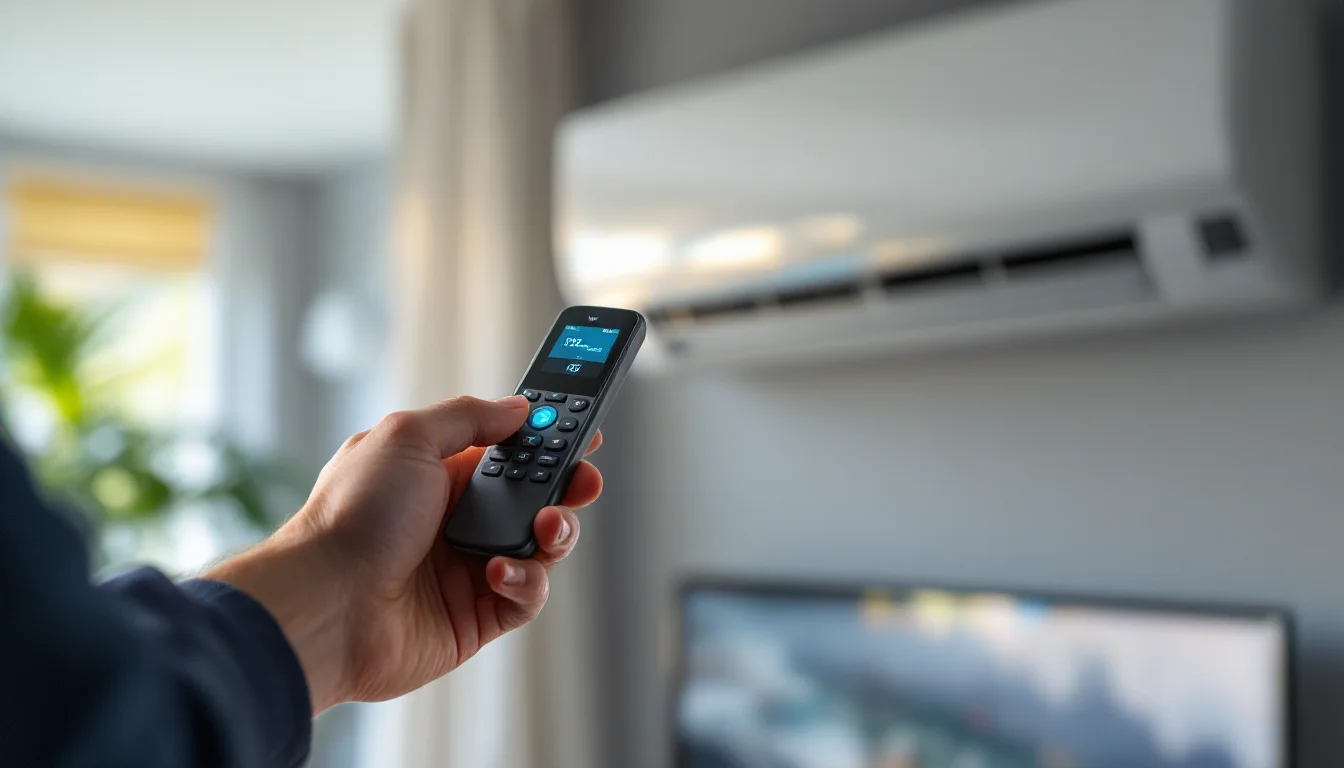
If your Daikin air conditioner has flashed an error code at you, you're not alone. Daikin units talk to engineers through a small alphanumeric code, and that code tells you exactly what tripped, where, and how serious it is. The trick is knowing whether you can clear it yourself in five minutes or whether running the system any longer will make the repair bill three times bigger.
This guide is built from Daikin's own service literature plus 20 years of London callouts at Be Cool Refrigeration. We've put a live lookup tool below so you can paste your code in and get a plain-English explanation, plus the next steps. After the tool you'll find a deeper walk-through of how the codes are organised, the most common faults we see in domestic and commercial systems, and when you genuinely need an F-Gas certified engineer rather than a homeowner-level reset.
How Daikin Error Codes Work
Every Daikin error is a letter followed by a number, sometimes a letter. The letter is the system, the digit is the specific fault. So U4 means a U-series (communications) fault, sub-code 4 (indoor-to-outdoor link). Once you understand the letter system, even an unfamiliar code becomes readable at a glance.
| Series | What it covers | Severity |
|---|---|---|
| A | Indoor unit faults: PCB, drain, fan motor, expansion valve | Mixed |
| C | Indoor temperature and humidity sensors (thermistors) | Usually low |
| E | Outdoor unit faults: PCB, fan, compressor, pressure switches | Often critical |
| F | Discharge or coil temperature trips | Critical |
| H | High-side problems: pressure switches, current sensors, motor signals | Often critical |
| J | Outdoor sensor faults: discharge pipe, suction pipe, ambient | Medium |
| L | Inverter / electrical box: overcurrent, heatsink temperature | Critical |
| P | Other PCB-side issues including capacity setting mismatches | Medium |
| U | System and communication errors between units and controllers | Mixed |
Reading the Code on Your Remote
How you see the code depends on which controller you have.
Wireless ARC remote (typical split system)
- Press and hold the CANCEL button for around five seconds.
- The display will show 00 and beep continuously.
- Press CANCEL again to step through codes — the unit will give a long beep when it hits the active error code.
- Note the code, then press CANCEL once more to exit.
BRC1E / BRC1H wired controllers (commercial units)
- The error code shows automatically on the bottom row of the screen.
- Press Menu / OK to drill into the fault history.
- The most recent ten faults are stored, with timestamps if the controller has a real-time clock fitted.
Madoka and newer touch controllers
Tap the warning triangle to bring up the active code. Long-press it to see the history.
Daikin Error Code Lookup Tool
Type your code below. The tool covers the codes we see most often in the field, with a clear explanation and a short list of what to check next. Severity is colour-coded so you know whether to keep using the unit or shut it down.
Daikin Error Code Lookup
Type a code (e.g. U4, E3, A3) or a keyword like fan or thermistor. Built from Daikin service data and 20 years of London callouts.
A0External protection device activatedService soon
An external safety device wired to the indoor unit has tripped — usually a high-static fan trip or a third-party limit switch.
- Check any wired external protection devices.
- Cycle power at the isolator.
- If it returns within minutes, call a Daikin engineer — do not bypass the safety.
A1Indoor PCB malfunctionStop and call an engineer
The indoor unit's main control board has failed self-check.
- Power off at the isolator for 5 minutes.
- If A1 persists on restart, the indoor PCB needs replacing.
- Book an engineer — board swaps require firmware matching.
A3Drain water level abnormalService soon
The condensate drain pan is full. Either the pump has failed, the drain is blocked, or the float switch is stuck.
- Stop using the unit so it stops producing condensate.
- Check the condensate drain runs to outside / a tundish.
- Have the pump and float switch tested by an engineer.
A5High pressure or freeze-up protectionService soon
Indoor coil temperature is too low (heating mode) or too high (cooling mode).
- Clean the indoor air filters.
- Check airflow is not blocked by furniture, curtains or closed vents.
- If it returns the refrigerant charge or coil may need attention.
A6Indoor fan motor faultStop and call an engineer
The indoor fan motor isn't running, or its speed feedback is missing.
- Power off and check the fan can spin freely by hand (only if accessible).
- Most fan motors need replacing once they trip A6 repeatedly.
- Call an engineer — DC fan motors should not be DIY'd.
A7Swing flap motor faultInformation
The louvre / swing motor has failed or is jammed.
- Visually check the louvre is not jammed by debris.
- The unit will keep cooling but the swing won't move until repaired.
A9Electronic expansion valve faultStop and call an engineer
The indoor expansion valve coil or driver has failed.
- This is an engineer-only fix.
- Don't keep running the unit with A9 — it can damage the compressor.
AHStreamer / air filter faultInformation
The streamer discharge or self-cleaning filter mechanism has tripped.
- Vacuum the dust collector.
- Power-cycle the unit.
- Replace the streamer unit if AH returns within a week.
C4Indoor heat exchanger thermistor faultService soon
The indoor coil temperature sensor is open-circuit, short-circuit, or out of range.
- Often a loose connector behind the front panel.
- Engineer to test thermistor resistance and replace if needed.
C5Indoor pipe thermistor faultService soon
The pipe-temperature thermistor reading is invalid.
- Same fix as C4 — sensor or wiring fault.
- Should not be ignored, the unit can't run efficient cycles without it.
C7Front panel limit switch faultInformation
The front panel position switch is stuck or disconnected.
- Open and close the front panel to reseat the switch.
- If it returns, the switch is faulty.
C9Indoor air thermistor faultService soon
The indoor return-air temperature sensor is faulty.
- Check the sensor's plug at the PCB is fully home.
- Replace the thermistor if reading is way out.
CCHumidity sensor faultInformation
Only on units with a humidity sensor — sensor reading invalid.
- Unit will run, but auto-humidity functions disabled.
- Engineer can swap the sensor module.
E0Safety device activated (outdoor)Stop and call an engineer
An outdoor safety device, often a high-pressure switch, has tripped.
- Stop the unit immediately.
- Common cause: blocked condenser coil, fan failure, or overcharge.
- Engineer-only fix — do not reset repeatedly.
E1Outdoor PCB faultStop and call an engineer
Outdoor unit main control board self-check failed.
- Power off at the isolator for 10 minutes.
- If E1 returns on power-up, the outdoor PCB needs replacing.
E3High-pressure switch trippedStop and call an engineer
Discharge pressure exceeded the safety limit. Almost always airflow or charge related.
- Switch the system off.
- Clean the outdoor coil with a soft brush.
- Make sure airflow is not blocked by foliage or fencing.
- Engineer to verify subcooling and charge.
E4Low-pressure switch trippedStop and call an engineer
Suction pressure too low — usually a refrigerant leak or restricted flow.
- Don't keep running the unit, the compressor will overheat.
- Engineer needs to leak-check and re-charge.
E5Inverter compressor motor lock / overloadStop and call an engineer
Compressor has failed to start or is drawing excessive current.
- Power off for 10 minutes to let the compressor cool.
- If E5 returns, it's compressor / inverter PCB territory — engineer only.
E6Compressor startup faultStop and call an engineer
The inverter has tried to start the compressor multiple times and failed.
- Same as E5 — engineer to diagnose inverter and compressor windings.
E7Outdoor fan motor faultStop and call an engineer
The outdoor fan motor speed feedback is wrong, missing, or the motor is locked.
- Check nothing is jamming the outdoor fan blades.
- The fan motor and its driver board both fail this code — engineer needed.
E8Inverter input overcurrentStop and call an engineer
Mains current to the inverter is too high.
- Have the supply checked — under-voltage and loose terminals can cause this.
- Inverter PCB may need replacing.
E9Outdoor expansion valve faultStop and call an engineer
The outdoor electronic expansion valve coil is open-circuit or stuck.
- Engineer-only fix.
- EEV swaps need recovery and re-charge.
EACooling/heating switching fault (4-way valve)Service soon
The reversing valve hasn't shifted between modes correctly.
- Try selecting a different mode and then switching back.
- Engineer to test the valve coil and pilot pressure.
F3Discharge pipe temperature too highStop and call an engineer
Compressor discharge temperature has exceeded the safety limit.
- Stop the unit and let it cool.
- Cause is usually low refrigerant or a blocked TXV / EEV.
- Engineer leak-check needed.
F6Heat exchanger temperature abnormalService soon
Outdoor coil temperature out of range, often related to airflow.
- Clean the outdoor coil.
- Make sure the unit isn't enclosed or starved of air.
H0Compressor sensor system faultStop and call an engineer
Voltage / current sensor on the compressor side is reading abnormally.
- Engineer-only.
- Often the inverter PCB.
H3High-pressure switch malfunctionService soon
The HP switch itself has gone open-circuit (different from E3 which is a real trip).
- Replace the HP switch.
- Wiring loom can also chafe and cause this.
H6Compressor startup position detection errorStop and call an engineer
The inverter can't detect the rotor position to start the compressor.
- Engineer to test windings and replace the inverter PCB if windings are good.
H7Outdoor fan motor signal abnormalStop and call an engineer
Speed feedback from the outdoor fan is wrong.
- See E7. Same family of faults.
H8AC current sensor faultStop and call an engineer
Inverter input current sensor is faulty.
- Engineer-only — inverter PCB diagnosis.
H9Outdoor air thermistor faultService soon
Outdoor ambient sensor reading is invalid.
- Swap the thermistor — they're cheap and quick to replace.
J3Discharge pipe thermistor faultService soon
The compressor discharge sensor is open or short.
- Engineer to refit or replace the sensor.
- Don't ignore — the unit can't protect itself from overheating without it.
J5Suction pipe thermistor faultService soon
Suction sensor reading invalid.
- Sensor or wiring fault — engineer to swap.
J6Outdoor heat exchanger thermistor faultService soon
Outdoor coil temperature sensor invalid.
- Same family as J3/J5 — sensor swap.
L3Electrical box temperature highStop and call an engineer
The outdoor electrical compartment is overheating.
- Make sure the louvres on the outdoor unit are not blocked.
- If the inverter cooling fan is dead, the PCB will fail next — fix urgently.
L4Heatsink temperature highStop and call an engineer
Inverter heatsink is too hot.
- Same family as L3.
- Often the inverter cooling fan or thermal paste.
L5Inverter overcurrent (output)Stop and call an engineer
The inverter has tripped on output current to the compressor.
- Engineer to test compressor windings and inverter — one of them is faulty.
L8Inverter electronic thermal tripStop and call an engineer
Sustained overcurrent has tripped the soft thermal protection.
- Power off for 10 minutes.
- If L8 returns, engineer needs to investigate.
L9Compressor stall protectionStop and call an engineer
Compressor has stalled multiple times during startup.
- Often low voltage or a sticking compressor.
- Engineer required.
P4Inverter heatsink thermistor faultService soon
Sensor on the inverter heatsink is open or short.
- Engineer to swap the thermistor.
PJOutdoor unit capacity setting mismatchService soon
Capacity setting jumper / address on the outdoor PCB is wrong.
- Often shows up after a board swap if the installer didn't set capacity.
- Engineer to set the correct value.
U0Insufficient gas (low refrigerant)Stop and call an engineer
System has detected the charge is too low to run safely.
- This usually means a leak.
- Don't top up without leak-checking — F-Gas regulations require it.
- Book an engineer for a proper repair.
U2Power supply voltage abnormalStop and call an engineer
Mains voltage to the unit is out of spec, or DC bus voltage on the inverter is wrong.
- Have an electrician check the supply at the unit's isolator.
- If supply is fine, the inverter PCB is failing.
U4Indoor / outdoor communication faultStop and call an engineer
The two units cannot talk to each other.
- Check the interconnect cable for damage and that both ends are tight.
- Polarity matters on Daikin systems — confirm 1, 2, 3 wiring.
- Engineer to test signal voltage.
U5Remote controller communication faultService soon
The wired or wireless controller has lost contact with the indoor unit.
- For wired: check P1/P2 wiring.
- For wireless: replace the batteries and re-pair.
U7Communication fault between outdoor unitsStop and call an engineer
On multi-outdoor systems, units are not in sync.
- Engineer to verify F1/F2 cabling between outdoor units.
U8Multi-system communication / address faultService soon
Indoor and outdoor units have mismatched addresses on a multi system.
- Engineer to re-address using the dipswitches or service controller.
UAIndoor / outdoor combination wrongService soon
The indoor capacity or model isn't compatible with the outdoor.
- Usually shows after a unit swap.
- Engineer to confirm both unit codes are on the same family.
UFPipe / wiring mismatch on multi systemsService soon
Refrigerant piping and the data cabling don't match the indoor addresses on a multi system.
- Engineer to run the auto-pipe-detection routine.
Got a code that needs an engineer? Be Cool covers all London postcodes.
Call 0203 488 1889The Five Most Common Daikin Errors We See in London
About 70 per cent of our Daikin call-outs are one of these five codes. If yours is on the list, the section below will tell you whether to attempt a reset or book us in.
U4 — indoor and outdoor cannot communicate
This is by far the most common one. The two units share a small data signal over the interconnect cable. When that signal drops, neither unit knows what the other is doing and the system shuts down. Causes we see weekly:
- A loose terminal screw on the outdoor unit, often after a windy week.
- The polarity is wrong on terminals 1, 2 and 3 — Daikin is strict about this and the system will not run if they're swapped.
- A nail or staple has gone through the cable inside a wall (yes, really).
- The outdoor unit has lost mains power because the isolator was left off after a service.
If you can safely access the isolator, switch it off, wait two minutes, switch it back on, and watch for U4 to clear. If it returns within an hour, stop and book an engineer. If our London air conditioning installation team installed the unit, we'll usually have the wiring records on file.
E3 — high-pressure switch tripped
This means the discharge pressure inside the system has climbed past Daikin's safety limit. Almost every E3 we attend is one of three things:
- The outdoor coil is matted with leaves, fluff or pollen and the unit can't reject heat.
- Something has been built or planted within the airflow zone of the outdoor unit (a fence, a shed, a row of conifers).
- The system has been overcharged by a previous engineer.
It is not safe to keep cycling the unit through E3. Discharge pressure spikes quickly damage the compressor, and a compressor is the single most expensive component in the system. Clean the outdoor coil if you can do so safely, and clear at least 30 cm of breathing room on every side. If E3 returns within a week, we need to verify subcooling and superheat before running the unit again.
A3 — indoor drain water level abnormal
Cooling produces condensate. Around 5 to 20 litres a day from a typical wall split working hard in summer. That water has to leave the unit, and the drain path is the part of the install most likely to fail over time.
A3 specifically means the float switch in the drain pan has detected a high water level. Two main causes:
- The condensate pump has failed, so water sits in the pan instead of being pumped out.
- The drain hose is partly blocked by biological slime or has frozen up over winter.
Switch the unit off in cooling mode the moment A3 appears or you risk water dripping through the ceiling. Heating mode is fine because it doesn't produce condensate. Closely related: read our piece on why an AC leaks water for the full diagnosis tree.
U0 — insufficient gas (refrigerant low)
U0 is Daikin's polite way of saying the system has lost charge. It does not lose charge through normal use. If U0 has appeared, you have a leak. Top-up without leak repair is a breach of the UK F-Gas Regulations 2015 and any engineer who pumps gas into a leaking system without finding the leak is acting unlawfully.
What we'll do: pressure test, leak detect with electronic sniffer, repair, evacuate, weigh in fresh charge to the spec on the unit's data plate. We strongly recommend reading our refrigerant types guide if you want context on what charge your unit uses.
A6 — indoor fan motor fault
Modern Daikin indoor units use brushless DC fan motors that report their speed back to the PCB. When the speed feedback drops out, the unit assumes the motor has failed and stops the system. Rarely a wiring issue, almost always a worn motor.
You can confirm if you turn the unit on and listen — if the fan never spools up, A6 is real. If the fan runs and A6 still appears, it's a feedback wire. Either way it's an engineer fix because DC fan motors carry residual voltage on their terminals and aren't safe for DIY.
Resetting a Daikin After a Fault
The unit has its own reset routine that's safer than just pulling the plug.
- Switch the unit off at the wireless or wired controller.
- Switch off at the wall isolator (the small grey switch with a red dot — it lives near the outdoor unit and sometimes near the indoor unit too).
- Wait five full minutes. The capacitors inside the inverter PCB take this long to discharge.
- Switch the isolator back on.
- Wait two more minutes for the system to handshake.
- Run the unit. If the same code returns within an hour, you have a real fault, not a glitch.
Don't try a reset more than twice. Repeated resets through a real fault can stack damage on top of damage, especially with anything compressor-related (E5, E6, L5, L8).
When to DIY and When to Call an Engineer
| Code or symptom | Try yourself first | Call an engineer |
|---|---|---|
| Filter dirty, weak airflow | Yes — clean filters, see our filter guide | Only if cleaning doesn't fix it |
| U4 (one-off) | Yes — power-cycle once | If it returns within an hour |
| U5 (remote) | Yes — replace remote batteries, re-pair | If wired controller |
| A3 (drain) | Switch off cooling immediately | Yes, every time |
| E3 (high pressure) | Clean outdoor coil | Always, after first cleaning |
| U0 / leak | No | Always — F-Gas obligation |
| Anything compressor-related (E5, E6, H6, L5) | No | Always — stop running unit |
| Anything PCB-related (A1, E1, H0) | No | Always |
Preventing Error Codes in the First Place
Most of the codes above are avoidable with a half-day of preventative maintenance once a year. The cheapest five things you can do to stay out of fault states:
- Clean indoor filters every four to six weeks during heavy use.
- Hose down the outdoor coil every spring before the cooling season.
- Clear at least 30 cm of breathing room on every side of the outdoor unit.
- Run the heating mode for ten minutes once a month over winter to keep the compressor seals lubricated.
- Get a proper service every twelve months. Read our pre-season checklist for what we run through.
If you run a commercial system with an effective rated output of 12kW or more, you also have a legal obligation. Read our TM44 inspections guide for what's required and the £300 fines if you skip it. The TM44 inspection itself often catches issues that would otherwise produce an error code six months later.
Frequently Asked Questions
Why does my Daikin keep showing the same error code after a reset?
Because the underlying fault hasn't been fixed. A reset clears the latched fault state but does nothing to the cause. If the same code returns within an hour, treat it as confirmed and book an engineer.
Can I clear a Daikin error code by removing the batteries from the remote?
No. The error is stored in the indoor unit's PCB, not the remote. The only way to clear it is at the unit itself, either by power-cycling at the isolator or by using the engineer's reset routine on a wired controller.
Is it safe to keep using my Daikin with an active error code?
It depends on the code. Sensor faults (the C and J series) are usually safe to run on for a few days while you wait for an engineer. Pressure or compressor codes (E3, E4, E5, E6, U0, L-series) are not — keep using the unit and you can turn a £300 sensor swap into a £2,000 compressor replacement.
How much does it cost to repair a Daikin error code in 2026?
Sensor swaps and drain unblocks: around £180 to £350 including parts and labour. PCB replacements: £450 to £900. Compressor replacements: £1,400 upwards on a small split, more on multi-systems. A leak repair plus regas is typically £350 to £600. Read our full AC repair and replacement cost guide for the breakdown.
Are Daikin error codes the same on all models?
The major codes (the U, A, C, E, H families) are consistent across the entire Daikin range, from a domestic FTXM split to a commercial VRV system. The exact sub-codes within a series can vary slightly, especially on the latest VRV 5 hardware. The lookup tool above covers the codes that match across the consumer and light commercial ranges, which is over 90 per cent of what we see.
Does my Daikin warranty cover error code repairs?
Daikin's standard warranty covers manufacturer faults on parts for three years on residential and five years on commercial, provided the unit has been serviced annually by an F-Gas certified engineer. Wear-and-tear (filters, blocked drains, refrigerant top-ups due to leaks) is not covered. Keep your service records — without them, Daikin will reject claims.
Talk to a Real Engineer
If your code isn't on the list above, or it is but you'd rather have a professional look at it, we cover all of London for Daikin repairs. Most jobs are diagnosed on the first visit, and we carry common spares (PCBs, sensors, capacitors, fan motors) on the van so we can fix the same day where possible. Book a callout via the form on the homepage or call 0203 488 1889. You can also browse our comparison of London AC companies if you want to see how we stack up before deciding.
If the fault code points at something beyond a reset or a clean, it is worth having Daikin repair and servicing looked at properly rather than clearing the alarm and waiting for it to come back.

Written by
Ali Elm
Ali is the Head of Operations at Be Cool Refrigeration with over a decade of hands-on experience in HVAC and commercial refrigeration. He oversees every installation, repair, and maintenance project, making sure the work meets the highest standards. Ali holds full F-Gas certification and has worked across residential, commercial, and industrial refrigeration systems throughout London and the South East. When he is not on site, he writes these guides to help business owners and homeowners understand their cooling systems better.