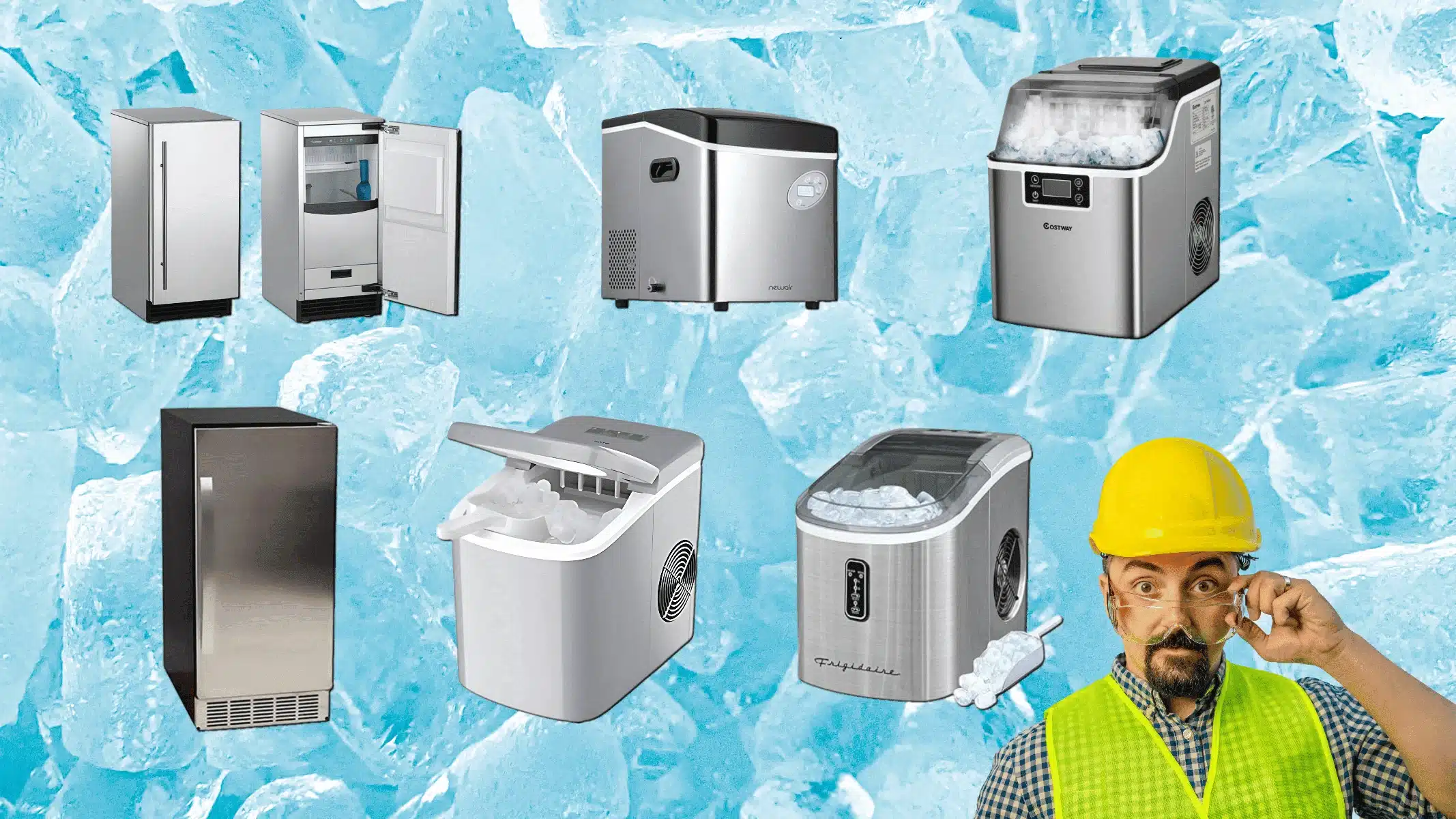
The best ice maker for outdoor or bar use in the UK is one rated for where it will actually sit. Most ice makers are built for indoor use only, including popular models such as Polar's T316 and GL192, so for a garden bar, terrace or marquee you need either an outdoor-rated machine or a sheltered spot that stays within the maker's temperature range. After that, choose by daily output, bin size, ice type, and the water and drain connections.
This guide explains what to check before buying, using the operating limits manufacturers publish, rather than a list of products that may not be sold in the UK.
At a glance
| Check | Why it matters |
|---|---|
| Indoor or outdoor rating | Many machines are indoor only. Polar's T316 and GL192 manual says "For indoor use only" |
| Ambient temperature range | Scotsman's AC, EC and MXG ranges work from 10°C to 43°C. Polar's T316 may not work below 10°C |
| Daily output | Quoted in kg per 24 hours, for example 20 kg (Polar T316) or 50 kg (Polar GL192) |
| Bin size | How much ice is ready at once, for example 3.5 kg or 10 kg |
| Water supply | Plumbed machines need a mains supply within the maker's pressure range, such as 1 to 5 bar |
| Drain | Gravity drain needs a drain below the machine. A drain pump allows more flexibility |
Indoor or outdoor
The first question is not which brand, but whether the machine can live where you want it. Polar's T316 and GL192 instruction manual states that the machines are for indoor use only. Most countertop and undercounter ice makers are the same, because rain, frost, direct sun and dust all cause problems for the electrics, the water system and the refrigeration.
For outdoor bars and events, the options are:
- An outdoor-rated ice machine, built with a sealed cabinet and components for outdoor conditions. Check the maker's documentation says outdoor use is allowed.
- An indoor machine in a sheltered spot, such as a bar store, back room or covered servery that stays dry and within the temperature range.
- Making ice indoors and storing it outside in an insulated ice chest or bin, which is often the simplest answer for occasional events.
Temperature limits
Ice machines have a working temperature range, and both ends matter in the UK. Scotsman's user guide for its AC, EC and MXG ice makers gives a working range of 10°C to 43°C, a water temperature range of 5°C to 38°C, and water pressure of 1 to 5 bar. Polar's troubleshooting table lists an ambient temperature below 10°C as a reason its T316 and GL192 machines may not work, and a room that is too cold as a cause of the "ice full" light.
That rules out unheated outdoor spaces for much of the year, and very hot spots in summer, such as a sun-baked marquee or next to a grill, will cut output. Choose a site that stays within the range all year, or plan to use the machine only in the months it suits.
How much ice you need
Output is quoted in kilograms per 24 hours. Polar's manual gives 20 kg per 24 hours for the T316, with a 3.5 kg bin, and 50 kg per 24 hours for the GL192, with a 10 kg bin. Commercial modular machines make far more and sit on separate storage bins.
Two points to remember when sizing:
- The bin is what you can use at once. A machine making 50 kg a day only has its bin's worth ready at the busiest moment, so for a rush, bin size matters as much as output.
- Output falls in warm conditions. Quoted figures are measured at set air and water temperatures, so a hot day outdoors will produce less than the headline number.
Ice type
- Cubes (full, half or gourmet) melt slowly and suit drinks.
- Bullet or finger ice from smaller machines is quick to make but melts faster.
- Flake or nugget ice suits food display, seafood and some cocktails.
Choose the type for what you serve. A bar serving spirits and soft drinks usually wants cubes, while a fish counter wants flake.
Water and drainage
Small countertop machines are filled by hand. Plumbed machines need a cold water supply within the maker's pressure range and a drain. Polar notes that the T316 drains by gravity, so it needs an optional drain pump if it is installed lower than the drain standpipe, while the GL192 has a drain pump that can lift water up to 1.6 m. Scotsman says its EC machines have a built-in drain pump that can reach a drain up to 30 m away and 1.5 m higher. On a garden bar or terrace, the drain is often the hardest part to arrange, so plan it before buying.
Hard water causes scale, so both Polar and Scotsman recommend regular descaling, and a water filter is worth fitting in hard water areas such as London.
Power and safety outdoors
- Use an earthed supply with residual current protection, and keep the plug and socket dry. Outdoor sockets and cabling should be installed by an electrician.
- Do not use extension leads trailing across wet ground.
- Many modern ice makers use flammable natural refrigerants such as R600a or R290. Polar's manual warns to keep ventilation clear and to avoid sources of ignition if a leak is suspected.
- Only use drinking water, and replace standing water in tank-filled machines regularly, as Polar advises.
Cleaning and hygiene
Ice is food, and an ice machine left uncleaned grows slime and mould, especially outdoors where dust and insects get in. Follow the cleaning interval in the manual, and use the machine's cleaning cycle where it has one. Our guide to ice machine hygiene and cleaning covers what a proper clean involves, and our guide to ice machines that stop making ice covers the common faults. Our ice machine repair team installs and services ice makers for bars and venues across London.
Questions people ask about ice makers
Can I use an ice maker outside?
Only if the manufacturer says it is suitable for outdoor use, or it sits in a sheltered spot within its temperature range. Many models are indoor only. Polar's T316 and GL192 manual, for example, says "For indoor use only".
What is the best ice maker for a garden bar?
One rated for the location, with enough output and bin capacity for your busiest hour, the ice type you serve, and a water and drain arrangement you can actually provide. For occasional use, making ice indoors and storing it in an insulated chest outside is often simpler.
Do ice makers work in cold weather?
Not well below their minimum temperature. Scotsman gives 10°C as the bottom of its AC, EC and MXG working range, and Polar lists an ambient below 10°C as a reason its machines may not work.
How much ice does an ice maker produce?
It is quoted in kilograms per 24 hours. Polar's T316 makes 20 kg and its GL192 50 kg in 24 hours, while commercial modular machines make much more. Real output falls in warm conditions.
Does an ice maker need plumbing?
Countertop machines can be filled by hand. Plumbed machines need a cold water supply within the maker's pressure range, such as 1 to 5 bar for Scotsman, and a drain, either by gravity or through a drain pump.
How often should an ice maker be cleaned?
As the manual says, usually every few months for a cleaning cycle and descale, and more often in hard water areas or outdoors. Polar recommends descaling at least every 3 months.
The short version
Check the machine's location rating and temperature range before anything else, then size it by output and bin for your busiest period, pick the ice type for what you serve, and plan the water, drain and power. For most outdoor bars, a machine in a sheltered spot nearby beats one exposed to the weather.
Last updated: 4 November 2026

Written by
Ali Elm
Ali is the Head of Operations at Be Cool Refrigeration with over a decade of hands-on experience in HVAC and commercial refrigeration. He oversees every installation, repair, and maintenance project, making sure the work meets the highest standards. Ali holds full F-Gas certification and has worked across residential, commercial, and industrial refrigeration systems throughout London and the South East. When he is not on site, he writes these guides to help business owners and homeowners understand their cooling systems better.