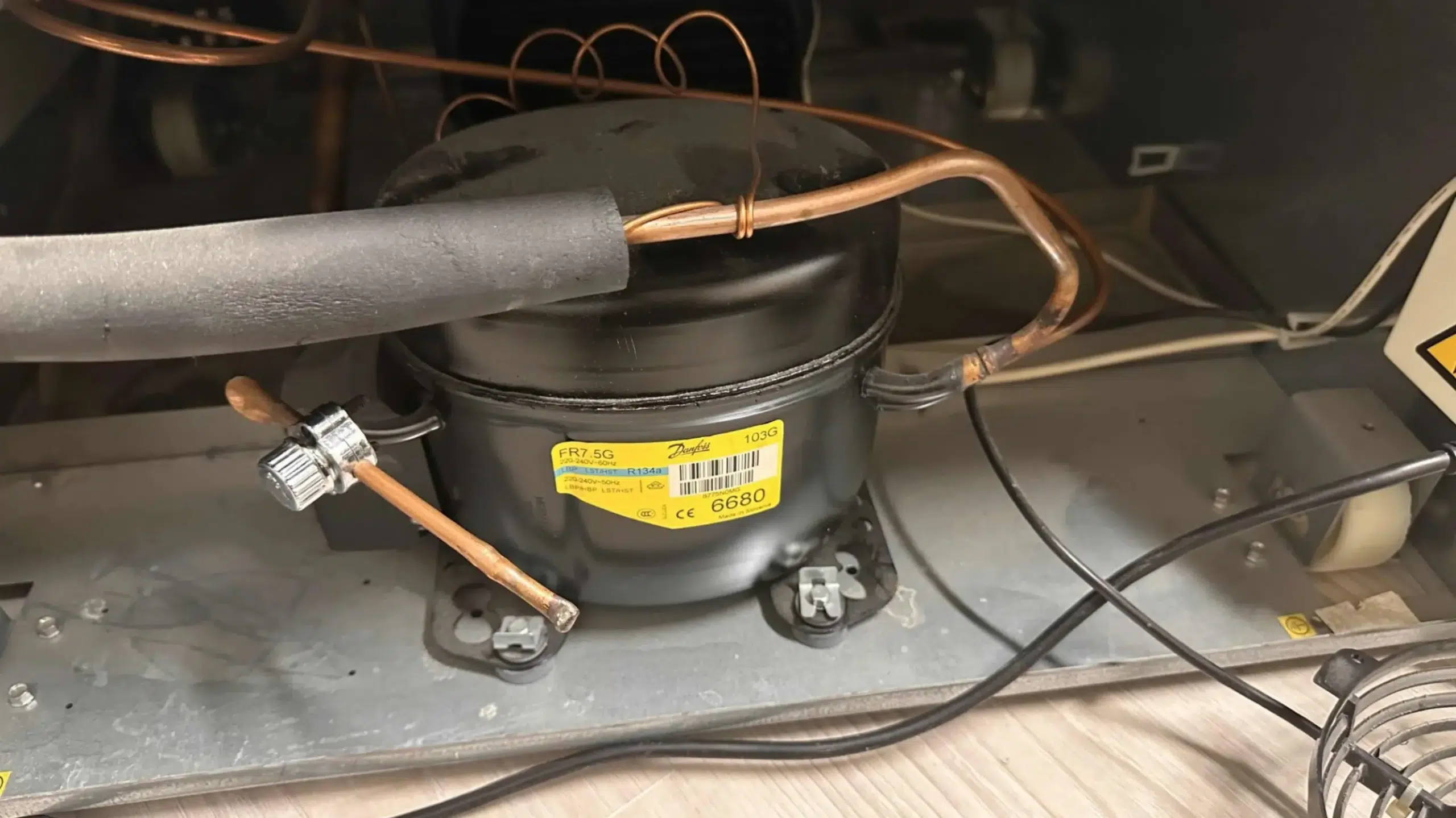
A noisy fridge fan is usually one of two fans. The evaporator fan inside circulates cold air, and is often noisy because ice has built up around it. The condenser fan at the back or bottom cools the compressor, and is often noisy because of dust, debris or worn bearings. A light whirring after the door closes is normal. Grinding, scraping, ticking or squealing is not.
This guide explains how to tell which fan is making the noise, what causes each problem, what you can safely check, and when a fan needs replacing.
At a glance
| Noise | Where | Likely cause |
|---|---|---|
| Light whirring, especially after the door closes | Inside | Normal fan operation |
| Scraping, ticking or grinding that changes with the door open | Inside, usually the freezer | Evaporator fan blade catching ice |
| Rattling or buzzing from the back or bottom | Outside, near the compressor | Condenser fan hitting debris, a loose cover, or dust build-up |
| Squealing, chirping or a rough hum | Either fan | Worn fan motor bearings |
| Fan noise with poor cooling | Either fan | Fan slowing down or failing |
The two fans in a fridge
Most frost-free fridges, fridge freezers and commercial cabinets have two fans:
- The evaporator fan sits inside, usually behind a panel at the back of the freezer or fridge section. It blows air over the cold evaporator coil and round the cabinet. Electrolux's UK guide to fridge noises notes that fans circulating cold air can make a light whirring sound, particularly after the door is closed.
- The condenser fan sits outside the cabinet, at the back or underneath near the compressor, and blows air over the condenser to get rid of heat. Not every domestic fridge has one: many use a static condenser on the back instead.
Hotpoint's UK troubleshooting guide notes that frost-free appliances use a series of internal and external fans, so a slight increase in operating noise is normal on those models.
Which fan is making the noise
Open the door while the fridge is running. On many fridges, the evaporator fan stops or slows when the door opens. If the noise stops with it, the evaporator fan is the likely source. If the noise carries on and comes from the back or bottom, it is more likely the condenser fan or the compressor.
Evaporator fan noise
Ice around the fan
The most common cause of an evaporator fan noise is ice. If frost builds up on the evaporator or around the fan housing, the blades can start to brush against it, making a scraping, ticking or grinding noise. Ice builds up when warm, moist air gets in, for example from a door left ajar or a damaged seal, or when the defrost system is not working. Hotpoint notes that small amounts of frost can appear when doors are left ajar, and that a sharp cracking sound can be caused by frost building up on internal components.
If the fan has iced up, switching the fridge off and letting it defrost fully, with the food moved somewhere cold, usually frees it. If the ice comes back within days, the defrost heater, sensor or timer may have failed, which needs an engineer. Our guide to a commercial freezer icing up covers defrost faults.
A worn motor
Fan motors have bearings that wear over time. A worn motor often starts with a squeal, chirp or rough hum, sometimes only when cold, and gets louder until the fan slows or stops. A slow or stopped evaporator fan means cold air is not moved round the cabinet, so the fridge section can warm up while the freezer stays cold.
Condenser fan noise
Dust and debris
The condenser fan pulls air through the condenser, so it also pulls in dust, fluff and anything else lying behind or under the fridge. Debris touching the blades makes a rattling or ticking noise, and dust on the condenser makes the fan and compressor run harder. Electrolux points out that all refrigeration appliances need ventilation, and that noises can occur when performance is affected by insufficient ventilation.
A loose cover or blade
A loose fan guard, a bent blade or a fan that has shifted on its shaft can rattle or buzz. Hotpoint and Electrolux also list pipework touching the wall as a cause of rattling, which is worth ruling out before blaming the fan.
What you can check safely
- Open the door to see if the noise changes, which tells you which fan it is.
- Check the door closes fully and the seal is not damaged, so moist air is not getting in and icing up the fan.
- Look for frost or ice on the back panel inside the freezer.
- Unplug the fridge, then check behind and underneath it for dust, fluff or objects near the condenser fan, and vacuum away loose dust.
- Make sure the fridge is level and not touching the wall. Our guide to a fridge vibrating covers levelling.
Always unplug the fridge before reaching behind or underneath it. Do not remove internal panels or touch the fan motor or wiring. Fans can start without warning while the fridge has power.
Commercial fridges and freezers
Commercial cabinets work their fans much harder, and kitchens are full of grease and flour that clog condensers and fan blades quickly. A noisy fan on a commercial cabinet is worth acting on early, because a failing fan usually leads to the cabinet not holding temperature. Williams lists a defective fan motor among the causes of a cabinet not maintaining temperature, alongside a dirty condenser and restricted air circulation. Our commercial refrigeration repair engineers replace evaporator and condenser fans on cabinets, counters and cold rooms across London, and planned refrigeration maintenance keeps condensers and fans clean.
When to call an engineer
- The fan keeps icing up after a full defrost.
- A squeal, grinding or rough hum that does not stop.
- The fan has stopped, or the cabinet is not holding temperature.
- Noise from the compressor area that is not the condenser fan, which our guide to a refrigerator making a loud noise helps identify.
Questions people ask about fridge fan noise
Why is my fridge fan making noise?
Usually because ice has built up around the evaporator fan inside, or dust and debris are affecting the condenser fan at the back. Worn fan motor bearings are the other common cause, often starting as a squeal or chirp.
Is it normal for a fridge fan to make noise?
A light whirring is normal. Electrolux notes that fans circulating cold air can be heard, particularly after the door is closed. Scraping, grinding, ticking or squealing is not normal.
How do I stop my freezer fan making noise?
If the noise is scraping or ticking, ice is likely catching the blades. Move the food, switch off and let the freezer defrost fully, then check the door seal. If the ice returns quickly, the defrost system needs an engineer.
Can I fix a noisy fridge fan myself?
You can clean dust from around the condenser fan with the fridge unplugged, and defrost an iced-up evaporator fan. Replacing a fan motor involves internal panels and wiring, so leave that to an engineer.
What happens if a fridge fan stops working?
If the evaporator fan stops, cold air is not circulated, so the fridge section warms up. If the condenser fan stops, the compressor overheats and cooling fails. Either way, the cabinet will not hold temperature.
Why does my fridge fan stop when I open the door?
Many fridges switch the evaporator fan off when the door opens, to stop cold air being blown out. It is normal and a useful way to tell whether that fan is the one making a noise.
The short version
Find out which fan it is by opening the door. Inside, it is usually ice, so defrost and check the seal. At the back, it is usually dust or debris, so unplug and clean. A squealing motor, a fan that keeps icing up, or a cabinet that will not hold temperature needs an engineer.
Last updated: 4 November 2026

Written by
Ali Elm
Ali is the Head of Operations at Be Cool Refrigeration with over a decade of hands-on experience in HVAC and commercial refrigeration. He oversees every installation, repair, and maintenance project, making sure the work meets the highest standards. Ali holds full F-Gas certification and has worked across residential, commercial, and industrial refrigeration systems throughout London and the South East. When he is not on site, he writes these guides to help business owners and homeowners understand their cooling systems better.