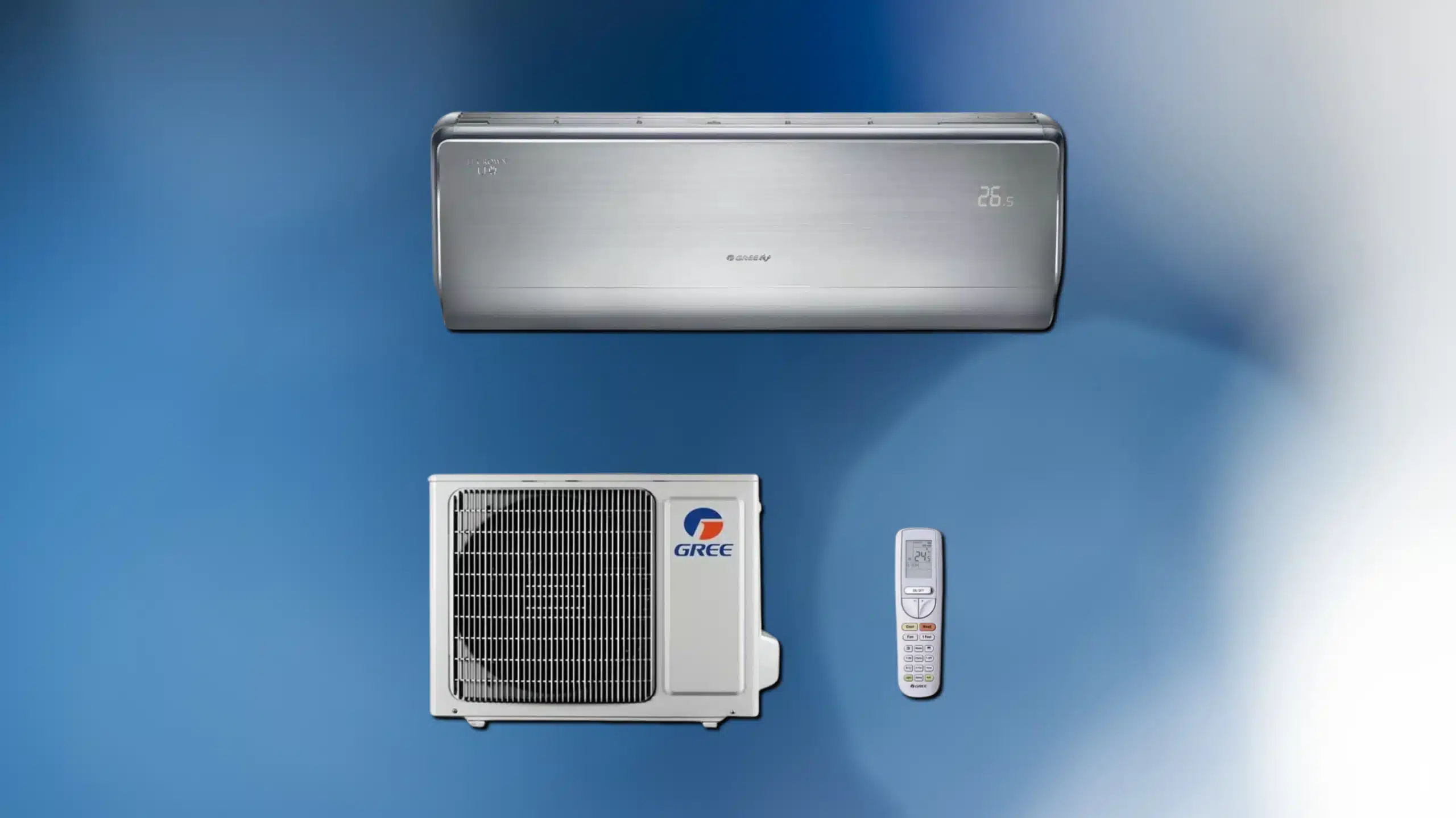
Gree is one of the biggest air conditioning brands in the world, and like any modern system, a Gree unit will flash an error code the moment something isn't right. That code is the unit telling you where to look, so it pays to understand what it means before you reach for the phone.
Below is a clear, plain-English list of the Gree error codes you are most likely to see, what each one points to, and what you can safely check yourself. We service Gree equipment across London most weeks, so these are the faults we actually come across, not a copy-paste of someone else's chart.
One thing worth knowing first: Gree uses slightly different code maps across its ranges. A wall-mounted split, a U-Match ducted or cassette system, and a GMV VRF system can read the same code a little differently. The meanings here cover the common split and U-Match commercial systems. For the exact wording on your model, it is always worth checking Gree's official error code guide or the Gree U-Match service manual.
E Codes: Operation and System Protection
E codes are the ones homeowners and facilities managers see most. They usually mean the system has paused to protect itself rather than failed outright.
| Code | What it means | What to do |
|---|---|---|
| E1 | High-pressure protection. System pressure is too high, usually from a dirty condenser, blocked airflow or an overcharge. | Clean the outdoor coil and clear anything blocking airflow, then restart. If it returns, an engineer should check the charge and the high-pressure switch. |
| E2 | Anti-freeze protection. The indoor coil has dropped too cold and the unit has paused. | Check the filters and airflow, nudge the set temperature up slightly, and make sure nothing is covering the indoor unit. |
| E3 | Low-pressure protection or low refrigerant. Often a shortage or a leak. It can also show briefly during refrigerant recovery. | This usually points to a leak. Clean filters and coils, but a low charge needs an F-Gas engineer to trace the leak and recharge. |
| E4 | High compressor discharge temperature. The compressor is running too hot. | Make sure airflow is clear at both units and let it cool. If it keeps tripping, book an engineer. |
| E5 | Overcurrent or overload protection. The unit is drawing too much current, often from high or unstable mains voltage. | Check for power fluctuations. A stabiliser can help on a weak supply. Persistent trips need an electrician or engineer. |
| E6 | Communication fault. The indoor and outdoor units have stopped talking to each other. | Usually a wiring or connection issue. Restart the system; if it returns, the interconnecting cable or a control board needs checking. |
| E7 | Mode conflict. Two indoor units, or their settings, are fighting between heating and cooling. | Set everything to the same mode, then restart. |
| E8 | Indoor fan motor fault on U-Match and commercial units. On some wall-mounted splits, E8 is a high-temperature or overheat trip instead. | Check the fan turns freely and isn't blocked. If the motor isn't running, it usually needs replacing. |
| E9 | Full-water protection. The condensate level is too high and the float switch has tripped. | Check the drain line and condensate pump for blockages. |
F Codes: Temperature Sensors
Every F code points to a temperature sensor reading open or short circuit. The unit often keeps running in fan mode, but it can't control properly until the sensor is sorted.
| Code | What it means | What to do |
|---|---|---|
| F0 | Indoor ambient (return-air) sensor fault. | Check the sensor connection. If the reading is open or short, it needs replacing, which is an engineer job. |
| F1 | Evaporator (indoor coil) sensor fault. | As above, check the connection then replace the sensor if faulty. |
| F2 | Condenser (outdoor coil) sensor fault. | Check the connection; replace if the sensor is open or short. |
| F3 | Outdoor ambient sensor fault. | Sensor check and replacement. |
| F4 | Compressor discharge sensor fault. | Sensor check and replacement. |
| F5 | Wired-controller sensor fault. The sensor inside the wall controller is faulty. | Check or replace the wired controller. |
On some wall-mounted splits the F numbers shift by one, but the meaning is the same idea every time: a temperature sensor is reading open or short. Match the code to your own model manual if in doubt.
H Codes: Compressor, Fan and Power Module
| Code | What it means | What to do |
|---|---|---|
| H1 | Defrost mode. This is not a fault. The unit is clearing frost from the outdoor coil during heating. | No action needed. It clears itself once defrost finishes. Normal in cold weather. |
| H2 | Filter protection on most models (the static or dust filter needs attention). Some models use H2 for an indoor sensor fault. | Clean or replace the filter first. If your model uses H2 for a sensor, that needs an engineer. |
| H3 | Compressor overload protection has tripped. | Let it cool and clear airflow around both units. Repeat trips need an engineer. |
| H4 | Overload protection from high coil or pipe temperature. | Clean the coils and clear airflow, then let it cool before restarting. |
| H5 | IPM (intelligent power module) protection. The inverter board has shut down to protect itself from voltage, current or heat. | Check the supply is stable. This almost always needs an engineer to test the board. |
| H6 | Fan motor fault. The control board isn't getting a feedback signal from the DC fan motor (indoor or outdoor, depending on the model). | Check the fan spins freely. A motor that won't run usually needs replacing. |
| H7 | Compressor desynchronising. The compressor has lost sync. | Engineer diagnosis, normally drive or compressor related. |
| HC | PFC (power factor correction) circuit protection. | Board-level fault, one for an engineer. |
Inverter, Voltage and Control-Board Codes
These show up on inverter (DC) systems and the outdoor drive board. Most are not DIY fixes, but knowing what they point to helps when you brief an engineer.
| Code | What it means | What to do |
|---|---|---|
| PH | DC bus-bar over-voltage protection. | Check the mains supply, then engineer. |
| PL | DC bus-bar under-voltage protection. | Check the supply, then engineer. |
| U3 | Voltage drop on the DC bus bar. | Supply check; engineer to test the board. |
| PA | AC input over-current protection. | Engineer diagnosis. |
| PP | Input AC voltage out of normal range. | Check the supply quality. |
| PU | Charging-circuit fault on the drive. | Engineer diagnosis. |
| Pc | Current-sensing circuit fault. | Engineer diagnosis. |
| P0 | Drive module reset. Note this is not IPM protection, that is H5. | Often clears on a restart. If it sticks, engineer. |
| P5 | Compressor over-current protection. | Engineer diagnosis. |
| P6 | Communication fault between the main control board and the drive board. | Often self-clears; otherwise check the connections. |
| P7 | IPM or PFC temperature-sensor fault. | Engineer diagnosis. |
| P8 | IPM or PFC over-temperature protection. | Improve ventilation and airflow; engineer if it persists. |
| Lc | Compressor start-up failure. | Engineer diagnosis. |
| Ld | Phase loss. A connection to the compressor is missing. | Engineer to check the wiring. |
| U7 | Four-way reversing valve fault on heat-pump models. | Engineer to check the reversing valve. |
| C5 | Jumper cap fault. A capacity jumper on the PCB is missing or wrong, common after a board swap. | Fit the correct jumper. If the board was just replaced, move the jumper across from the old board. |
| L9 | Power protection mode after a large surge. | Check the supply quality and restart once it is stable. |
| EE / ee | Memory chip (EEPROM) fault. EE is the main control board, ee is the drive board. | Power-cycle a few times. If it stays, the board needs replacing. |
How to Reset a Gree Air Conditioner
Plenty of one-off codes clear with a proper power cycle. Before anything else, try this:
1. Turn the unit off at the remote or controller.
2. Isolate it from power and wait five to ten minutes.
3. Switch the power back on and restart the unit.
4. See if the code clears.
If the same code comes straight back, it is a genuine fault rather than a glitch, so work through the steps in the table above.
Simple Maintenance That Prevents Most Codes
A lot of the faults above trace back to airflow and a tired system. A little upkeep goes a long way:
Clean or rinse the filters roughly every two weeks in heavy use. Keep the outdoor unit clear of leaves, boxes and overgrowth. Have the refrigerant charge and electricals checked once a year by an F-Gas registered engineer. Book a proper service annually so small issues are caught before they become a callout.
When to Call an Engineer
Some codes are safe to investigate yourself, but bring in a professional when:
The code keeps returning after a reset and the basic checks. You can hear unusual noises, or the unit won't start at all. There are signs of a refrigerant leak, such as ice on the pipework or a hissing sound. The code points to the compressor, the inverter drive or a control board.
For anything beyond filters, airflow and a power cycle, our team can help. See our air conditioning repair page, or book a maintenance visit to stop the codes coming back.
Gree Error Codes: Common Questions
What does a Gree E6 error code mean?
E6 is a communication fault between the indoor and outdoor units. The two parts of the system have stopped exchanging data, which is nearly always a wiring or connection problem on the interconnecting cable, or occasionally a faulty control board. A restart sometimes clears it, but if it returns the cabling and boards need checking.
Is the Gree H1 code a fault I need to fix?
No. H1 simply means the unit is in defrost mode, clearing frost off the outdoor coil while heating. It is completely normal in cold weather and clears on its own once defrost finishes. No action is needed.
Can I fix a Gree error code myself?
It depends on the code. Anything to do with filters, airflow or a one-off glitch is usually fine to sort yourself with a clean and a power cycle. Codes involving refrigerant, temperature sensors, the compressor or the inverter board should be left to an F-Gas registered engineer, both for safety and to protect your warranty.
Why does my Gree code mean something different from this list?
Gree uses slightly different code maps across its split, U-Match and VRF ranges, so the same code can vary by model. This guide covers the common split and U-Match commercial systems. For the exact reading on your unit, check Gree's official documentation linked near the top of this page or your model's manual.
Understanding what a code is telling you is half the battle. Knock out the simple checks first, and when it is clearly an engineer's job, get it looked at early before a small fault turns into a bigger repair.
If the fault code points at something beyond a reset or a clean, it is worth having our air conditioning repair service looked at properly rather than clearing the alarm and waiting for it to come back.

Written by
Ali Elm
Ali is the Head of Operations at Be Cool Refrigeration with over a decade of hands-on experience in HVAC and commercial refrigeration. He oversees every installation, repair, and maintenance project, making sure the work meets the highest standards. Ali holds full F-Gas certification and has worked across residential, commercial, and industrial refrigeration systems throughout London and the South East. When he is not on site, he writes these guides to help business owners and homeowners understand their cooling systems better.