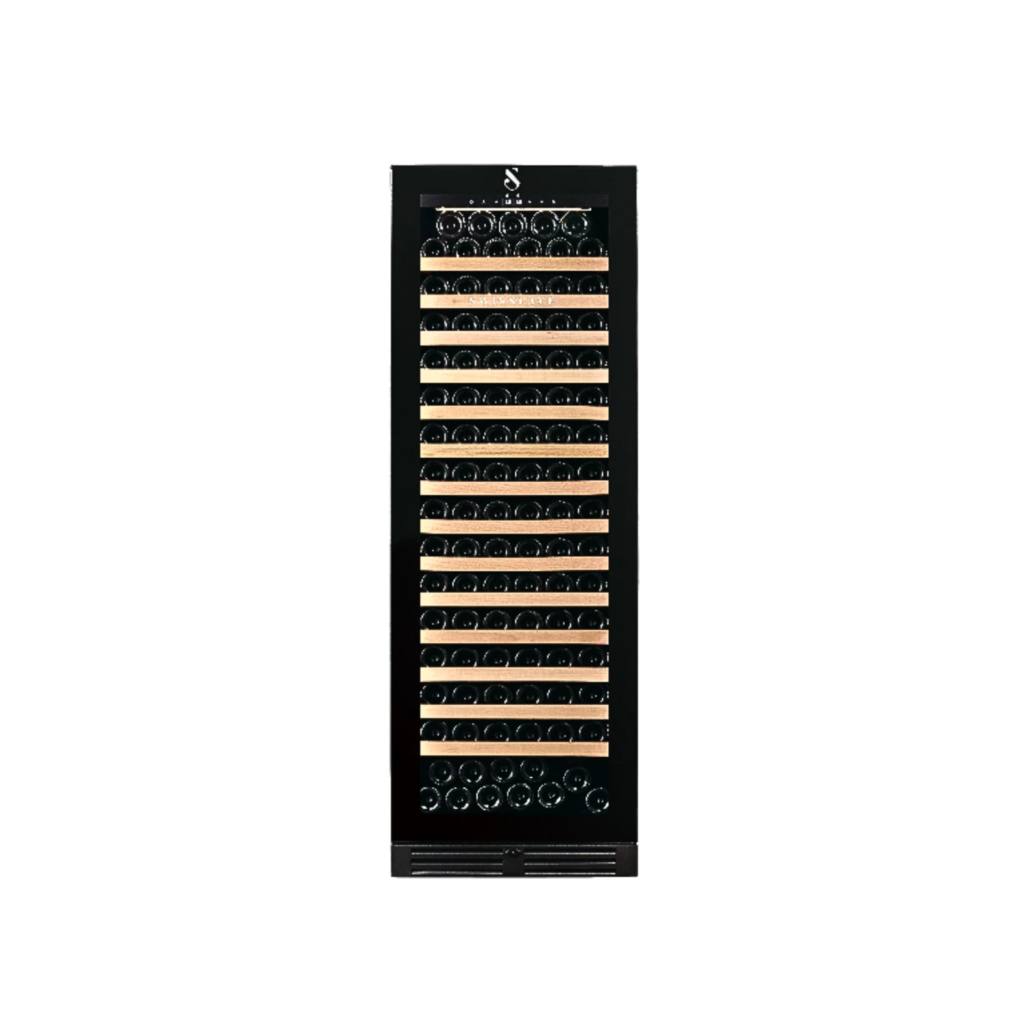
A wine cooler that is not cooling is most often affected by its surroundings: a room that is too warm or too cold, too little space around it for ventilation, a door that is not sealing, or a load of warm bottles. Thermoelectric coolers are especially sensitive to room temperature. If the power, setting and placement are all right and it still will not cool, the fan, sensor or cooling system needs an engineer.
This guide works through the checks in order, using the troubleshooting advice wine cooler makers publish, and explains how thermoelectric and compressor models differ.
At a glance
| What you notice | Check first |
|---|---|
| Not cooling at all, display blank | Plug, socket, fuse and circuit. Then unplug for about 10 minutes and reconnect |
| Not getting cold enough | Room temperature, ventilation space, door seal, recently loaded warm bottles |
| Thermoelectric unit struggling in summer | Room too warm for the unit. Move it somewhere cooler |
| Warmer than set in a cold room or garage | Room too cold. Most coolers cannot heat |
| Fan noisy or not running | Clear the vents. If it still will not run, call an engineer |
| Frost inside | Too much humidity, a poor seal, or the door opened too often |
Thermoelectric and compressor coolers
Wine coolers use one of two cooling systems, and it changes what to expect.
- Thermoelectric coolers use a solid-state module and a fan, with no compressor. They are quiet and vibration-free but have limited cooling power. Subcold's troubleshooting guide for its thermoelectric coolers says they cool gradually and are more affected by the surrounding room temperature than compressor appliances. One thermoelectric model's manual gives its working range as 12°C to 18°C when the room is at 25°C, with a maximum room temperature below 30°C.
- Compressor coolers work like a small fridge, with a compressor and refrigerant. They cope better with warm rooms and can reach lower temperatures, but they still have an operating range.
The checks to make
Power
Subcold's guide says to check the cooler is plugged in, the socket is switched on and works with another appliance, the cable is firmly connected and undamaged, and the circuit is not overloaded. If the display is blank, switch off, unplug for about 10 minutes, then reconnect. If it stays blank, the power supply, adapter, control panel or an internal component may be at fault. Do not keep using a cooler whose cable, plug or socket looks damaged or gets unusually hot.
The temperature setting
Check the right temperature is set. After a change, Subcold advises keeping the door closed and giving the cooler several hours to settle, rather than judging it straight away. Some displays show the current internal temperature rather than the target once the setting is confirmed.
The room temperature
This is the most common cause. CATA's wine cellar handbook recommends installing it where the room is between 19°C and 24°C with humidity under 60%, and says performance may be affected outside that range. Subcold advises against very hot or very cold rooms, garages, sheds, unheated outbuildings, direct sunlight, and spots near radiators or ovens.
A cold room causes problems too. Subcold explains that its cooler is designed to cool only, so if the room falls below the set temperature, the cooling system may stop because no more cooling is needed, and it will not warm the wine up. CDA's wine cooler manual gives a normal operating range of 16°C to 38°C for its model and says use below 16°C may cause performance issues that are not a fault.
Ventilation
Coolers need space for heat to escape. Subcold lists adequate space at the sides and behind, unblocked vents, not pushing the cooler tight against a wall, not installing it inside an enclosed cupboard, and nothing resting against the rear fan or vents. Restricted ventilation reduces cooling and makes the fan run longer. Built-in models need the clearances in their own manual.
The door and seal
Make sure the door closes fully and the seal sits evenly against the cabinet. A gap lets warm, moist air in, which reduces cooling and can cause frost. A door that is opened often or left open has the same effect.
The load
Adding a lot of room-temperature bottles at once means the cooler needs extra time to catch up. Subcold suggests using pre-chilled bottles where possible.
Faults that need an engineer
- A fan that has stopped. Both types rely on fans. One manual's troubleshooting table lists fans not working as a cause of the inside not getting cold enough.
- A failed thermoelectric module on thermoelectric units.
- A faulty temperature sensor or control board, which can show as wrong readings or a cooler that never switches on or off.
- A compressor or refrigerant fault on compressor units, where the compressor runs but the cabinet stays warm.
Wine coolers in bars and restaurants
Commercial wine and drinks coolers in bars and restaurants live in harder conditions: warm back-bar areas, constant door openings and poor ventilation under counters. Many of the same checks apply, especially ventilation and room temperature. For cellar-level cooling, our cellar cooling service and our guide to why cellar temperatures drift cover the bigger picture. Our commercial refrigeration repair engineers cover drinks and wine coolers across London.
Recommended wine temperatures
CATA's handbook gives these settings as a guide:
| Wine | Suggested temperature |
|---|---|
| Long-term storage | 12°C to 14°C |
| Rosé and sparkling | 5°C to 8°C |
| Dry whites | 9°C to 12°C |
| Reds | 14°C to 18°C |
A thermoelectric cooler may not reach the lowest of these in a warm room, which is a limit of the design rather than a fault.
Questions people ask about wine coolers not cooling
Why is my wine cooler not getting cold?
Usually the room is too warm, the cooler has too little ventilation space, the door is not sealing, or warm bottles have just been added. Check those first and give it several hours to settle. If it still will not cool, the fan, sensor or cooling system may have failed.
Why is my thermoelectric wine cooler not cooling?
Thermoelectric coolers have limited cooling power and depend heavily on the room temperature. In a warm room they may not reach the set temperature. Move the cooler somewhere cooler, give it space to ventilate, and keep it out of direct sun.
Can a wine cooler be too cold to work?
Yes. Most wine coolers only cool and cannot heat, so in a room colder than the set temperature they stop cooling and the wine may sit colder than set. CDA's manual says use below 16°C may cause performance issues on its model.
How long does a wine cooler take to cool down?
Several hours, and longer after loading a lot of warm bottles. Subcold advises keeping the door closed and allowing time to stabilise before judging the temperature.
How do I reset a wine cooler?
Switch it off, unplug it for about 10 minutes, then reconnect and switch it back on. If the display stays blank or it still will not cool, there may be a power supply, control or internal fault.
Is it worth repairing a wine cooler?
Often for a larger built-in or commercial unit, where a fan, sensor or control fault is a reasonable repair. For a small thermoelectric unit, a failed module can cost a good share of a new one, so compare before going ahead.
The short version
Check the power, the setting, the room temperature, the ventilation and the door seal, then give it time. Thermoelectric coolers in particular need a moderate room to work well. If it still will not cool, a fan, sensor or the cooling system needs an engineer.
Last updated: 4 November 2026

Written by
Ali Elm
Ali is the Head of Operations at Be Cool Refrigeration with over a decade of hands-on experience in HVAC and commercial refrigeration. He oversees every installation, repair, and maintenance project, making sure the work meets the highest standards. Ali holds full F-Gas certification and has worked across residential, commercial, and industrial refrigeration systems throughout London and the South East. When he is not on site, he writes these guides to help business owners and homeowners understand their cooling systems better.