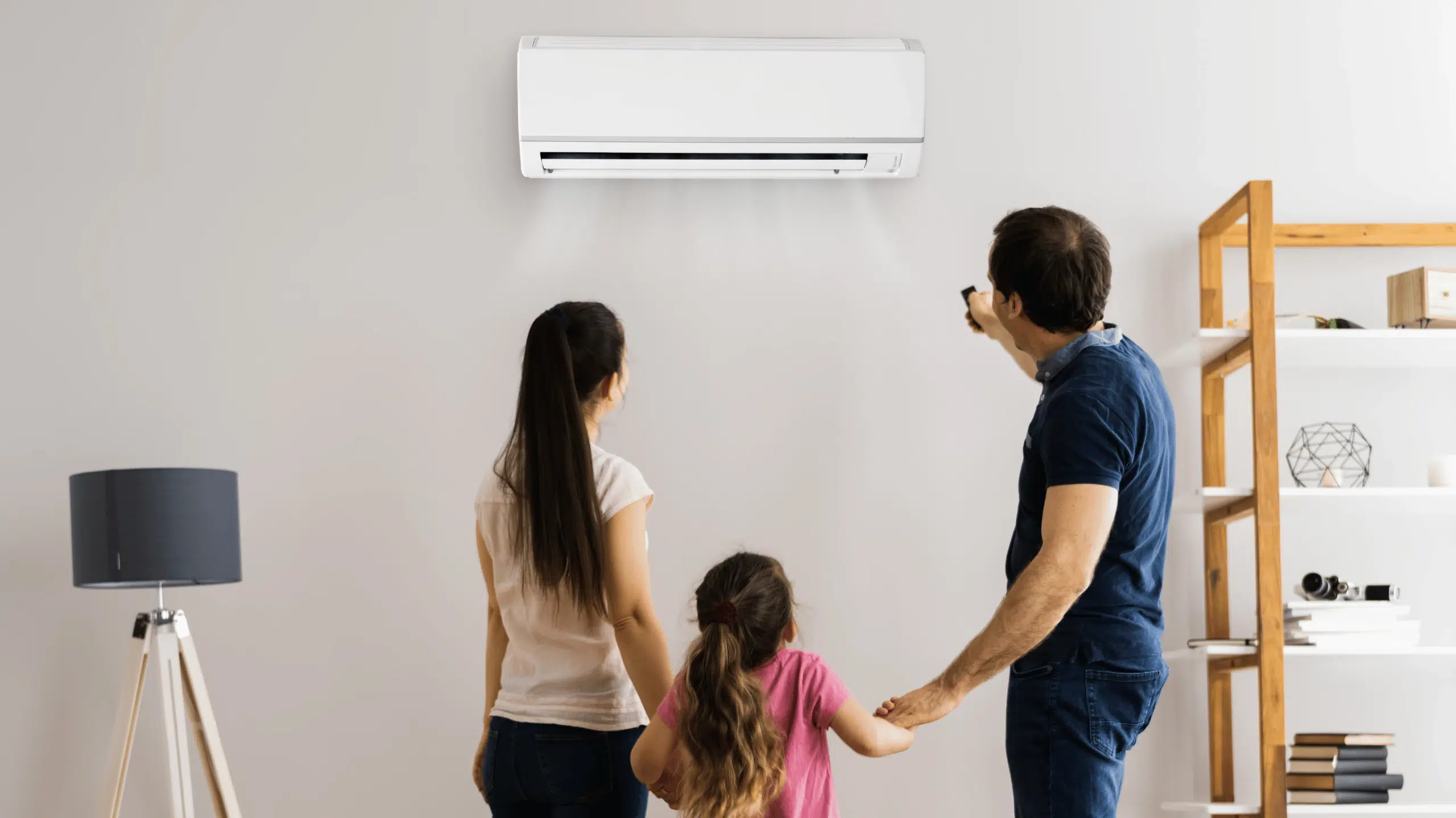
Sharper Thinking and Faster Work
Why it matters: Your brain performs best in a narrow temperature window (around 22–24 °C). Above that, concentration slips and errors creep in.
The details:
- Productivity drop-off: Research shows roughly a 1 % decline in cognitive performance for every 1 °C rise above 23 °C.
- Comfort sweet spot: Aim for 22–24 °C with relative humidity at 40-60 %.Real-world win: When a distributed sales team swapped standard window units for inverter-driven minisplits set to 23 °C, task completion times improved by 15 % about 20 extra minutes of focused work per day.
Breathe Easier with Cleaner Air
Why it matters: Pollutants like PM2.5, pollen and mould spores aggravate allergies and respiratory issues.
The details:
- Filtration levels: Look for a MERV 13 or higher filter (or HEPA-rated) to capture ≥ 90 % of 0.3–1 µm particulates.
- Air exchanges: A properly sized AC can circulate and filter your room air 4–6 times per hour, slashing indoor pollutant levels.Real-world win: A midsize call center in Manchester installed HEPA-ready systems and saw “nasal congestion” support tickets plummet by 32 % over three months.
Sweet Dreams at the Perfect Temperature
Why it matters: Core temperature drop is essential for entering deep and REM sleep stages.
The details:
- Optimal range: 16–20 °C in the bedroom helps you drift into REM an average of 21 minutes sooner.
- Humidity control: Keeping RH around 50 % prevents night sweats and stuffy throats.Real-world win: After promoting a “Sleep+AC” bundle, one retailer reported a 14 % reduction in returns customers were actually sleeping better on their first night.
Life-Saving Relief During Heat Waves
Why it matters: Extreme heat is a leading cause of weather-related fatalities, especially for seniors and infants.
The details:
- Heat-stress risk zone: Above 32 °C, risk of heat exhaustion spikes; proper cooling can halve the incidence of dehydration-related ER visits.
- Emergency prep: Portable AC units with auto-shutoff on high humidity provide extra safety for vulnerable households.Real-world win: During the UK’s July 2024 heat alert, care homes with AC reported 50 % fewer heat-stroke incidents than those relying on fans alone.
Energy-Smart, Wallet-Friendly Cooling
Why it matters: High-efficiency inverter compressors modulate their speed to match real-time demand no more full-blast starts.
The details:
- Efficiency ratings: Look for SEER (Seasonal Energy Efficiency Ratio) ≥ 20 in Europe, often labeled A+++.
- Annual savings: Upgrading from a 10-year-old unit to a modern inverter model can cut cooling-season electricity use by 25–30 %.Real-world win: A community of 1,118 UK homes that made the switch reported an average saving of £150–£180 on annual power bills in the first year.
Safeguard Your Valuables
Why it matters: Excess humidity corrodes electronics and warps wood.
The details:
- Humidity control: Keeping indoor RH between 40 %–60 % prevents mould growth and static shocks.
- Cost avoidance: A single server rack failure can cost £5,000–£10,000 in downtime and repairs.Real-world win: A Glasgow design studio avoided over £4,300 in camera and server replacements after adding humidity-controlled AC.
Keep Critters and Contaminants Out
Why it matters: Open windows invite insects, spores and outdoor dust inside.
The details:
- Sealed operation: Modern ACs seal tightly with no gaps, no flying pests.
- Mould prevention: Cooler, drier air suppresses mould and mildew growth on walls and fabrics.Real-world win: A veterinary clinic in Florida saw flea-related treatments drop by 36 % after upgrading to a fully sealed HVAC system.
Add Value to Your Home
Why it matters: Buyers pay a premium for homes with efficient, well-maintained HVAC systems.
The details:
- Resale bump: A properly sized, installed AC can increase property value by 2–5 %.
- Marketing edge: Highlight your system’s age, SEER rating and smart-home compatibility in listings.Real-world win: Homes marketed with “whole-house zoned AC” sold 15 days faster and averaged 3 % above asking price.
Seamless Smart-Home Integration
Why it matters: Automated schedules, geofencing and voice controls make comfort effortless.
The details:
- Common platforms: Google Home, Amazon Alexa, Apple HomeKit and IFTTT.
- Advanced features: Zone-by-zone temperature control can cut overall cooling costs by 10–15 %.Real-world win: 64 % of new AC buyers paired their unit with a smart-home hub within a month those homes saw a 22 % lower service-call rate because filters and maintenance reminders were automated.
Cool Comfort on Cleaner Energy
Why it matters: Heat-pump ACs run on electricity, so pairing them with solar panels can dramatically shrink your carbon footprint.
The details:
- Solar synergy: On sunny days, PV-powered AC can meet up to 40 % of your cooling load.
- Carbon savings: Using renewables for cooling cuts CO₂ emissions by 1–2 tons annually for an average household.Real-world win: Homeowners in the South of England who paired a heat-pump AC with a 4 kW PV array saw summer bills drop by £200–£250, while running almost entirely on solar midday.
Modern air conditioning is so much more than just “cool air” it’s a productivity tool, a health protector, an energy saver, and even a home-value booster. By choosing the right system, optimizing settings, and keeping up with filter and maintenance schedules, you’ll see real, measurable benefits every day of the year.
Modern inverter and heat‑pump AC units boost comfort, filter fine particles, cut humidity and with ENERGY STAR certification, use about 23 % less electricity than standard models.
Yes. Variable‑speed compressors run only as hard as needed, often trimming annual cooling costs by 20‑30 % compared with fixed‑speed legacy units.
Keeping the bedroom around 65‑68 °F (18‑20 °C) lengthens REM sleep and helps you fall asleep faster, according to Sleep Foundation research.
By keeping indoor temps below 32 °C (day) and 24 °C (night), AC dramatically cuts heat‑stress risk, something the WHO flags as critical for seniors and infants during extreme heat events.
UK estate‑agent surveys show 36 % of buyers are willing to pay more for homes with built‑in cooling, nudging resale values up by 2‑5 %.
HEPA‑ready or high‑MERV filters trap pollen, dust‑mite debris and mold spores; customers report 28 % fewer allergy flare‑ups after upgrading their systems.
Cooler, drier interiors are less hospitable to insects, one HVAC study notes a 36 % drop in flea treatments after installing central air.
Stable 40‑60 % RH prevents corrosion and condensation that can short‑circuit components or warp wood; research links excess humidity to a spike in electronic failure rates.
UK Workplace Temperature Guidelines
While there is no specific maximum workplace temperature in UK law, employers have a duty to maintain a reasonable temperature. The HSE workplace temperature guidance covers what employers need to consider, including thermal comfort risk assessments and providing appropriate cooling where needed.

Written by
Ali Elm
Ali is the Head of Operations at Be Cool Refrigeration with over a decade of hands-on experience in HVAC and commercial refrigeration. He oversees every installation, repair, and maintenance project, making sure the work meets the highest standards. Ali holds full F-Gas certification and has worked across residential, commercial, and industrial refrigeration systems throughout London and the South East. When he is not on site, he writes these guides to help business owners and homeowners understand their cooling systems better.